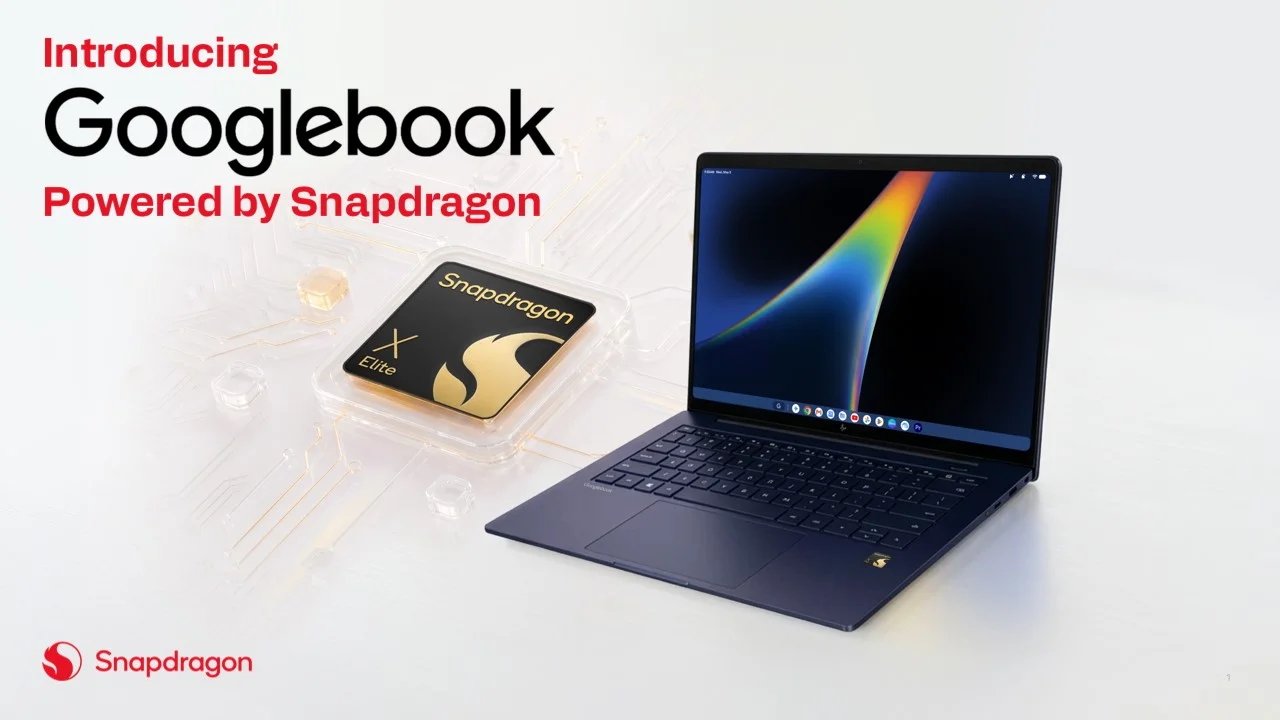
The landscape of personal computing is undergoing a profound transformation as Google officially introduces its entirely new platform category, the Googlebook, powered by the high-performance Qualcomm Snapdragon X Elite processor. Unveiled globally on September 21, 2026, this collaboration between two of tech’s most influential companies merges Qualcomm’s advanced system-on-chip architecture, Google’s Gemini artificial intelligence intelligence, and the vast, mature ecosystem of Android applications. Designed from the ground up to bridge the gap between mobile convenience and desktop productivity, the Googlebook series represents a concerted effort to challenge established architectures in the premium laptop market.
Industry analysts have noted that the release marks a critical juncture in the evolution of Arm-based computing. By leveraging the Snapdragon X Elite silicon, the new Googlebook line is engineered to deliver enterprise-grade performance, extraordinary battery efficiency, and deep integration with the broader ecosystem of Android smartphones and tablets. With major manufacturers such as Dell and HP already committed to launching initial hardware iterations, the debut of the Googlebook platform signals a major shift in how consumers and enterprise professionals will interact with portable computing devices in the years ahead.
Chronology and Development of the Googlebook Platform
The genesis of the Googlebook project can be traced back to years of converging technological trends within both Google and Qualcomm. As mobile processors achieved performance parity with traditional x86 desktop architectures, the demand for always-connected, highly efficient, and AI-native computing devices intensified. Google, seeking to unify its vast software ecosystem—spanning ChromeOS, Android, and advanced cloud services—began conceptualizing a dedicated hardware category that could leverage mobile-first efficiency without sacrificing desktop-class capabilities.
Qualcomm, meanwhile, had been heavily investing in its custom Oryon CPU cores, culminating in the late 2023 introduction of the Snapdragon X Elite platform. Recognizing the potential for this silicon to power a new class of intelligent devices, engineering teams from Google and Qualcomm entered a strategic partnership. The collaboration focused on tightly coupling the neural processing unit (NPU) capabilities of the Snapdragon chip with Google’s proprietary machine learning frameworks, culminating in the finalized Googlebook platform revealed on September 21, 2026.
Following the initial announcement, hardware partners moved swiftly. Dell and HP emerged as the first original equipment manufacturers (OEMs) to embrace the new platform, showcasing the Dell XPS Googlebook and the HP Googlebook 14. Pre-orders for these pioneering devices opened immediately following the launch event, establishing a clear timeline for consumer availability heading into the final quarter of 2026.
Architectural Integration: Snapdragon X Elite Meets Gemini Intelligence
At the heart of every Googlebook lies the Qualcomm Snapdragon X Elite processor, a powerhouse silicon designed specifically to handle heavy computational workloads while maintaining exceptional energy efficiency. The processor’s integration into the Googlebook platform is not merely a matter of raw computing speed; rather, it serves as the foundational engine for Gemini Intelligence, Google’s suite of advanced generative AI features.
Gemini Intelligence on the Googlebook operates on a deeply personal and pro-active level. Unlike traditional cloud-dependent AI tools, the Snapdragon X Elite’s dedicated Hexagon NPU enables significant on-device processing capabilities. This allows features such as Magic Pointer, Cast my Apps, and the contextual assistant Rambler to function with minimal latency. Rambler, for instance, continuously synthesizes relevant information across a user’s emails, calendar entries, and active on-screen content to provide contextual suggestions and automated workflow assistance without compromising data privacy.
Furthermore, the hardware architecture bridges the traditional divide between mobile operating systems and desktop form factors. The inclusion of native Android runtime support means that Googlebook users are no longer limited to browser-based applications or web apps. Instead, the platform runs thousands of native Android applications and mobile games seamlessly. To enhance the multimedia and gaming experience, the platform incorporates Snapdragon Elite Gaming technologies, enabling higher frame rates, advanced graphical rendering, and optimized thermal management.

Hardware Ecosystem: Dell and HP Lead the Charge
The successful launch of any new computing platform heavily relies on the willingness of hardware manufacturers to build and support compliant devices. In the case of the Googlebook, industry titans Dell and HP have stepped forward as the inaugural hardware partners, demonstrating strong confidence in the Snapdragon-Google alliance.
Dell has introduced the Dell XPS Googlebook, bringing its renowned premium design language, high-resolution display technology, and executive-tier build quality to the new software ecosystem. Targeted at professionals and power users, the XPS variant emphasizes sleek aesthetics, robust security features, and uncompromised productivity.
Simultaneously, HP has revealed the HP Googlebook 14, a versatile device aimed at a broader consumer and educational market. The HP Googlebook 14 focuses on portability, all-day ergonomics, and seamless multi-device synergy. Both models take full advantage of the Snapdragon X Elite’s power-saving capabilities, promising all-day battery life under standard workloads, though actual longevity will naturally vary depending on specific user habits, display brightness, and network connectivity.
Despite the immediate availability of pre-orders in primary Western markets, Qualcomm and Google have yet to disclose specific pricing structures, regional rollout schedules, or official launch dates for territories such as Indonesia. Tech enthusiasts and enterprise buyers in emerging markets are closely monitoring local subsidiaries for further updates regarding regional availability and localized warranty support.
Broader Industry Implications and Market Impact
The introduction of the Googlebook platform powered by Qualcomm Snapdragon X Elite carries profound implications for the global PC market. For decades, the personal computer landscape has been dominated by traditional x86 architectures from Intel and AMD, paired predominantly with Microsoft Windows or Apple’s proprietary macOS. The rise of Arm-based Windows laptops, followed closely by Google’s dedicated Googlebook initiative, represents a significant structural shift toward diversification.
By successfully porting the Android ecosystem—including millions of mobile apps and games—onto a traditional laptop form factor, Google is creating a powerful third pillar in personal computing. This convergence appeals directly to users who are already heavily invested in the Android mobile ecosystem, offering frictionless synchronization between smartphones, tablets, and laptop displays. Features like Cast my Apps allow users to interact with their mobile applications directly from the laptop interface, blurring the lines between mobile and desktop computing environments.
From an economic perspective, the partnership reinforces Qualcomm’s transition from a purely mobile-focused semiconductor supplier to a dominant force in the broader PC and artificial intelligence hardware sectors. Analysts project that as on-device AI capabilities become a mandatory requirement for enterprise buyers and modern consumers, platforms optimized for local neural processing—such as the Snapdragon-powered Googlebook—will capture an increasingly large market share.
As pre-orders roll out globally and early reviews begin to evaluate the real-world performance of the Dell XPS Googlebook and HP Googlebook 14, the technology sector will be watching closely. Should the platform successfully deliver on its promise of seamless Android integration, deep Gemini Intelligence, and robust battery life, the Googlebook may well establish a new benchmark for what consumers expect from a modern, connected laptop.