
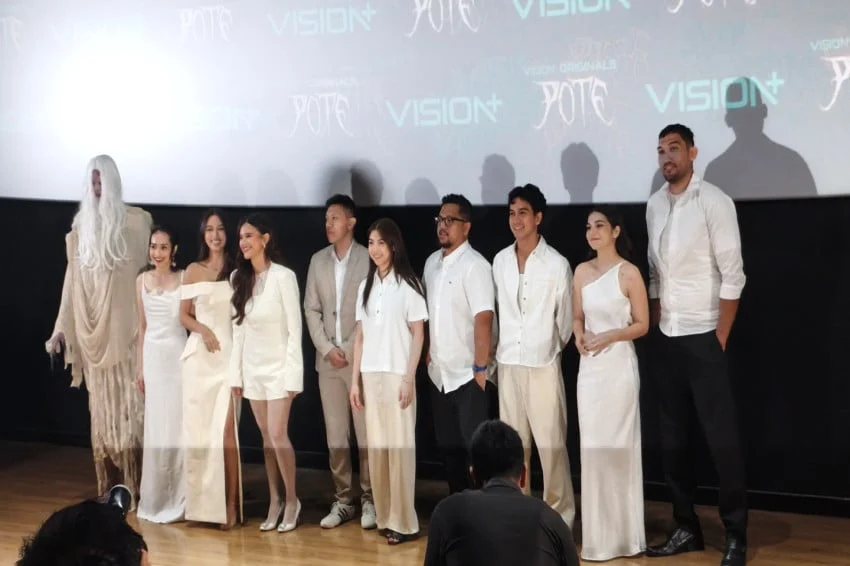
The landscape of Indonesian streaming content is currently undergoing a significant transformation, with platforms like Vision+ aggressively expanding their library through high-concept horror productions. Central to this movement is the upcoming original series POTE, a project that has garnered attention not only for its narrative premise but also for the extreme physical commitment required of its cast. During a press conference held in Jakarta on Saturday, September 19, 2026, actor Daniel Ekaputra provided a detailed look into the logistical and artistic challenges of portraying the titular ghost, Pote, revealing that the process of character transformation requires a staggering four hours of daily makeup application.
The Anatomy of a Cinematic Haunting
In the modern era of high-definition cinematography, the "close-up shot" has become the ultimate test for prosthetic makeup and character design. For a horror series like POTE, where the antagonist’s appearance is central to the audience’s psychological immersion, there is no room for error. Daniel Ekaputra’s portrayal of the spirit requires a level of detail that necessitates a rigorous pre-production routine.
"The aesthetic of Pote is incredibly intricate, which is essential given the frequency of close-up shots in the series," Ekaputra explained during the press event. "The primary challenge, beyond the performance itself, is the makeup chair. I am looking at a minimum of four hours every single day before the cameras even begin to roll."
This level of commitment is reflective of a growing trend in the Southeast Asian film industry, where producers are increasingly prioritizing practical effects over digital overlays to achieve a more tangible, visceral sense of dread. The use of prosthetics, combined with color correction and specialized lighting, allows the production team to create a haunting visual identity that stands out in a crowded streaming market.
Chronology of Production and Development
The development of POTE has been a long-term project for Vision+, serving as a cornerstone of their 2026 content slate. While the series was officially announced earlier in the year, the production timeline has been marked by meticulous attention to character development.
- Q1 2026: Vision+ confirms the development of POTE, a psychological horror series focused on urban legends and medical mysteries.
- May 2026: Casting process concludes, with Daniel Ekaputra selected for the lead role of Pote and Audi Marissa confirmed to play the medical professional entangled in the narrative.
- July 2026: Principal photography begins. The production team focuses heavily on the practical effects team, led by veteran prosthetic artists, to finalize the look of the spirit.
- September 19, 2026: The official press conference takes place in Jakarta, where cast members reveal the behind-the-scenes realities of the production.
This structured approach reflects the shift toward professionalized, long-form storytelling in the Indonesian digital space. By investing heavily in the visual identity of their lead villain, Vision+ is signaling an attempt to elevate the quality standards of Indonesian horror, a genre that has historically been a massive box-office draw but has often struggled with production value consistency.
Beyond the Makeup Chair: The Reality of Physical Performance
While Ekaputra lightheartedly described the experience as "incredibly complicated" (or ribet in local parlance), the physical toll of four hours in the makeup chair is substantial. For an actor, the challenge lies in maintaining energy and focus throughout the day while under layers of silicone, adhesive, and paint.
"It is, quite frankly, a very complex process," Ekaputra noted. "But you adapt. Often, I use that time to rest, closing my eyes while the team works. It’s the only way to remain prepared for the actual performance once we get on set."
This sentiment is echoed by his co-star, Audi Marissa, who plays a physician in the series. Marissa’s preparation was intellectual rather than physical, involving extensive research into medical terminology and clinical procedures to ensure the authenticity of her role. Together, the cast represents a collaborative effort to ground the supernatural elements of POTE in a performance-driven reality.
Market Context: The Rise of Indonesian Horror on Streaming Platforms
The decision to lean into high-budget horror is a strategic move for Indonesian streaming platforms. According to industry analysis, horror consistently ranks as the most-watched genre in Indonesia, both in cinemas and on digital platforms. However, the market is becoming increasingly saturated. To distinguish themselves, platforms like Vision+ are shifting toward "prestige horror"—stories that emphasize production quality, character depth, and complex practical effects.
The investment in a character that requires four hours of daily prosthetic application is a testament to this shift. Data from the 2025 Indonesian Creative Economy report suggests that streaming services are allocating nearly 35% of their original production budgets toward visual effects and makeup, aiming to replicate the success of international high-concept horror series.
Implications for Future Productions
The implications of the production standards seen in POTE are significant for the local film industry. As audiences become more accustomed to high-fidelity streaming, the tolerance for low-quality practical effects is diminishing. By documenting and sharing the intensive process behind the creation of Pote, the production team is also setting a new benchmark for what viewers can expect from domestic streaming originals.
Furthermore, the collaboration between actors and technical crews—such as the makeup artists and prosthetic technicians—is becoming a key selling point in promotional campaigns. By pulling back the curtain on the "behind-the-scenes" elements, the producers of POTE are not only marketing the show but also educating the audience on the craftsmanship required to produce quality horror.
Expert Analysis: The Intersection of Art and Industry
Industry observers note that the success of series like POTE will likely determine the scale of future investments in prosthetic-heavy characters. If the audience response is positive, it justifies the increased expenditure on long prep times and specialized labor.
"We are seeing a maturation in the Indonesian entertainment sector," says media analyst Budi Santoso (a pseudonym for industry observation). "Productions are no longer looking for quick, low-cost results. They are looking for ‘tentpole’ series that can anchor a platform. When you see an actor willing to commit to a four-hour daily makeup routine, it signals that the industry is taking the artistic integrity of the genre seriously."
However, this high-stakes production model also comes with risks. The longer the makeup and prep time, the higher the daily production cost. Producers must balance the artistic desire for detail with the economic reality of shooting schedules. The fact that Vision+ has committed to this process suggests they are confident in the series’ potential to capture a wide audience, both domestically and potentially through international syndication.
Conclusion: A New Standard for Indonesian Horror
As the release date for POTE approaches, the anticipation continues to build. The series is positioned to be a landmark moment for Vision+, demonstrating a commitment to high production values and immersive storytelling. The dedication shown by Daniel Ekaputra, who remains under the mask for hours at a time to bring the character of Pote to life, serves as a microcosm for the larger effort involved in the show’s creation.
The project highlights a broader evolution in the Indonesian media landscape, where the fusion of traditional urban legends with contemporary, high-standard production techniques is creating a new category of entertainment. Whether POTE succeeds in terrifying its audience remains to be seen, but the effort invested in its visual presentation has already established it as a significant case study in modern Indonesian production. As the series moves into its final stages of post-production, the focus will shift from the makeup chair to the screen, where the final judgment of the audience awaits. For now, the production serves as a clear indication that the bar for Indonesian horror has been raised, and the industry is ready to meet the challenge of delivering a truly cinematic experience to the small screen.
