The state-owned railway manufacturer PT Industri Kereta Api (Persero), commonly known as INKA, is currently navigating a critical phase in its production and maintenance obligations for KAI Commuter, the operator of the Jakarta Greater Area (Jabodetabek) commuter line. As the national demand for reliable, high-capacity public transportation continues to surge, INKA is balancing the delivery of new rolling stock with an intensive "General Check Up" (GCU) program for existing units of the iE305/CLI-225 series. This dual-track strategy aims to stabilize the KRL network’s performance while ensuring that the fleet remains compliant with modern safety and operational standards.
The Recall and Maintenance Timeline
The current operational landscape for KAI Commuter has been shaped by a strategic decision made in September 2026. Following internal reports and performance audits, KAI leadership initiated a recall of seven trainsets belonging to the iE305/CLI-225 series. This decision was formally addressed during a Hearing (RDP) with Commission VI of the Indonesian House of Representatives (DPR) on September 23, 2026.
KAI President Director Bobby Rasyidin explained to lawmakers that the recall was a precautionary measure. Inspections conducted by KAI maintenance crews identified specific components within these units that posed potential risks to long-term operational integrity. Rather than risking service disruptions or safety compromises on the busy tracks of the Jabodetabek network, KAI opted for a systematic recall to allow for comprehensive technical inspections and necessary retrofitting.
The chronology of this maintenance cycle is as follows:
- Early September 2026: KAI identifies technical inconsistencies during routine inspections of the iE305 series.
- September 11, 2026: Official withdrawal of seven trainsets from active duty to the Depok Depot for initial assessment.
- September 23, 2026: KAI management reports the situation to the DPR, confirming that the recall is a standard safety protocol.
- Late September 2026: INKA confirms that two of the seven recalled trainsets have passed all rigorous safety tests and have been reintegrated into the active fleet.
Balancing New Production and Remediation
While the maintenance of existing rolling stock remains a priority, INKA continues to fulfill its broader commitment to provide 16 new trainsets to KAI Commuter. This project is vital for the modernization of the KRL system, which serves over 1.1 million passengers daily. The pressure to increase fleet capacity is driven by the post-pandemic shift toward public transit and the government’s commitment to reducing private vehicle reliance in the capital.
Nanang Agung Rohmandiyas, Senior Manager of Corporate Communication and Representative Office at INKA, emphasized that the manufacturing and maintenance workstreams are running in parallel. "Total orders from KAI Commuter stand at 16 trainsets. We are working methodically to ensure that the new units meet all safety benchmarks, while simultaneously pushing the GCU process for the seven units currently under evaluation," Nanang stated on September 26, 2026.
Currently, the production facility in Madiun, East Java, is focusing on the final assembly and finishing stages of the eighth and ninth trainsets. These units represent a significant milestone in the project, as their completion will bring the total number of modernized or new units toward the halfway mark of the contract.
Technical Rigor and Safety Protocols
The return of the first two trainsets to the network was not a simple administrative process. Upon completing the structural and electrical checks, these units underwent a battery of operational tests to ensure that the remediation measures were effective. This includes testing the propulsion systems, braking mechanisms, and communication interfaces between the train cars and the signaling system.
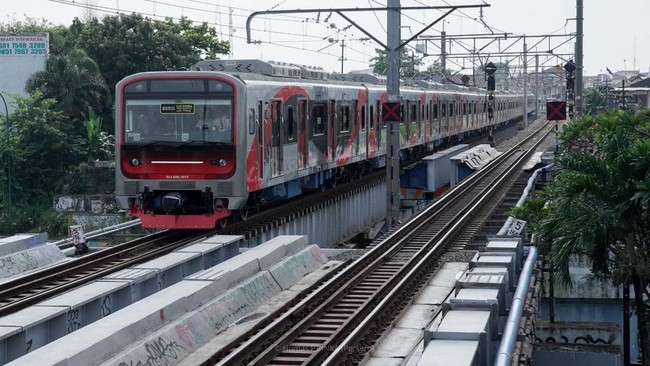
The remaining five trainsets are currently at various stages of the GCU process. INKA’s approach involves a phased technical teardown, which allows engineers to replace or calibrate components that may have suffered premature wear or exhibited performance degradation. This level of scrutiny is standard for high-frequency rail systems, where each trainset covers hundreds of kilometers daily, subject to extreme weather conditions and heavy passenger loads.
Implications for Jabodetabek Commuter Operations
The withdrawal of seven trainsets—even temporarily—has a tangible impact on the daily operations of the KRL network. In a system where headways are measured in minutes, the temporary loss of rolling stock requires careful management of the remaining fleet to ensure that peak-hour services remain as reliable as possible.
The implications of this situation are twofold:
- Operational Resilience: The willingness of KAI to recall units voluntarily demonstrates a shift toward a more proactive maintenance culture. By identifying potential failure points early, the operator avoids the risk of mid-route breakdowns, which are significantly more disruptive to the passenger experience.
- Manufacturing Capacity: The reliance on INKA for both maintenance and new construction underscores the importance of a domestic manufacturing hub for railway technology in Indonesia. As the nation expands its rail infrastructure, the ability of INKA to scale its operations and manage technical challenges will be a key performance indicator for the Ministry of State-Owned Enterprises (BUMN).
Broader Strategic Context
The modernization of the KRL fleet is part of a larger, long-term national strategy to integrate urban transportation. With the Jabodetabek area facing chronic traffic congestion, the KRL serves as the backbone of the city’s mass transit network. The integration of these 16 new trainsets, alongside the rehabilitation of older models, is essential to accommodate future ridership growth.
Furthermore, the involvement of the DPR in this issue highlights the high level of public and political interest in the quality of train manufacturing in Indonesia. Lawmakers are increasingly focused on ensuring that domestic products, such as those from INKA, compete effectively with international standards. The transparency provided by both KAI and INKA in explaining the "recall" process suggests a move toward more professional management of public transport assets.
Looking Ahead
As the year progresses, the focus for the joint KAI-INKA team remains on the phased return of the remaining five recalled trainsets and the finalization of the production order. The project serves as a test case for Indonesia’s railway industry to demonstrate that it can handle complex, large-scale maintenance while concurrently delivering high-tech rolling stock.
For the daily commuter, the immediate impact may be a slight adjustment in schedules or the temporary unavailability of certain train configurations. However, the long-term benefit of this meticulous attention to detail is a safer, more reliable, and more modern train system. By prioritizing rigorous testing over rapid deployment, KAI and INKA are effectively future-proofing the KRL infrastructure against the stresses of heavy urban use.
As production continues at the Madiun facility and maintenance proceeds at the Depok Depot, the cooperation between these two entities remains the cornerstone of Jakarta’s transit future. Stakeholders will be watching closely as the remaining units are brought back online, providing a clearer picture of the network’s readiness to handle the anticipated surge in ridership for the upcoming year. The current focus on quality control and safety checks, while challenging in the short term, is a necessary investment in the longevity and safety of Indonesia’s most vital public transit corridor.