
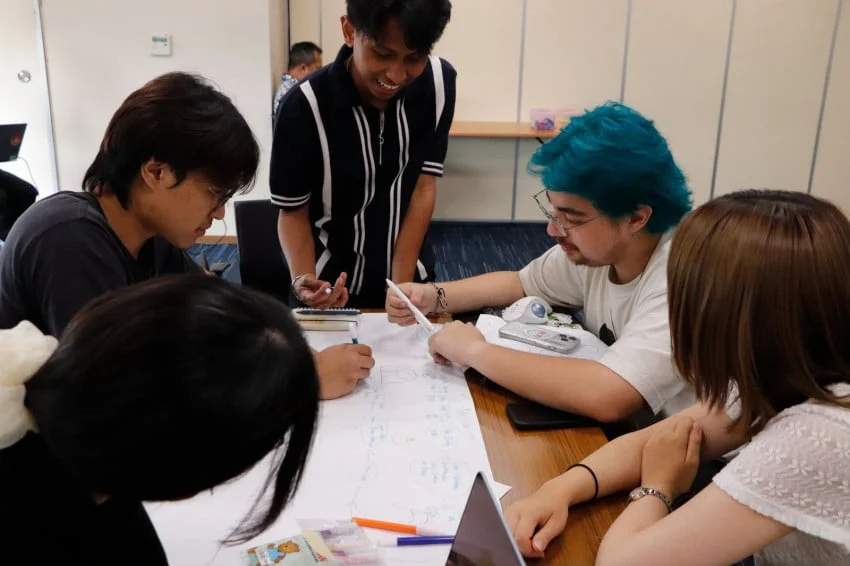
In a landmark collaborative effort aimed at addressing environmental sustainability through entrepreneurial innovation, a cohort of students from Indonesia and Japan has successfully developed groundbreaking circular economy solutions targeting waste management challenges in the Tanimbar Islands. The project, facilitated through the Building Entrepreneurial Mindset for Sustainable Technology and Society (BESTS) Program 2026, serves as a bridge between academic research and industrial application, focusing on transforming discarded fishing nets and low-value plastics into economically viable resources.
This initiative, a partnership between Sampoerna University and the Institute of Science Tokyo, underscores a growing trend in higher education where cross-border, interdisciplinary collaboration is prioritized to solve complex regional environmental issues. By integrating technical engineering with economic feasibility studies, these students are attempting to turn the tide on plastic pollution in one of Indonesia’s most ecologically sensitive maritime regions.
The Genesis of the BESTS Program 2026
The BESTS program was conceived as an intensive experiential learning platform designed to push students beyond traditional classroom boundaries. The curriculum focuses on "sustainable technology," requiring participants to identify real-world ecological pain points and design scalable, tech-driven solutions.
According to Farid Triawan, Dean of the Faculty of Engineering and Technology at Sampoerna University, the program’s primary objective is to cultivate an entrepreneurial mindset in engineering students. "BESTS provides a rare opportunity for students to step out of the classroom and witness firsthand how sustainability issues manifest in both community life and the industrial sector," Triawan stated. By involving international partners and industrial stakeholders like INPEX Masela Ltd, the program ensures that student projects are grounded in market reality rather than mere theoretical discourse.
Project One: Circular Economy for Fishing-Net Waste in Tanimbar
One of the most notable projects, titled "A Circular Economy Business for Fishing-Net Waste in Tanimbar," was spearheaded by a team consisting of Chintya Ramadhani, Keyzia Ariola Putri, Stivan Delon Sahertian, Tsukui Shun, and Mardo Malawau. The Tanimbar region, heavily reliant on the fishing industry, faces significant challenges regarding the disposal of "ghost nets"—discarded or lost fishing gear that continues to trap marine life and damage coral reefs.
The team’s research identified that current waste management systems in remote island regions are often insufficient, leading to the accumulation of non-biodegradable synthetic fibers. Their solution involves a closed-loop recycling process. By collecting discarded nets, the team proposes a mechanical recycling method that cleans, shreds, and processes the nylon or polypropylene fibers back into raw material pellets. These pellets can then be repurposed for the manufacturing of new, more durable fishing gear or other plastic-based industrial products.
This approach not only reduces the volume of marine debris but also lowers the production costs for local fishermen who currently struggle with the high price of imported equipment. The project team is currently conducting a feasibility study to determine the logistics of establishing a community-based collection center in Tanimbar, which could potentially create local employment opportunities.
Project Two: Eco-Fuel and the Pyrolysis Breakthrough
Simultaneously, a second team—comprising Harsen Ramadhan, Luthfi Ahmad, Nona Brillyanti, Koki Nakazaki, and Hiroki Nozaki—focused on the issue of non-recyclable plastic waste. Their project, "Eco-Fuel," addresses two major hurdles in Indonesia’s rural development: the high cost of fuel for agricultural machinery and the lack of an efficient waste management system for low-density plastics.
The team utilized a chemical recycling technique known as pyrolysis. In this process, waste plastic—specifically items that are usually rejected by standard recycling centers due to contamination or low quality—is heated in an oxygen-free environment to decompose into liquid fuel. The resulting synthetic oil can be refined into a fuel suitable for agricultural engines, such as tractors and water pumps.
By creating a localized "waste-to-energy" model, the team aims to provide a sustainable energy source for farmers while simultaneously providing an economic incentive for residents to collect and sort their plastic waste. If implemented at scale, this technology could mitigate the reliance on expensive fossil fuels in remote areas, effectively closing the loop on plastic pollution.
Contextualizing the Environmental Urgency
The urgency for such innovations is underscored by regional and national data. Indonesia remains one of the world’s largest contributors to ocean plastic, with studies from the National Research and Innovation Agency (BRIN) estimating that hundreds of thousands of tons of plastic enter the maritime environment annually.
In the Tanimbar Islands, the ecological stakes are particularly high. As part of the Maluku archipelago, the region is home to vast marine biodiversity. The introduction of synthetic materials into the marine ecosystem disrupts delicate habitats and threatens the long-term viability of local fisheries. Furthermore, the reliance on single-use plastics has grown rapidly in recent years, outpacing the development of municipal waste infrastructure.
The participation of INPEX Masela Ltd, a major player in the oil and gas sector with operations near the Tanimbar Islands, highlights the increasing interest of large-scale industry in supporting sustainable development. By mentoring students and providing technical guidance, the industry sector is signaling a pivot toward supporting "green" innovation as part of their corporate social responsibility and environmental, social, and governance (ESG) mandates.
Chronology of the 2026 BESTS Collaboration
The development of these projects followed a rigorous six-month timeline:
- Q1 2026: Problem Identification: Students from Sampoerna University and the Institute of Science Tokyo were paired into interdisciplinary teams. Initial research focused on site-specific challenges in the Maluku region.
- Q2 2026: Prototyping and Technical Mentorship: Teams engaged in lab work, utilizing the engineering facilities at both universities to test the mechanical properties of recycled fishing nets and the chemical efficiency of plastic pyrolysis.
- Q3 2026: Stakeholder Consultation: Students presented their preliminary findings to representatives from INPEX Masela Ltd, incorporating feedback regarding logistics, safety standards, and commercial viability.
- September 2026: Final Presentation and Implementation Roadmap: The culmination of the program resulted in the final prototypes presented this week, accompanied by business plans intended to attract potential investors or grant funding for pilot programs.
Analysis of Implications: A Model for Regional Sustainability
The success of the BESTS 2026 program suggests a replicable model for other academic institutions. By moving away from purely abstract research, the program bridges the "valley of death" that often exists between lab-scale innovation and commercial viability.
Implications for Policy:
The use of pyrolysis for fuel and the recycling of ghost nets aligns with the Indonesian government’s commitment to achieving a 70% reduction in marine plastic waste by 2025-2030. These student-led projects demonstrate that decentralized, community-level solutions can be as effective, if not more so, than centralized industrial projects in archipelagic regions where logistics costs are prohibitive.
Socio-Economic Impact:
The economic impact of these projects is twofold. First, they reduce the operating costs for local businesses—such as fishermen and farmers—who are currently burdened by the high price of imported goods. Second, they create a new value chain for waste. When waste is perceived as a "resource" rather than a "burden," community behavior regarding disposal changes. This shift is critical to the long-term success of circular economy models.
Technological Challenges:
Despite the promise of these projects, the teams acknowledge significant hurdles. For the Eco-Fuel project, the primary challenge remains the purification of the fuel to meet engine standards without damaging machinery. For the fishing net project, the sorting of different types of plastic polymers remains labor-intensive. These challenges, however, provide the basis for future research iterations.
Looking Ahead
As the BESTS 2026 program concludes, the focus shifts to implementation. The universities are exploring options to secure funding for small-scale "living labs" in Tanimbar. If these pilot programs prove successful, they could serve as a template for other regions in Indonesia grappling with similar waste management crises.
The partnership between Sampoerna University and the Institute of Science Tokyo stands as a testament to the power of international collaboration. By combining Japan’s advanced technological expertise with Indonesia’s deep understanding of local environmental challenges, the students involved in the BESTS program have provided a glimpse into a future where technology is not merely a tool for progress, but a vital instrument for preservation.
The developments in Tanimbar are more than just academic exercises; they represent a fundamental shift in how the next generation of engineers and entrepreneurs approaches the defining crisis of our time: the transition to a sustainable, circular economy. Whether these innovations will reach widespread adoption remains to be seen, but the groundwork laid by these students provides a robust framework for further development in the years to come.
