
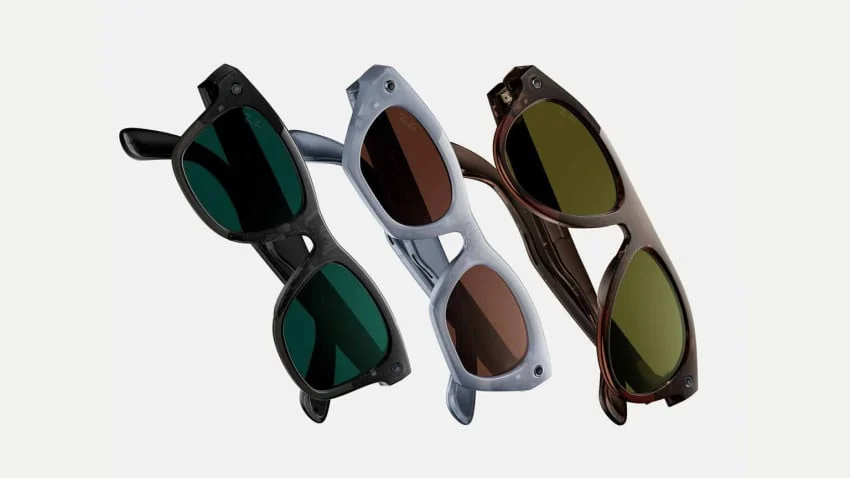
Meta, in collaboration with EssilorLuxottica, has officially unveiled the third generation of its Ray-Ban Meta smart glasses, marking a significant evolution in the intersection of wearable technology and high-fashion aesthetics. The launch event, held at the company’s Cupertino headquarters, served as a global stage for the debut of a highly anticipated special edition collection designed in partnership with Lisa, the global superstar and member of the K-pop sensation BLACKPINK. This launch represents a strategic shift for Meta as it seeks to normalize smart eyewear by blending advanced AI capabilities with iconic, customizable design language.
The Evolution of Smart Eyewear: From Concept to Consumer Staple
The journey of Meta’s foray into smart eyewear began in 2021 with the inaugural Ray-Ban Stories collection. While the first generation provided a foundational blueprint for integrating cameras and audio into a standard frame, the third generation—the Ray-Ban Meta Gen 3—represents a refinement of user experience, ergonomics, and hardware performance.
By the time Meta announced its partnership with the legendary eyewear manufacturer EssilorLuxottica, the objective was clear: to move away from the bulky, "gadget-first" aesthetic that plagued early iterations of smart glasses and toward a product that could be worn comfortably in any social or professional setting. The Gen 3 model is the culmination of this design philosophy, offering a chassis that is significantly more lightweight, refined, and versatile than its predecessors.
Lisa BLACKPINK and the Fashion-Tech Fusion
The most notable highlight of the launch was the introduction of the exclusive Ray-Ban Meta edition curated by Lisa. As a global icon with massive influence in both the fashion and music industries, Lisa’s involvement serves as a bridge between the niche world of tech enthusiasts and the broader mainstream market.
The collaboration involves not only branding but also specific aesthetic choices that reflect Lisa’s personal style. This is a deliberate move by Meta to position the glasses as a fashion accessory rather than a silicon-based peripheral. By leveraging the cultural capital of a figure like Lisa, Meta aims to overcome the "glasshole" stigma that once hindered the adoption of early face-worn cameras, transforming the device into a coveted lifestyle item.
Addressing the Privacy Landscape: The Ray-Ban Meta Audio
One of the most significant announcements during the event was the introduction of the Ray-Ban Meta Audio, a specialized variant that omits the integrated camera system entirely. This development is a direct response to the increasing regulatory scrutiny and consumer concerns regarding privacy and surveillance in public spaces.
The Audio-only model focuses on the core benefits of smart eyewear—high-fidelity open-ear audio, integrated microphones for voice commands, and seamless connectivity to digital assistants—without the potential for video recording. This "privacy-first" option is expected to appeal to a demographic that desires the convenience of hands-free audio and AI interaction while maintaining the assurance that they are not capturing or recording their surroundings.
Technical Specifications and Hardware Upgrades
Under the hood, the Gen 3 Ray-Ban Meta smart glasses feature several iterative but meaningful improvements over the previous generation. Meta has optimized the architecture to ensure that the device remains functional for longer periods while maintaining a low profile.
Imaging and Visual Capture
The device is equipped with an upgraded 12-megapixel ultra-wide-angle camera. This sensor is capable of capturing high-resolution photos and recording video at 3K resolution, a jump that ensures the content produced is suitable for high-definition mobile displays and social media platforms. The camera’s stabilization and low-light performance have also been refined, allowing for more fluid video capture during active use.
Audio and Communication
The acoustic system utilizes a custom-built array of six microphones. According to internal testing data provided by Meta, this configuration offers a 90 percent improvement in background noise reduction. This enhancement is crucial for the glasses’ primary use case: voice-activated AI interaction. Whether a user is in a crowded subway or a busy street, the microphones are designed to isolate the user’s voice from environmental noise, ensuring that commands are processed accurately by the integrated Meta AI.
Battery Life and Power Management
Battery efficiency has been a consistent point of critique for wearable tech. The Gen 3 model introduces power management software optimizations that extend the battery life to nine hours on a single charge, a 12.5 percent increase over the previous generation’s eight-hour capacity. The charging case remains a central component of the experience, providing additional charge cycles to ensure the glasses remain powered throughout a full day of travel or work.
Design Versatility: A Spectrum of Choice
Meta has significantly expanded its customization options, offering 27 distinct combinations of colors and lens types. The collection retains the timeless Wayfaring silhouette while introducing the Aviator and Zena styles. These additions allow for a broader range of face shapes and personal preferences, reinforcing the idea that the hardware is meant to be a permanent fixture in the user’s wardrobe rather than a temporary gadget.
The frames now feature adjustable temple tips, a small but significant change that improves long-term wearability and comfort for a diverse user base. Furthermore, the introduction of a programmable action button allows users to customize their interface, mapping specific functions—such as volume control, AI initiation, or media playback—to their preferred physical interaction.
Market Implications and Strategic Analysis
The release of the Gen 3 Ray-Ban Meta glasses is not merely a product launch; it is a strategic maneuver in the race toward spatial computing. While the industry remains divided on the viability of AR glasses as a smartphone replacement, Meta is betting on an incremental approach. By focusing on audio and high-quality capture, the company is conditioning consumers to interact with AI-driven hardware in their daily lives.
The Role of AI Integration
The success of this hardware relies heavily on the underlying AI software. As Meta continues to integrate its Llama language models into these devices, the glasses are shifting from "smart spectacles" to "wearable AI assistants." The ability to ask the glasses questions about one’s surroundings—such as identifying a landmark or translating a sign—is the true value proposition that sets this generation apart from its predecessors.
Competitive Positioning
In the current landscape, competitors such as Amazon (Echo Frames) and various AR-focused startups are also vying for dominance in the smart eyewear segment. However, the partnership between Meta and EssilorLuxottica remains the industry benchmark. By leveraging Ray-Ban’s established supply chain, manufacturing expertise, and retail distribution, Meta has effectively bypassed the production hurdles that often plague tech-first companies.
Official Stance and Future Outlook
In a statement during the launch, Meta representatives emphasized that the focus for this generation was "integration and invisibility." The company aims to make the technology so unobtrusive that the user forgets they are wearing a computer. This philosophy is reflected in the product’s name, marketing, and the collaboration with influencers who prioritize style.
The inclusion of an audio-only version is perhaps the most telling signal of Meta’s maturity as a hardware company. By acknowledging that privacy is not a monolithic concern and that different users have different thresholds for digital integration, Meta is positioning its product suite as a scalable platform.
As these glasses begin to reach consumers, the long-term impact will likely be measured by how seamlessly they integrate into daily routines. If the Gen 3 can successfully transition from a "novelty tech item" to an "everyday essential," it will pave the way for future generations of hardware that may eventually move toward true augmented reality overlays. For now, Meta is content with leading the market in the most important category: the balance between aesthetic appeal and functional utility.
With the retail rollout commencing immediately, the industry will be watching closely to see if the combination of high-fashion branding, such as the Lisa special edition, and technical reliability can drive the widespread adoption that the smart glasses category has been chasing for over a decade. The Gen 3 Ray-Ban Meta is, by all indications, the most refined attempt at this goal to date.
