
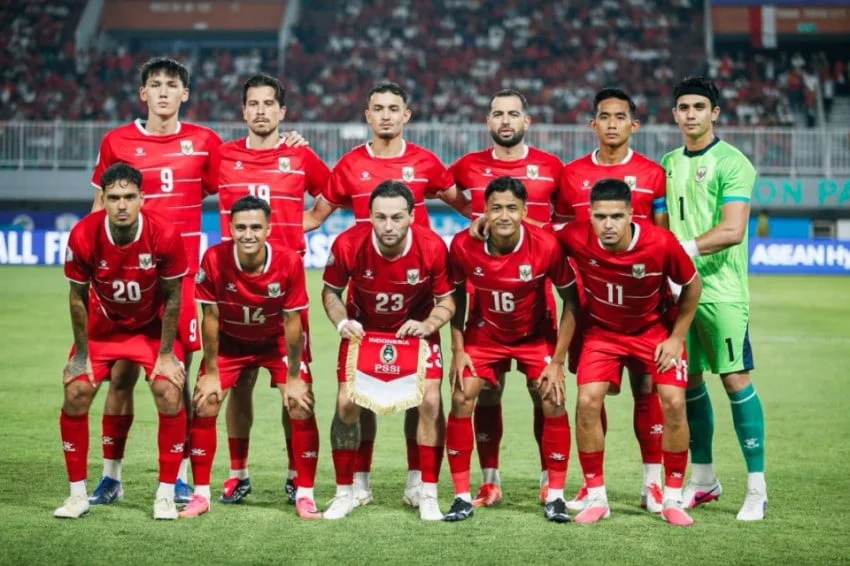
The Indonesian National Football Team has officially finalized its roster for the highly anticipated FIFA ASEAN Cup 2026. Under the strategic direction of head coach John Herdman, the Football Association of Indonesia (PSSI) announced the 23-man squad on Friday, September 18, 2026, via the official national team social media channels. The announcement, captioned with the rallying cry "Garuda Calling," marks the beginning of an intensive preparation period for a tournament that carries significant weight for the regional standing of Indonesian football. The inclusion of new talent, most notably the highly touted Luke Vickery, has signaled a shift in the tactical approach under Herdman’s tenure.
The Road to the 2026 ASEAN Cup
The FIFA ASEAN Cup 2026 represents a milestone in the regional football calendar. Hosted jointly by Indonesia, the tournament will utilize two major venues: the historic Gelora Bung Karno Stadium (SUGBK) in Jakarta and the Si Jalak Harupat Stadium in Bandung. Scheduled to run from September 25 to October 5, 2026, the tournament serves as both a showcase of regional talent and a crucial testing ground for teams looking to refine their squads ahead of future FIFA World Cup qualification cycles.
Indonesia’s campaign begins in Group A, where they are set to face stiff competition from regional rivals Singapore and Malaysia, as well as an improving Bangladesh side. The group stage fixtures are condensed, requiring optimal physical conditioning and squad rotation. Indonesia will open its campaign against Singapore on September 25, followed by the high-profile encounter against Malaysia on September 28, and concluding the group stage against Bangladesh on October 1.
Tactical Evolution Under John Herdman
The appointment of John Herdman as head coach was viewed as a transformative move by the PSSI leadership. Herdman, known for his analytical approach and focus on high-performance culture, has been tasked with bridging the gap between Indonesia’s regional dominance and its international aspirations. The selection of the 23-man squad reflects a blend of seasoned veterans and young prospects.
The inclusion of Luke Vickery is perhaps the most scrutinized element of the announcement. A versatile player capable of operating across the midfield and defensive flanks, Vickery’s integration into the national setup is expected to provide Herdman with the tactical flexibility required to navigate the different playing styles of Group A opponents. Analysts suggest that Vickery’s experience in international-standard conditioning environments will be pivotal in maintaining the high-intensity press that Herdman prefers.
The 23-Man Squad Composition
While the full list includes a mix of domestic league standouts and international diaspora players, the depth of the squad is designed to mitigate the risks of injury and fatigue during the tight tournament window. Herdman has prioritized players who demonstrate high tactical discipline and the ability to adapt to varying defensive structures.
- Goalkeepers: The selection in goal emphasizes both shot-stopping ability and ball-playing capacity, a prerequisite for modern tactical systems.
- Defenders: The backline features a combination of physical presence and technical proficiency, aimed at nullifying the counter-attacking threats posed by Malaysian and Singaporean wingers.
- Midfielders: This sector is the engine room of Herdman’s philosophy. The inclusion of playmakers capable of dictating tempo is essential for breaking down the defensive blocks often employed by opponents in the ASEAN region.
- Forwards: The striking department has been bolstered by players who excel in both aerial duels and link-up play, ensuring the team remains clinical in the final third.
Chronology of Preparation
The journey to this roster announcement began months prior, with scouting networks expanding across Europe and Asia to identify dual-eligible players who could bolster the national team’s depth. Since Herdman’s arrival, the team has undergone several mini-camps, focusing on psychological resilience and tactical synchronization.
- June 2026: Initial scouting reports finalized for the ASEAN Cup cycle.
- July 2026: Selection of the preliminary squad; internal testing of physical benchmarks.
- August 2026: Tactical workshops and simulation matches conducted in Jakarta.
- September 18, 2026: Official release of the final 23-man squad.
- September 25, 2026: Tournament commencement.
Official Responses and Stakeholder Sentiment
The PSSI has expressed confidence in the current squad, emphasizing that the selection process was data-driven. "Our primary objective is to maintain a balance between competitive urgency and the long-term development of the squad," stated a PSSI spokesperson following the announcement. "Coach Herdman has evaluated every candidate based on their performance in recent club matches and their fit within our specific match-day protocols."
Supporters have reacted with a mix of optimism and critical analysis. The presence of Luke Vickery has sparked significant online debate regarding the national team’s commitment to integrating diaspora talent. However, the general consensus among local pundits is that the inclusion of such players is necessary to raise the overall technical floor of the team as they compete for higher honors on the international stage.
Broader Impact and Implications
The 2026 FIFA ASEAN Cup is not merely a regional trophy contest; it is a barometer for the health of the Indonesian football ecosystem. Success in this tournament would translate to increased momentum for domestic leagues and potentially higher viewership figures, which in turn drive commercial investment.
From a technical perspective, the tournament acts as a stress test for the national team’s defensive structure. Historically, Indonesian sides have struggled with defensive transitions against quick, counter-attacking teams. Herdman’s emphasis on tactical organization is a direct response to these recurring issues. If the squad can maintain a clean sheet in their opening fixture against Singapore, it would provide the necessary psychological boost to carry them through the group stage and into the knockout rounds.
Strategic Analysis: Facing Group A Rivals
The group stage draw presents a complex set of challenges. Singapore, often known for a pragmatic and compact defensive approach, will likely look to frustrate Indonesia in the opener. The match against Malaysia is traditionally the most emotionally charged, requiring the coaching staff to manage the players’ temperament effectively. Finally, Bangladesh, while statistically the underdog, has shown significant improvement in recent years, making them a potential "banana skin" fixture that requires absolute focus.
The venue advantage cannot be understated. Playing at the Gelora Bung Karno Stadium provides a significant home-field advantage, with the passionate support of the local fans often serving as the "twelfth man." However, the pressure of playing at home can also be a double-edged sword, and Herdman’s emphasis on psychological conditioning will be tested in the high-pressure environment of the Jakarta heat.
Conclusion and Outlook
As the kickoff date approaches, the focus for the 23 selected players will shift to final team-building exercises and tactical rehearsals. The inclusion of Luke Vickery and other new faces signifies a proactive approach to the evolving landscape of regional football. By combining traditional domestic talent with international tactical standards, Indonesia aims to establish itself as a dominant force in the ASEAN region.
The coming weeks will reveal whether the strategic adjustments implemented by John Herdman will yield the desired results on the pitch. With the full support of the PSSI and the intense expectation of the Indonesian public, the national team stands at a threshold. The FIFA ASEAN Cup 2026 will ultimately serve as the definitive assessment of the team’s current trajectory and their readiness to compete at higher, more demanding levels of global football. For now, the roster is set, the strategy is defined, and the nation waits to see how the Garuda will perform when the first whistle blows on September 25.
