
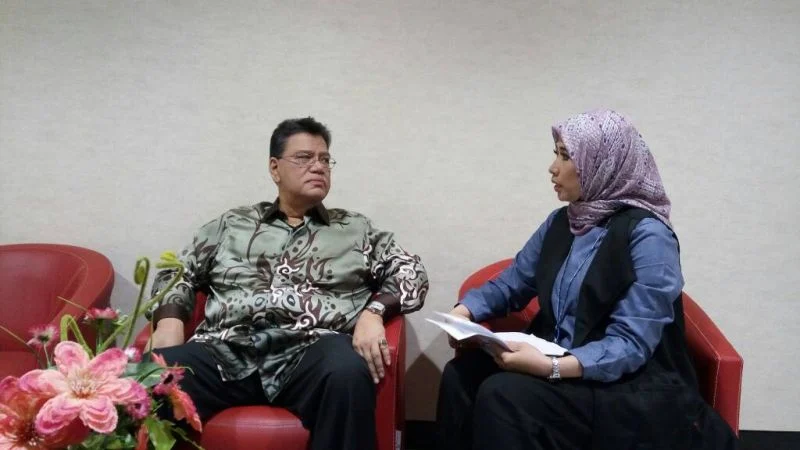
The trajectory of Dato’ Seri Zahrain Mohamed Hashim stands as a compelling testament to the intersection of corporate leadership, public administration, and international diplomacy in modern Southeast Asia. Born into a prominent landscape and academically trained in the rigorous analytical frameworks of mathematics at British institutions, Zahrain carved a unique path that transitioned from managing vital maritime trade routes to navigating volatile domestic political corridors and, ultimately, serving as a key diplomatic envoy. Spanning more than three decades of public and private engagement, his career reflects the broader evolution of Malaysia’s economic development, political realignments, and bilateral foreign relations, particularly with neighboring Indonesia.
Early Life, Academic Foundation, and Entry into Maritime Management
Dato’ Seri Zahrain Mohamed Hashim’s formative years were characterized by a strong emphasis on analytical precision. Pursuing his higher education in the United Kingdom, he earned undergraduate and postgraduate degrees in mathematics. This quantitative grounding would later heavily influence his strategic approach to logistics, corporate governance, and fiscal administration. Despite his profound academic immersion in abstract sciences, Zahrain’s career aspirations drew him toward the tangible, fast-paced world of commerce and national infrastructure.
His professional journey commenced in earnest in 1993 when he assumed the role of head of the Penang Port Commission. At a time when Malaysia was aggressively positioning itself as a central hub for international trade and manufacturing within the Association of Southeast Asian Nations (ASEAN), the modernization and efficient operation of the country’s maritime gateways were paramount. Penang Port, historically significant and strategically positioned along the Malacca Strait, required visionary leadership to handle increasing cargo volumes and streamline bureaucratic bottlenecks.
Zahrain’s appointment placed a father of four at the helm of complex commercial negotiations and operational logistics. Rather than relying solely on administrative oversight, he implemented systematic, data-driven management techniques derived from his mathematical background. This approach quickly yielded tangible results, transforming regional perceptions of state-managed port infrastructure.
Corporate Ascendancy and the Transformation of Penang Port
Building upon his early successes at the port commission, Zahrain’s administrative acumen was formally recognized with his appointment as the Executive Director of Penang Port Sdn Bhd, a tenure that would span seven formative years. During this period, the port experienced unprecedented operational growth. Under his stewardship, Penang Port expanded its capacity, upgraded its container handling facilities, and successfully negotiated the opening of numerous new international shipping lanes connecting northern Malaysia to global markets.
His success was not merely confined to throughput metrics; it extended to fostering strategic partnerships between the public and private sectors. Recognized as an industry authority on port management, Zahrain’s expertise transcended national borders. He became a sought-after speaker at international maritime seminars, where he lectured on best practices in port optimization, supply chain resilience, and infrastructural financing.
His industry leadership was further solidified through active membership in the International Cargo Handling Coordination Association (ICHCA). Recognizing the fragmented nature of port operators across Malaysia, Zahrain played a pivotal role in the conceptualization and establishment of the Federation of Malaysian Port Operating Companies (FMPOC). Elected as the organization’s inaugural president, he utilized the platform to bridge the gap between commercial operators and federal regulatory bodies. This institutional bridge-building proved instrumental in harmonizing national maritime policies, reducing regulatory friction, and accelerating Malaysia’s integration into global supply chains. Reflecting on this foundational decade during a special dialogue at the Okezone media offices in Jakarta on June 7, 2017, Zahrain remarked that his initial trajectory was firmly anchored in expanding family business interests and steering the maritime economy of Penang, viewing those ten years as a core developmental epoch of his professional life.
The Shift from Commerce to Public Service and Political Mobilization
Despite achieving remarkable success in the corporate sphere, accumulating wealth and corporate prestige did not fulfill Zahrain’s long-term aspirations. Driven by an underlying commitment to public service and national development, he redirected his professional energies toward the sociopolitical arena.
The transition from the boardroom to the political stage in Malaysia is often fraught with complex factional dynamics, yet Zahrain’s administrative reputation provided him with a solid platform. He initially aligned himself with the United Malay National Organization (UMNO), the dominant party within the ruling Barisan Nasional coalition. Demonstrating the same organizational skill that characterized his tenure at Penang Port, he secured election as the Head of the Tanjong UMNO Division.
However, the Malaysian political landscape in the early 2000s was undergoing profound structural shifts, driven by demands for institutional reform, transparency, and anti-corruption measures. Aligning his political philosophy with these burgeoning reformist currents, Zahrain made a decisive break from UMNO in 2004. He joined the Parti Keadilan Rakyat (PKR), a core component of the nascent opposition movement led by figures advocating for a multi-ethnic, reform-oriented agenda.
This political realignment placed him at the forefront of the opposition’s push in Penang, a state that would later become a crucial opposition stronghold. His ability to synthesize complex economic realities with populist political rhetoric made him a formidable campaigner, bridging the gap between urban mercantile communities and grassroots political activists.
Diplomatic Engagement and Strengthening Bilateral Ties
Zahrain’s transition from domestic opposition politics to international diplomacy marked another critical chapter in his public life. Leveraging his vast network, administrative background, and deep understanding of regional economics, he was subsequently appointed to diplomatic service, representing Malaysia abroad.
Diplomatic assignments in Southeast Asia require a delicate balance of economic pragmatism and cultural sensitivity. For Malaysia, maintaining robust, cordial relations with Indonesia—its largest maritime neighbor and a vital cultural and economic partner—is a perennial foreign policy priority. Zahrain’s diplomatic tenure was characterized by a concerted effort to deepen bilateral cooperation, enhance trade relations, and resolve historical sensitivities through quiet, effective statecraft.
In various public addresses and diplomatic forums, Zahrain consistently emphasized that Indonesia and Malaysia must transcend superficial geopolitical rivalries to become steadfast allies. He frequently noted that the shared cultural heritage, linguistic proximity, and intertwined economic destinies of the two nations necessitate a proactive approach to conflict resolution and cooperative development. Analysts observing his diplomatic style noted that his corporate background imbued him with a pragmatic approach to negotiations, prioritizing mutual economic gains and infrastructural connectivity over rigid diplomatic posturing.
Broader Implications and Analytical Legacy
The life and career of Dato’ Seri Zahrain Mohamed Hashim offer valuable insights into the broader patterns of leadership in contemporary Southeast Asia. His transition from mathematics to maritime logistics, and subsequently from corporate executive to political reformer and diplomat, illustrates the fluid boundaries between statecraft and commerce in developing economies.
From an economic perspective, his decade-long modernization of Penang Port laid critical logistical foundations that supported Malaysia’s export-driven industrialization phase in the 1990s and 2000s. The institutional frameworks he helped establish through the Federation of Malaysian Port Operating Companies continue to influence how national infrastructure is managed in coordination with federal oversight.
Politically, his journey mirrors the broader tectonic shifts within Malaysian society, where technocrats and business leaders increasingly stepped into the political arena to challenge entrenched systems, ultimately contributing to the democratization and pluralization of the nation’s political landscape. His capacity to navigate both the corridors of corporate power and the volatile waters of opposition politics highlights the versatility required of modern Malaysian leaders.
Ultimately, as a grandfather, experienced businessman, former politician, and diplomat, Zahrain’s legacy is defined by a consistent adherence to institutional capacity-building. Whether orchestrating the flow of maritime cargo through the Straits of Malacca, rallying political constituents in Penang, or negotiating bilateral frameworks in Jakarta, his career underscores the enduring importance of strategic vision, quantitative precision, and a genuine commitment to public service in shaping the modern Malaysian state.
