
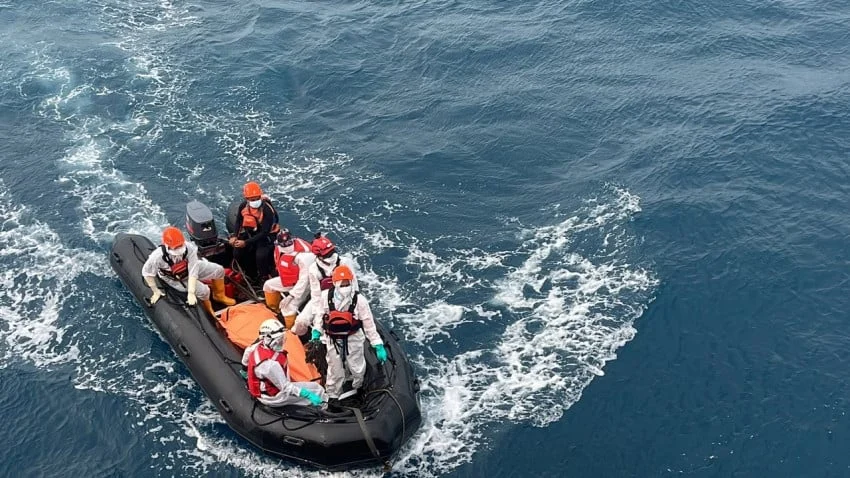
JAKARTA — The Joint Search and Rescue (SAR) team has significantly intensified its ongoing operations to locate and evacuate victims of the Kapal Virgo Transport 8, which suffered a catastrophic maritime accident in the Java Sea. As of Friday, September 25, 2026, rescue efforts have entered a critical phase, focusing heavily on expanding the search radius, deploying specialized diving units, and coordinating a multi-agency aerial and maritime evacuation network. The disaster has drawn national attention, prompting rigorous responses from government bodies, emergency responders, and legal advocates as the search for dozens of still-missing passengers continues unabated.
According to official updates provided by the Head of the National Search and Rescue Agency (Basarnas), Marshal Madya TNI M. Syafii, the scale of the maritime disaster is vast. Out of the 243 individuals officially recorded on the vessel’s manifest, the Joint SAR team has successfully accounted for 160 victims as of 12:00 Central Indonesia Time (Wita). Within this grim tally, 108 individuals have been found alive, while 52 victims tragically lost their lives. Meanwhile, rescue personnel and maritime authorities are racing against time and adverse weather conditions to locate the remaining 83 individuals who are still listed as missing.
Background Context of the Maritime Incident
The sinking or distress event involving the Kapal Virgo Transport 8 has underscored ongoing concerns regarding maritime safety in Indonesian waters, particularly along major inter-island shipping routes in the Java Sea. The Java Sea, known for its busy commercial traffic, unpredictable weather patterns, and varying sea states, has historically presented significant navigation challenges for both cargo and passenger vessels.
Maritime safety analysts note that incidents of this magnitude prompt renewed scrutiny into vessel maintenance, compliance with safety regulations, maximum load capacities, and the availability of life-saving equipment on board commercial transports. The Virgo Transport 8 tragedy has instantly transformed into one of the most severe maritime emergencies of recent years, mirroring past historical precedents where inter-agency coordination became the linchpin of large-scale rescue operations. The involvement of multiple branches of the Indonesian military, police, and specialized civilian rescue units highlights the complexity and sheer geographic spread of the search area, which encompasses both open-water marine zones and remote coastal estuaries.
Chronology of the Search and Rescue Operations
The execution of the SAR operation has been characterized by meticulous planning, phased deployments, and cross-sectoral coordination. In the immediate aftermath of the distress signal from the Kapal Virgo Transport 8, Basarnas mobilized assets from nearby naval bases and regional posts. As days progressed, the operation transitioned from a primary surface sweep to a comprehensive multi-tiered strategy involving underwater dives, shoreline patrols, and aerial surveillance.
On Friday, September 25, 2026, the operation achieved critical milestones. The Joint Diving Team from Basarnas successfully executed complex underwater extraction maneuvers, managing to evacuate five victims from the submerged or drifting wreckage area. These individuals were immediately transferred to command vessels, specifically KN SAR Kamajaya and KRI Gusti Ngurah Rai, which are serving as floating command and stabilization centers in the Java Sea.
To expedite medical triage and advanced care, authorities integrated air assets into the evacuation chain. The retrieved victims were airlifted via helicopter HR-3601 directly to the Syamsudin Noor Air Base, where ground medical teams stood by to triage and transport survivors and casualties to regional medical facilities.
Expanding Search Sectors: Coastal and Estuary Discoveries
While open-sea operations remain the primary focus, the shifting ocean currents and prevailing winds have carried victims and debris toward coastal areas, necessitating a widening of the operational grid. In tandem with the offshore dives, land and coastal patrols reported significant findings in remote regional sectors.
The Joint SAR Team discovered three additional victims in the vicinity of the Cabang River, located near the PT Kumai Sentosa plantation area in Sukamara Regency. Furthermore, two more victims were located along the shoreline of Sandurian in Seruyan Regency. The geographical dispersion of these findings illustrates the dynamic drift patterns characteristic of the Java Sea during this seasonal transition.
Local authorities coordinated rapid transport for these victims. Those recovered from the Sukamara and Seruyan coastlines were initially routed to the Sukamara Regional General Hospital (RSUD Sukamara) for preliminary forensic identification and emergency handling. Plans were subsequently put in place to transfer the remains to RS Bhayangkara in Banjarmasin, South Kalimantan, for comprehensive disaster victim identification (DVI) processes, autopsies, and eventual handover to grieving families.
Official Responses and Inter-Agency Synergy
The rescue operation’s success—and the mitigation of further loss of life—relies heavily on seamless synergy among various state institutions. Basarnas, operating under the direct leadership of Marshal Madya TNI M. Syafii, has synchronized efforts with the Indonesian Navy (TNI AL), the Indonesian National Police (Polri), the Ministry of Transportation, local regional disaster management agencies (BPBD), and volunteers.
Logistical mobilization has been extensive. Naval vessels such as KRI Gusti Ngurah Rai provide heavy support, offering advanced radar, medical bays, and communication relay stations. Meanwhile, specialized units like the Basarnas underwater diving squad continue to face zero-visibility conditions, strong undercurrents, and structural hazards while probing the vessel’s remains.
Government officials have emphasized transparency in daily briefings, providing verified updates to families gathered at crisis centers. Psychological support teams have also been deployed to assist traumatized survivors and the families of victims awaiting news at evacuation posts in Banjarmasin, Sukamara, and other designated coordination hubs.
Legal Implications and Rights of Passengers
Beyond the immediate humanitarian imperative of search and rescue, the disaster has opened a critical legal front. Legal experts and consumer protection advocates have pointed out that passengers and the families of victims aboard the Kapal Virgo Transport 8 possess clear legal rights to pursue accountability and compensation.
Under Indonesian maritime law and consumer protection statutes, commercial transport operators bear strict liability for the safety and security of their passengers. Questions surrounding adherence to manifest regulations, weather clearance protocols, and the provision of adequate safety gear are expected to form the basis of thorough investigations by the National Transportation Safety Committee (KNKT) and law enforcement agencies. Legal counsel specializing in maritime torts have noted that survivors and heirs are legally entitled to file civil lawsuits against negligent parties, should investigations reveal systemic failures, operational negligence, or overloading.
Broader Economic and Safety Implications for National Maritime Transport
The tragedy of the Kapal Virgo Transport 8 carries profound implications for Indonesia’s archipelagic transportation network. As a nation heavily reliant on sea lanes for commerce and passenger mobility, systemic safety lapses undermine public confidence and disrupt regional supply chains.
Economically, the incident is expected to trigger stricter regulatory enforcement across major commercial ports. The Ministry of Transportation is anticipated to review current dispatch protocols, tighten weather advisory mandates for vessel departures, and increase random safety audits on passenger and cargo liners operating in high-risk zones like the Java Sea.
Furthermore, the disaster highlights the ongoing need for technological upgrades in national search and rescue infrastructure. The efficiency demonstrated by the integration of aerial assets like the HR-3601 helicopter and maritime command vessels like KN SAR Kamajaya illustrates the critical importance of sustained state investment in rapid-response capabilities.
Conclusion and Outlook for Ongoing Operations
As the sun sets on Friday, September 25, 2026, the Joint SAR operations in the Java Sea show no signs of slowing down. With 83 individuals still unaccounted for, rescue teams remain steadfast in their mission. The combined efforts of surface vessels, diving teams, aerial units, and land-based patrols embody a relentless commitment to bringing closure to the families affected by the Kapal Virgo Transport 8 disaster.
Authorities have urged the public and media to rely on official channels for updates as the investigation and search operations continue to unfold in the coming days. The focus remains steadfastly fixed on the dual imperatives of locating the remaining missing persons and ensuring that the lessons learned from this tragedy translate into enduring improvements in Indonesian maritime safety standards.
