
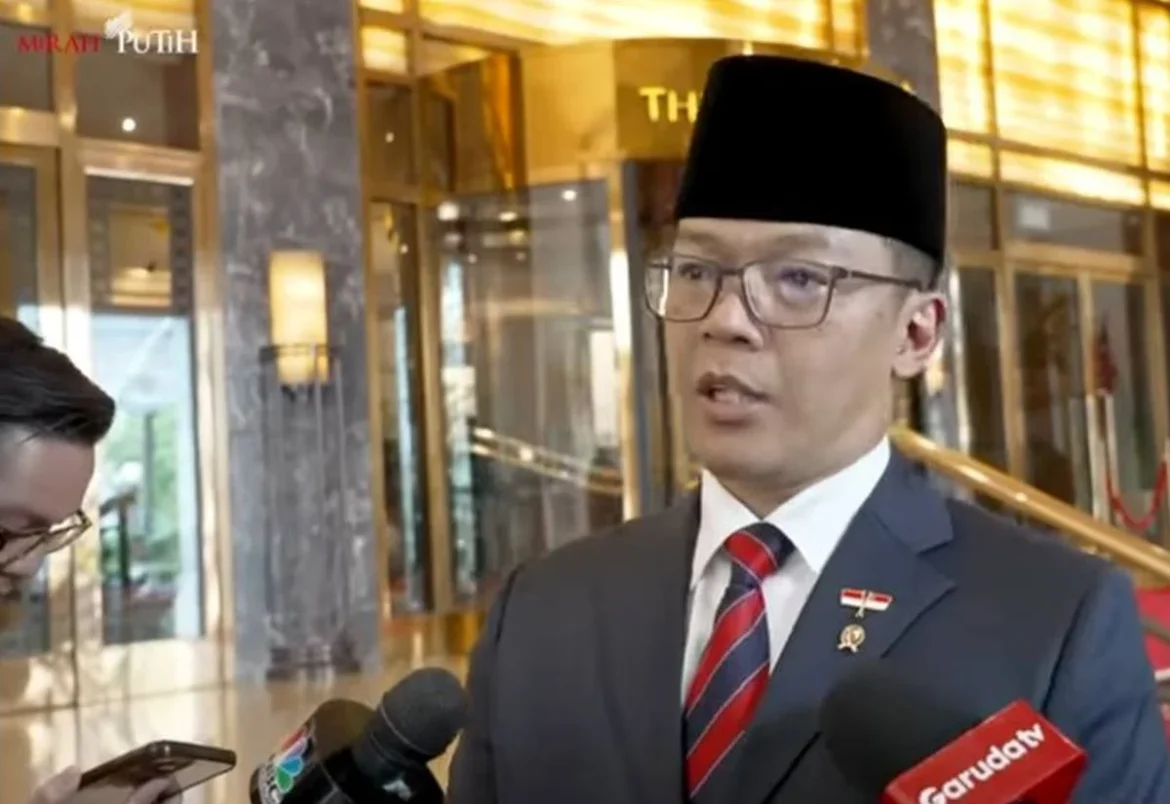
The arrival of Indonesian Minister of Foreign Affairs Sugiono in New York marks a pivotal moment for Indonesian diplomacy as he leads the national delegation to the 81st Session of the United Nations General Assembly (UNGA). Touching down in the United States on Monday, September 21, 2026, Minister Sugiono’s presence at the High-Level Week underscores Indonesia’s proactive stance in navigating the increasingly complex architecture of global governance. As the world faces a confluence of geopolitical instability, economic volatility, and the existential threat of climate change, the Indonesian delegation is poised to advocate for a reinvigorated multilateralism that prioritizes the interests of the Global South and the preservation of international law.
The Significance of the 81st UNGA High-Level Week
The High-Level Week of the UNGA represents the premier annual gathering of world leaders, diplomats, and civil society representatives. For the 81st session, the agenda is dominated by the urgent need to address the erosion of international norms. Since its inception in 1945, the UNGA has served as the primary deliberative, policymaking, and representative organ of the United Nations. In 2026, the stakes are arguably higher than at any point in the last decade.
Minister Sugiono’s participation is not merely ceremonial; it is a strategic engagement aimed at cementing Indonesia’s role as a "bridge-builder" in international relations. Throughout the week, the Minister is scheduled to participate in a series of high-level plenary sessions and ministerial-level discussions. Key topics of focus include the ongoing humanitarian crisis in Gaza and the broader Middle East, the reform of global financial institutions, the acceleration of the Sustainable Development Goals (SDGs), and the implementation of the Paris Agreement to combat climate change.
Strategic Objectives and Bilateral Engagements
Beyond the formal proceedings of the UNGA, the delegation’s itinerary is densely packed with bilateral meetings. These sessions serve as the bedrock of Indonesia’s foreign policy, allowing the Minister to address specific regional concerns while strengthening ties with traditional and emerging partners.
Observers of Indonesian diplomacy note that these bilateral meetings are essential for navigating the current climate of "great power competition." By maintaining an independent and active foreign policy—a principle enshrined in Indonesia’s constitution—Minister Sugiono is expected to emphasize that Indonesia remains committed to constructive cooperation with all major stakeholders, including the United States, China, and the European Union, provided that such cooperation respects sovereignty and promotes regional stability.
Among the priority issues for these bilateral talks are the enhancement of trade agreements, the promotion of digital economic cooperation, and the collaborative management of transnational challenges such as maritime security and cyber threats.
Launching the Bid for the UN Security Council
A cornerstone of Indonesia’s mission at the 81st UNGA is the official launch of its campaign for a non-permanent seat on the United Nations Security Council (UNSC) for the 2029–2030 term. This ambition was first signaled by Minister Sugiono during his annual press statement in January 2026, where he outlined the vision for Indonesia to contribute more robustly to international peace and security.
The UNSC, tasked with maintaining global peace, is currently grappling with gridlock due to diverging interests among its permanent members. Indonesia’s candidacy is framed around the concept of "Inclusive Security." By leveraging its historical experience as a successful democracy and its role as a leader in ASEAN, Indonesia argues that it is uniquely positioned to mediate between conflicting parties.
Data on Indonesia’s previous tenures on the Council—most recently in 2019–2020—demonstrates a consistent track record of promoting peacekeeping missions and advocating for the protection of civilians in conflict zones. By seeking a seat for 2029–2030, Indonesia aims to lead efforts in modernizing the Security Council’s working methods, making them more transparent and responsive to the needs of member states that are currently underrepresented in the decision-making process.
National Statement and Global Positioning
The climax of the delegation’s trip will occur on the evening of Saturday, September 26, 2026, when Minister Sugiono delivers the National Statement during the General Debate. This speech is a critical diplomatic instrument, serving as a formal declaration of Indonesia’s official position on the most pressing issues of the year.
The speech is expected to reiterate Indonesia’s steadfast support for the Palestinian people, a position that remains central to the country’s foreign policy identity. Furthermore, the statement will likely touch upon the need for a more equitable global economic order. With inflation and debt sustainability affecting many developing nations, Indonesia—as a prominent member of the G20—is expected to push for a global financial architecture that offers more favorable lending terms and supports sustainable infrastructure development in the Global South.
Historical Context and Diplomatic Continuity
Indonesia’s commitment to the UN is rooted in its historical identity as a nation born from the struggle against colonialism. Since joining the United Nations on September 28, 1950, Indonesia has been a vocal proponent of the principles of the UN Charter.
In the current decade, the geopolitical landscape has shifted significantly. The rise of multi-polarity and the resurgence of protectionism have tested the effectiveness of international organizations. Indonesia’s role has evolved from that of an emerging player to a significant regional power that anchors the stability of Southeast Asia. Analysts suggest that the 81st UNGA session represents a test of whether the global community can move past rhetoric to achieve tangible reforms in the UN’s structure, particularly regarding the veto power of permanent members and the representation of the African and Asian continents.
Implications for Global Stability
The participation of Minister Sugiono at this year’s UNGA has several implications for the international community. Firstly, it reaffirms Indonesia’s status as a key interlocutor in global affairs. Secondly, it serves as a litmus test for the country’s ability to mobilize international support for its UNSC bid.
Fact-based analysis suggests that if Indonesia successfully secures the 2029–2030 seat, it will provide the country with a platform to influence the development of international norms related to cybersecurity, climate resilience, and humanitarian intervention. However, the path to the seat requires extensive diplomatic legwork, much of which begins this week in New York. The success of this endeavor will depend on Indonesia’s ability to articulate a clear value proposition to the UN’s 193 member states.
Conclusion: A Commitment to Multilateralism
As the week progresses, the international community will look to the contributions of leaders like Minister Sugiono to break the current cycle of diplomatic impasse. Indonesia’s approach—characterized by a preference for dialogue, consensus-building, and a commitment to international law—offers a blueprint for how middle powers can exert influence in a fragmented world.
The 81st UNGA is more than just a meeting of leaders; it is a critical juncture for the survival of the multilateral system. By leading the Indonesian delegation with a focus on peace, development, and inclusivity, Minister Sugiono is signaling that Indonesia is prepared to shoulder its share of the burden in safeguarding the global order for the next generation. As the General Assembly debates the trajectory of the coming years, the presence and advocacy of the Indonesian delegation will be a vital component in shaping the consensus required to address the existential challenges of the 21st century.
Through its active participation and its clear-eyed ambition to serve on the Security Council, Indonesia is not merely attending the UNGA; it is actively shaping the agenda for a more stable and prosperous global future. Whether in the halls of the United Nations headquarters or through the quiet, intense negotiations of bilateral sessions, the work conducted by Minister Sugiono this week will resonate well beyond the borders of New York, influencing the direction of international relations for years to come.
