
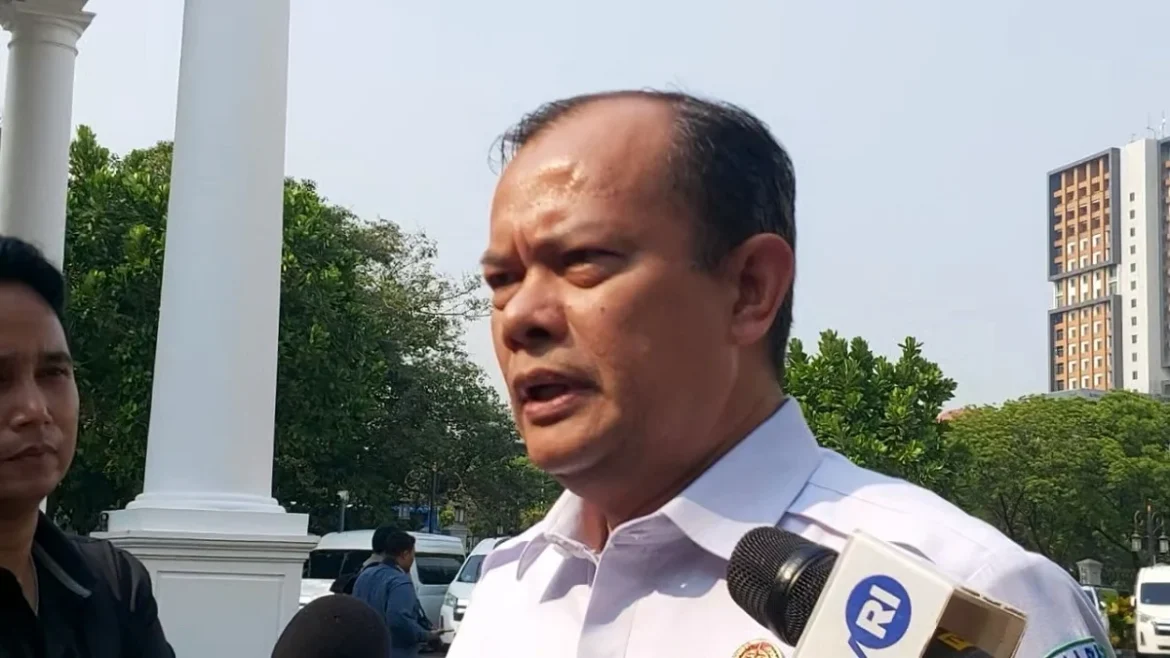
The Indonesian government, under the leadership of President Prabowo Subianto, has unveiled a strategic shift in its approach to tackling the perennial crisis of forest and land fires (karhutla). Following a high-level limited meeting at the Presidential Palace in Jakarta on Thursday, September 24, 2026, the Head of the Meteorology, Climatology, and Geophysics Agency (BMKG), Teuku Faisal Fathani, outlined a multifaceted strategy focusing on localized, subterranean intervention, particularly within the country’s extensive peatland ecosystems. This new directive marks a departure from traditional aerial-heavy firefighting methods, pivoting toward granular, community-driven, and technologically assisted ground operations.
The Strategy: Subterranean Firefighting and Shallow Drilling
The core of the new policy, as explained by Faisal Fathani, involves the implementation of shallow drilling techniques. Unlike conventional methods that rely heavily on water bombing—which often fails to penetrate the dense, multi-layered fuel beds of peatlands—the shallow drilling method targets the heat source from within the ground.
Peatland fires are notoriously difficult to extinguish because they burn beneath the surface, smoldering in layers of organic matter that can remain ignited for weeks or even months. By drilling shallow wells directly into the affected areas, fire crews can install portable high-pressure pumps. These systems are capable of drawing water from the water table or nearby sources to saturate the burning peat from the inside out, covering a radius of approximately 200 meters from each drilling point.
"Our current focus is to bolster the capacity of the Ground Task Force (Satgas Darat)," Faisal stated. "The shallow drilling method is a precise tactical response. By utilizing portable pumps, we can create a localized cooling zone that effectively chokes the fire at its source, preventing the subterranean spread that usually leads to larger, uncontrolled conflagrations."
Chronology of the 2026 Fire Season
The meeting at the Presidential Palace serves as a critical juncture in the 2026 fire season. Throughout the months of July and August 2026, satellite monitoring from the BMKG and the Ministry of Environment and Forestry (KLHK) recorded a gradual increase in "hotspots" across Kalimantan and Sumatra. The El Niño-related weather patterns experienced earlier in the year created a "curing" effect on the vegetation, leaving the forest floor highly susceptible to ignition.
By early September 2026, the accumulation of smoke haze had begun to impact air quality in parts of Riau and Central Kalimantan. This prompted the government to transition from a monitoring phase to an active mitigation phase. The directive issued by President Prabowo on September 24 signals a centralized effort to harmonize the actions of local authorities, the military, and community groups, ensuring that the response is standardized across high-risk provinces.
The Role of Community-Based Prevention: Masyarakat Peduli Api (MPA)
A significant pillar of the government’s updated strategy is the institutionalization of the Masyarakat Peduli Api (MPA), or Fire-Care Communities. BMKG’s analysis indicates that most fires in the Indonesian archipelago are human-induced, often linked to land clearing practices. By empowering village-level units to act as first responders, the government aims to reduce response times to near zero.
"We are leveraging the strength of our rural populations," Faisal noted. "The MPA units are not just auxiliary observers; they are trained personnel equipped with the knowledge to detect early signs of smoke and initiate suppression before a small flame becomes a landscape-scale emergency."

This decentralization of firefighting is intended to foster a sense of local ownership over the forest landscape. In addition to suppression, these groups are tasked with monitoring soil moisture levels and reporting deviations that could indicate an increased risk of fire.
Ecosystem Management: The Importance of Peatland Hydration
Beyond tactical suppression, the BMKG and scientific advisors are emphasizing the importance of long-term landscape management. Peatlands, which act as massive carbon sinks, become highly combustible when drained or exposed to direct sunlight.
Faisal highlighted that the primary driver of rapid fire spread in peat areas is the removal of the canopy layer, which leads to soil desiccation. "The surface of the peat must be protected with consistent vegetation cover," he explained. "When the peat is left exposed, the rate of evaporation increases exponentially, turning the soil into a dry, combustible sponge. Our strategy involves strict land-use policies that prevent the removal of ground cover in sensitive areas, thereby maintaining the soil’s natural moisture content."
Fact-Based Analysis: Implications for Indonesia
The shift toward ground-level suppression and community engagement carries significant implications for Indonesia’s environmental and economic stability.
- Environmental Impact: By keeping moisture trapped in the peat, the government is not only preventing fires but also mitigating carbon emissions. Peat fires are among the most carbon-intensive events globally; curbing them is central to Indonesia’s commitments under the Paris Agreement.
- Economic Implications: The recurring haze caused by karhutla has historically disrupted trade, aviation, and public health. A more efficient suppression system could save the national economy billions of rupiah in healthcare costs and productivity losses caused by air pollution-related illnesses.
- Technological Synergy: The integration of BMKG’s meteorological data with localized drilling techniques represents a more sophisticated, data-driven approach to disaster management. By identifying "high-risk" moisture zones via satellite and deploying drilling teams to those specific coordinates, the government is moving toward a preemptive rather than a reactive stance.
Challenges and Future Outlook
Despite the promise of the new strategy, experts acknowledge that the scale of the challenge remains immense. The geography of Kalimantan and Sumatra presents logistical hurdles; many high-risk areas are remote and difficult to access with heavy equipment. Furthermore, the reliance on portable pumps requires a consistent supply chain of fuel and maintenance for the equipment in rugged, swampy terrain.
Furthermore, the success of the MPA depends heavily on consistent funding and training. As the 2026 dry season enters its peak, the coming weeks will serve as a litmus test for the effectiveness of these newly proposed methods.
Supporting Data and Environmental Context
According to data released by the BMKG in September 2026, the drought index in the peatland areas of Central Kalimantan has reached "Alert" status. The lack of significant rainfall over the last 30 days has dropped the water table by nearly 40 centimeters in some sectors, creating prime conditions for subsurface fires.
Historical data from the previous decade suggests that the intensity of fire seasons in Indonesia is increasingly tied to the interplay between human land-use changes and shifting climatic patterns. While the government’s new policy addresses the "how" of fire suppression, the "why"—preventing the initial ignition through education and strict enforcement of the "no-burn" policy—remains an equally vital component of the state’s strategy.
Conclusion
The directives issued by the BMKG and endorsed by the Presidential Palace represent a holistic evolution in Indonesian fire management. By combining high-tech subterranean suppression with the mobilization of village-level fire-care groups and a focus on long-term ecological preservation, the government is signaling a departure from the traditional "wait-and-see" approach. As the country faces the peak of the 2026 dry season, the integration of these technical and social strategies will be crucial in safeguarding Indonesia’s vital ecosystems and the health of its citizens. The focus remains clear: prevention through vegetation management, and intervention through precise, ground-based action.
