The Indonesian music landscape has been struck by a significant development as guitarist, songwriter, and founding member Dodhy Hardiyanto officially declared the dissolution of Kangen Band, one of the country’s most enduring and commercially successful Malay-pop music groups. The abrupt announcement, made public through Dodhy’s official Instagram account on Saturday, September 12, 2026, has sent shockwaves through the Indonesian entertainment industry and among the band’s massive fanbase, known universally as "Doi Kangen."
Beyond the startling news of the band’s termination, the situation escalated rapidly when Dodhy issued an explicit, legally and professionally binding warning to former bandmates, current affiliates, and event organizers (EOs) across the archipelago. The primary creator behind the band’s chart-topping hits strictly prohibited any usage, performance, or commercial exploitation of his musical catalog by anyone other than himself, citing years of unresolved grievances, internal injustices, and profound emotional distress.
The Announcement and the Catalyst for Dissolution
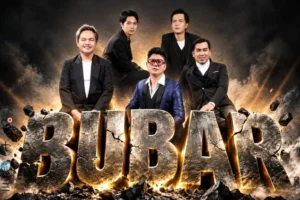
The declaration materialized through a carefully curated social media post featuring an official portrait of Kangen Band emblazoned with the definitive word "Bubar" (Dissolved) stamped across the visual layout. In his accompanying caption, Dodhy emphasized that his choice to terminate the group was deliberate, conscious, and born out of necessity rather than a spontaneous emotional outburst.
"Bismillah, with full consciousness, I declare that Kangen Band is dissolved due to the presence of oppression and injustice within it," Dodhy wrote in his public statement.
As the principal songwriter, composer, and creative anchor who shaped the distinct musical identity of Kangen Band since its inception, Dodhy’s assertion of "kezoliman" (injustice or oppression) points toward deep-seated internal friction among members. While specific operational details of the dispute remain tightly contained within the internal circle, the statement signals that artistic, financial, or administrative differences had reached an intolerable threshold for the primary visionary of the group.
The Strict Ban on Performing Copyrighted Works

The most commercially damaging aspect of Dodhy’s declaration is his sweeping prohibition regarding his intellectual property. Kangen Band’s legendary status in the Indonesian music industry—marked by iconic ballads that defined an era of popular Malay-pop music in the mid-2000s and early 2010s—was built predominantly on Dodhy’s prolific songwriting capabilities. Hits such as "Tentang Aku, Kau, dan Dia," "Andai Ku Jasa," "Yakinlah," and "Pujaan Hati" became cultural touchstones, frequently streamed, broadcasted, and performed live at festivals and regional concerts.
Addressing the stakeholders of the live music ecosystem directly, Dodhy stated that he had silently harbored his grievances for an extended period. Consequently, he drew a hard line regarding the future performance rights of his compositions.
"As the owner and founder of Kangen Band, I have harbored this pain for a long time. For the personnel involved and event organizers, it is strictly forbidden for any member or former member of Kangen Band to perform the songs I have created. I express my utmost gratitude," Dodhy asserted in his statement.
This sweeping restriction carries immense legal and economic weight under Indonesian copyright law. As the registered creator and copyright holder of the compositions, Dodhy retains the legal prerogative to grant or revoke performance licenses (Performing Rights), particularly in commercial live performance settings managed by event organizers.
Background Context: The Legacy and Evolution of Kangen Band
To understand the magnitude of Dodhy Hardiyanto’s recent proclamation, one must examine the historical trajectory of Kangen Band. Formed in Lampung in 2004 by Dodhy and vocalist Andika Mahesa, alongside other founding members, the band emerged from humble beginnings to become a dominant force in the Indonesian music industry.
Kangen Band pioneered a distinct wave of accessible, emotionally resonant Malay-pop characterized by catchy guitar riffs, relatable lyrics concerning love and betrayal, and a unique vocal delivery. Their debut album, Tentang Aku, Kau, dan Dia (2007), achieved massive commercial success, propelling them into superstardom and establishing them as household names. Over the years, the band experienced various structural changes, temporary hiatuses, internal disputes, and reconciliations, with members occasionally pursuing solo projects or side ventures before reuniting under the Kangen Band banner.
Throughout these tumultuous cyclical changes, Dodhy remained the consistent creative engine. Even during periods when vocalists or other instrumentalists rotated in and out of the lineup, Dodhy’s songwriting credit remained the constant denominator that validated the band’s musical output. The sudden collapse of the group in late 2026 demonstrates that even legacy acts with decades of shared history are vulnerable to internal fractures that ultimately override commercial longevity.

Legal and Financial Implications for Event Organizers and Performers
Dodhy’s ban introduces severe operational complexities for the Indonesian live music industry, particularly for event organizers, talent agencies, and former band members who rely on nostalgia-driven concert tours and festival appearances.
-
Enforcement of Copyright and Intellectual Property Rights: Under Indonesia’s Copyright Law (Undang-Undang Hak Cipta No. 28 Tahun 2014), creators hold exclusive moral and economic rights over their works. Creators possess the absolute right to permit or prohibit the commercial performance, reproduction, or adaptation of their musical compositions. By explicitly withdrawing consent for former members to perform his songs, Dodhy establishes a strong legal foundation to issue cease-and-desist orders or pursue legal action against unauthorized public performances of his catalog.
-
Impact on Event Organizers (EOs): Event organizers scheduling retro-themed music festivals, regional fairs, or commercial concerts featuring former Kangen Band members must now exercise extreme caution. If artists perform Dodhy-penned tracks without a valid license or in direct violation of the creator’s explicit ban, EOs and performing artists alike could face legal liability, copyright infringement claims, and demands for statutory damages or royalty compensation through Collective Management Organizations (LMKN) or private litigation.
-
Commercial Viability of Ex-Members’ Future Projects: For former members who intended to leverage the Kangen Band catalog for nostalgia-based touring, the restriction strips away their primary commercial appeal. Audiences attending Kangen Band-related concerts primarily anticipate live renditions of the classic hits written by Dodhy. Without access to these signature songs, the commercial viability of any splinter group or independent performances by former members diminishes significantly.
Industry Reactions and Fanbase Uncertainty
The public declaration has triggered intense discourse across social media platforms, entertainment news portals, and professional music circles in Indonesia. Fans of the group have expressed profound disappointment, noting that Kangen Band had undergone multiple successful revivals in the past, making this definitive dissolution particularly disheartening.
Industry analysts observe that disputes over royalties, songwriting credits, and revenue distribution from digital streaming platforms and live performances remain persistent pain points within Indonesian bands. As legacy acts age and their catalogs generate recurring passive income through digital platforms and licensing, the financial stakes of ownership become increasingly contentious.

While representatives or other former members of Kangen Band have yet to issue a comprehensive formal rebuttal or counter-statement addressing Dodhy’s specific allegations of "kezoliman," industry insiders anticipate further legal clarifications or mediation efforts in the coming weeks to resolve the impasse over copyright utilization.
Broader Industry Impact: A Precedent for Creator Rights
Dodhy Hardiyanto’s decisive action serves as a prominent case study regarding the assertion of creators’ rights within band dynamics in the Indonesian music industry. Historically, internal band disputes often resulted in informal splits where members continued performing legacy hits interchangeably, frequently leading to ambiguity over licensing and royalty distribution.
By publicly and unequivocally revoking performance privileges, Dodhy is setting a stringent precedent for songwriter autonomy. His move highlights a growing trend where primary composers within legendary groups demand rigorous adherence to intellectual property laws, ensuring that their creative contributions are not leveraged by estranged collaborators without explicit, mutually agreed-upon terms.
As the situation develops, the focus remains on how regulatory bodies, copyright institutions, and legal representatives will navigate the fallout between Dodhy Hardiyanto and the former members of Kangen Band, marking a definitive end to one of the most recognizable chapters in modern Indonesian pop music history.