Every year on September 9, Indonesia observes National Sports Day, commonly known as Hari Olahraga Nasional (Haornas). While modern observances often focus on contemporary fitness trends, grassroots wellness, and the booming sport-tourism sector, the roots of this national commemoration stretch back to a turbulent era in the nation’s infancy. Established to honor the resilience, unity, and indomitable spirit of a newly independent republic, Haornas has evolved from a diplomatic alternative to international sporting exclusion into a comprehensive blueprint for public health, character building, and economic vitality.
As Indonesia marks the 43rd anniversary of the official Haornas proclamation in 2026, examining the historical trajectory, socio-economic implications, and evolving strategic goals of National Sports Day provides a vital lens through which to view the nation’s broader developmental ambitions.
The Historical Genesis: The First PON of 1948
To understand why September 9 holds such profound significance for Indonesian sports, one must look back to 1948. Just three years after proclaiming independence on August 17, 1945, the young Republic of Indonesia was still fighting to secure international diplomatic recognition while navigating severe internal and external security challenges.
In 1948, the International Olympic Committee (IOC) invited nations to participate in the XIV Olympic Games in London. For Indonesia, receiving an invitation was a thrilling prospect; however, it quickly transformed into a bureaucratic and diplomatic hurdle. At the time, the world sports governing bodies did not fully recognize Indonesia’s sovereign status, largely due to ongoing political friction with Dutch colonial authorities who still sought to reassert control over the archipelago. International officials insisted that Indonesian athletes could only compete under the Dutch flag or as part of a Dutch-controlled contingent—a humiliating compromise that the fledgling republic steadfastly rejected.
Refusing to compromise national dignity, Indonesian sports pioneers, led by figures within the Indonesian Olympic Committee (KOMITE OLYMPIC INDONESIA – KOI) and key government leaders, made a bold decision. If Indonesia could not yet send its athletes to the global stage in London, it would stage its own grand multi-sport event to demonstrate unity, organizational capability, and sovereign existence to the world.
Thus, the first-ever Pekan Olahraga Nasional (PON) was born. Held in Solo (Surakarta), Central Java, from September 9 to September 12, 1948, the inaugural PON brought together athletes from various regions, military factions, and sports associations across the archipelago. Despite severe logistical limitations, economic scarcity, and the lingering threat of military conflict, the event was a resounding success. The opening day of this historic event—September 9—forever altered the course of Indonesian sports history, cementing that date as the symbolic birth of national sporting identity.
Institutionalization: From Proclamation to Presidential Decree
Although the spirit of September 9, 1948, resonated deeply within the national consciousness, it took several decades for the date to be formally institutionalized as a nationwide commemorative day.
For the first thirty-five years following the inaugural PON, sports development in Indonesia grew organically through regional competitions, school programs, and the expansion of the national multi-sport games. However, by the early 1980s, the Indonesian government recognized the need for a unified national mobilization strategy to encourage mass physical fitness and elevate competitive achievements.
The turning point came on September 9, 1983. During a state visit to Surakarta to inaugurate the comprehensive restoration and modernization of the historic Sriwedari Stadium—the very venue that hosted the 1948 PON—President Soeharto officially proclaimed September 9 as Hari Olahraga Nasional.
This proclamation served as a clarion call for the populace to embrace regular physical activity as a civic duty and a cornerstone of nation-building. To solidify this mandate with legal authority, the government subsequently issued Presidential Decree (Keputusan Presiden – Keppres) Number 67 of 1985 concerning National Sports Day. This legal framework formally codified September 9 into the national calendar, mandating continuous, structured development of sports infrastructure, talent identification pipelines, and public wellness campaigns across all provinces.
Transforming Physical Fitness into a Societal Pillar
In contemporary times, the Ministry of Youth and Sports (Kemenpora) emphasizes that Haornas transcends mere historical nostalgia. According to official guidelines and national sports policy frameworks, Haornas serves as an active catalyst for pembudayaan olahraga (the cultivation of a sports culture) throughout the archipelago.
Modern sports administration views physical activity through a multi-dimensional lens. No longer restricted to the elite pursuit of gold medals on podiums, sports are increasingly recognized as an essential instrument for holistic human development. Regular physical engagement fosters discipline, resilience, mental well-being, and social cohesion among Indonesia’s diverse demographic groups.
Furthermore, public health analysts point out that promoting a culture of regular exercise is crucial for addressing modern epidemiological challenges. As lifestyle-related non-communicable diseases—such as diabetes, hypertension, and cardiovascular ailments—rise across developing urban centers, institutionalizing physical activity via frameworks like Haornas provides a vital counterweight to sedentary habits.
Economic Implications and the Rise of Sport-Tourism
In recent years, the discourse surrounding sports in Indonesia has expanded significantly into the economic domain. Government leadership, including statements from the Ministry of Youth and Sports, has repeatedly highlighted how the modern sports ecosystem directly generates multi-sectoral economic benefits.
The synergy between sports, tourism, and local enterprise has given rise to the booming "sport-tourism" sector. Major national events—ranging from traditional multi-sport competitions like the upcoming PON editions to specialized championships such as beach games and international marathons—inject substantial capital into regional economies.
For instance, strategic initiatives such as designating regions like Sumba Timur as national sport-tourism hubs demonstrate how athletic infrastructure investments can transform local economies, boost hospitality revenues, and create sustainable employment opportunities for small and medium-sized enterprises (SMEs). Similar economic impacts are observed when hosting major coastal and urban events, such as beach sports festivals in metropolitan zones like Ancol.
However, scaling the national sports ecosystem requires significant financial commitment. Recent policy discussions within Kemenpora have underscored the necessity of robust capital allocation, including proposals for multi-trillion rupiah investments dedicated to building world-class sports academies, regional training centers, and advanced scientific support facilities. These investments are deemed critical if Indonesia aims to transition from regional athletic competitiveness to consistent global podium finishes.
Commemorating Haornas in the Modern Era
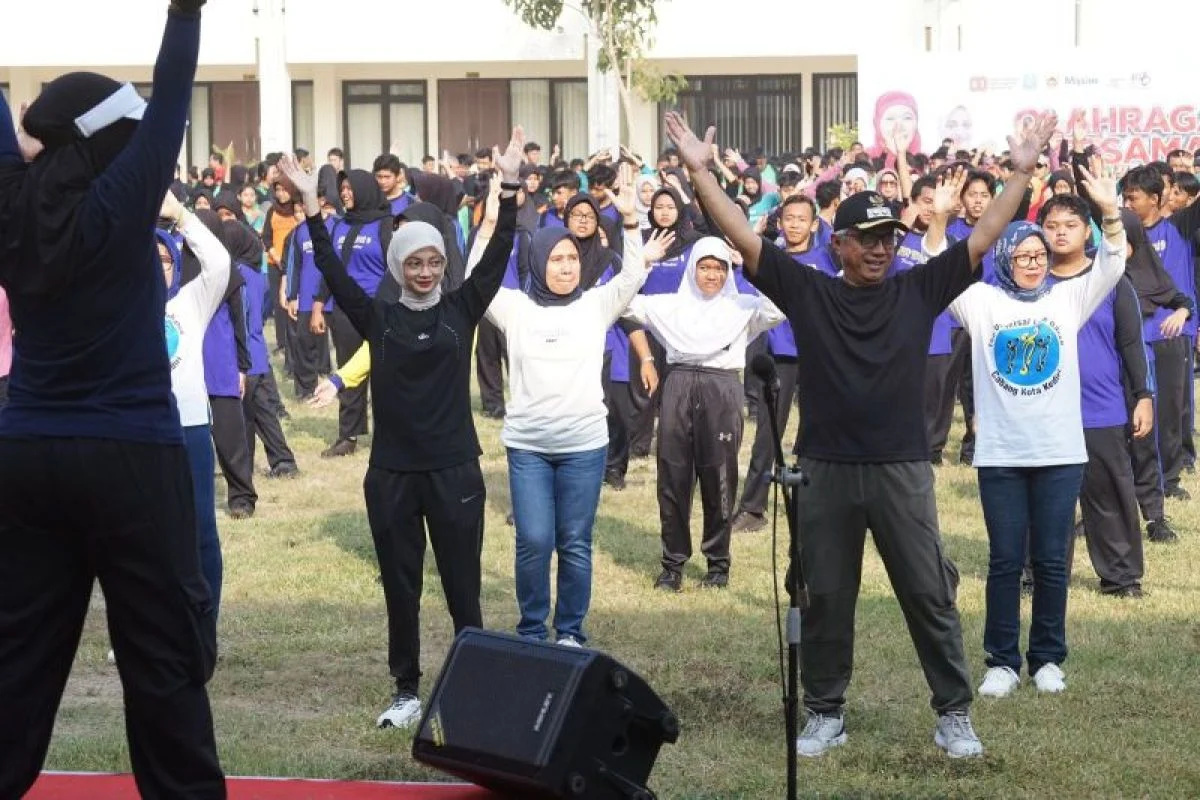
As the nation observes the 43rd anniversary of the Haornas proclamation, the spirit of September 9 remains as relevant as ever. The modern iteration of National Sports Day encourages citizens of all ages to integrate physical movement into their daily routines, support national athletes in international arenas, and foster grassroots athletic initiatives within local communities.
From its defiant origins in war-torn Solo in 1948 to its contemporary role as a driver of public health, social unity, and economic growth, Hari Olahraga Nasional stands as a testament to Indonesia’s enduring journey. It serves as an annual reminder that a healthy, active, and disciplined population is the bedrock of a resilient and prosperous nation.