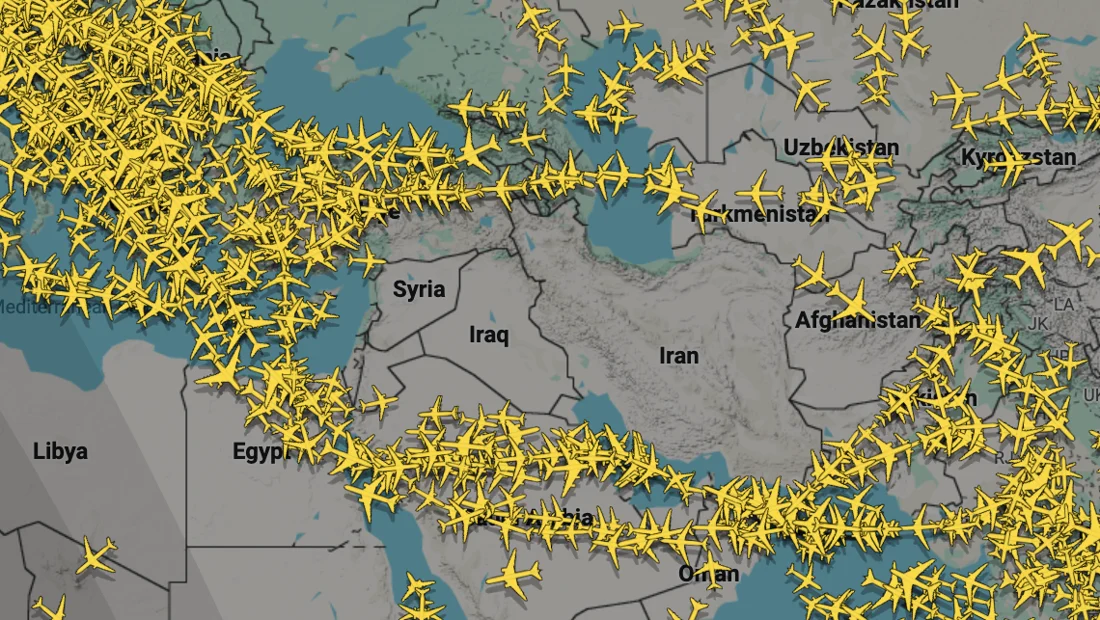
The aviation landscape in Iran has entered a state of profound uncertainty as national carriers continue to grapple with a sweeping wave of international flight cancellations heading into Wednesday, September 23, 2026. This disruption follows a high-stakes geopolitical maneuver by the United States, as Treasury Secretary Scott Bessent announced aggressive secondary sanctions aimed at isolating Iran’s civil aviation sector. The move is part of a broader, intensified campaign by Washington to compel Tehran into submission following a protracted conflict that has persisted for nearly seven months. While the aviation industry in Iran has long been a focal point of Western economic pressure, the latest decree represents an escalation that threatens to sever remaining air links with the outside world.
A Chronology of Escalation and Economic Pressure
The history of sanctions against Iran’s aviation sector is extensive, dating back decades to the early years following the 1979 revolution. However, the current crisis is rooted in the geopolitical volatility that ignited approximately seven months ago. Since the outbreak of the recent conflict, international airspace access for Iranian carriers has become increasingly constricted.
In early 2026, as diplomatic tensions reached a breaking point, the U.S. began telegraphing its intent to utilize the global financial system to penalize entities that facilitate Iranian air travel. By September 2026, the rhetoric shifted from diplomatic warnings to actionable mandates. Secretary Bessent’s announcement on Monday, September 21, served as the catalyst for the current chaos, effectively placing a "secondary" target on any country or private firm that continues to provide ground handling, fuel, or logistical support to Iranian airlines.
The Anatomy of the Sanctions: Financial Strangulation
The core of the new U.S. strategy lies in the threat of expulsion from the global dollar-denominated financial system. Secretary Bessent’s warning was unambiguous: nations or private companies that continue to service Iranian aircraft face the risk of being cut off from U.S. markets and the SWIFT banking network.
"If they land, you cannot provide them with fuel, you cannot provide them with landing services, you cannot sell tickets to them, or you will be excluded from the dollar system," Bessent stated. This policy is designed to make the cost of doing business with Iran prohibitively high for international airports, ground crews, and aviation service providers. By targeting the secondary market—the third-party entities that keep planes flying—Washington is attempting to ground Iran’s national carriers, including major players like Mahan Air and Iran Air, which have already struggled for years with aging fleets due to the inability to import Western-manufactured parts.
Operational Reality: Cancellations vs. Resilience
On the ground in Tehran, the reality for travelers is one of fragmented connectivity. According to reports from aviation industry insiders and travel agencies in the capital, the disruption has been uneven. Destinations such as Baghdad, Muscat, Doha, Tbilisi, and Baku have seen a near-total suspension of flights. The logistical fear of being stranded or having aircraft seized at foreign airports has led many carriers to preemptively scrub schedules.
Despite the heavy pressure, some air corridors remain active. Data from flight tracking services such as FlightRadar24 indicates that Mahan Air successfully completed a flight from Tehran to Guangzhou, China, even after the sanctions were formally enacted on Wednesday. This highlights a significant geopolitical divide. While the U.S. expects global compliance, major economic partners like China have openly defied the mandate. On Tuesday, a spokesperson for the Chinese Ministry of Foreign Affairs categorized the U.S. sanctions as "illegal and unilateral," asserting that China would maintain normal economic and trade exchanges with Iran, including aviation cooperation.
As of Wednesday morning, Tehran’s Imam Khomeini International Airport reported that flights to Shanghai remained on the schedule, signaling that the "Silk Road" air route remains a critical, if contested, lifeline for the Iranian economy.
Sector-Wide Implications and Passenger Fallout
The uncertainty has paralyzed the private sector. A travel agent in Tehran, speaking on condition of anonymity, described a market in disarray. "The situation is fundamentally unstable," the agent noted. "We have ceased all ticket sales for the foreseeable future. The risk of sudden, last-minute cancellations is too high, and the potential for passengers to be left without recourse or reimbursement is a liability we cannot manage."
For the average Iranian citizen, the impact is profound. The reduction in flight options not only complicates international travel for business and tourism but also hinders the ability of the diaspora to return home. As regional hubs like Dubai and Istanbul—traditional transit points for Iranians traveling to the West—become more restrictive due to the threat of U.S. sanctions, the cost and duration of international travel have skyrocketed.
Smaller carriers such as Varesh Airlines have attempted to fill gaps in the schedule, particularly on routes to Armenia and Turkey. While these smaller operations may not have the same global footprint as the state-owned flag carriers, they are equally susceptible to the tightening of international refueling and maintenance services.
Geopolitical Analysis: The Limits of Sanctions
Political analysts suggest that the efficacy of these sanctions will depend heavily on the willingness of regional neighbors to prioritize their relationship with Washington over their economic ties with Tehran. If the U.S. successfully exerts pressure on Turkey and the United Arab Emirates to deny Iranian aircraft landing rights, the isolation of Iran will be nearly complete.
However, historical precedent suggests that Iran has become adept at circumventing traditional aviation barriers. Through the use of front companies, re-registered aircraft, and the cultivation of alliances with non-aligned nations, Iran has historically managed to keep a skeleton of its aviation network operational. The current challenge, however, is the scale of the secondary sanctions, which target the infrastructure of the aviation ecosystem—fuel and ground support—rather than just the aircraft themselves.
The Human and Economic Cost
The long-term economic implications for Iran’s aviation sector are severe. The inability to procure parts for maintenance, coupled with the loss of revenue from international routes, threatens the viability of the entire domestic aviation industry. For a nation that relies on air travel to connect its major urban centers and facilitate its limited international trade, this is a significant economic blow.
Beyond the numbers, there is a human element to the crisis. Aviation is a vital link for families, students, and medical patients requiring treatment abroad. As the "air bridge" to the outside world narrows, the isolation of the Iranian populace from the global community deepens.
Conclusion: A Precarious Future
As of the close of business on Wednesday, September 23, the Iranian aviation sector remains in a state of suspended animation. The U.S. government maintains that its policy is a necessary instrument of pressure to address the ongoing regional conflict. Conversely, the Iranian government views these measures as an extension of a campaign of "economic terrorism."
With the threat of being cut off from the global financial system looming over any airport or service provider that dares to assist an Iranian plane, the coming weeks will be a litmus test for the reach of U.S. influence. Whether this strategy will lead to the desired geopolitical outcomes remains to be seen, but for the passengers, airlines, and logistics crews caught in the middle, the skies have become significantly more difficult to navigate. The world is now watching to see if the remaining open routes—such as those to China—will hold, or if the isolation of Iran’s aviation sector will become absolute.