New York Fashion Week may have officially concluded, but the sartorial influence of Bella Hadid remains a focal point for the fashion industry as she navigates the transition from late summer to early autumn. While the runways provided the blueprint for the upcoming season, Hadid’s recent appearances in Manhattan have offered a masterclass in pragmatic, high-fashion styling that bridges the gap between seasonal weather shifts. Her recent wardrobe choices, characterized by a fusion of vintage archival pieces, Western-inspired accents, and bold color palettes, have solidified her position as a leading figure in contemporary style narratives.
A Chronology of Manhattan Street Style
Hadid’s presence in New York throughout the week was not marked by runway participation, but rather by a series of meticulously curated personal appearances that drew significant media attention. On the early days of the week, the supermodel demonstrated a rapid shift in aesthetic, transitioning from casual, trend-focused attire—featuring trucker hats and Ugg footwear—to high-concept vintage elegance. Notably, her arrival at the Tribeca eatery Locanda Verde in a rare, vintage gold-toned Prada dress paired with a matching vintage bowling bag underscored her penchant for digging into the archives of heritage fashion houses.
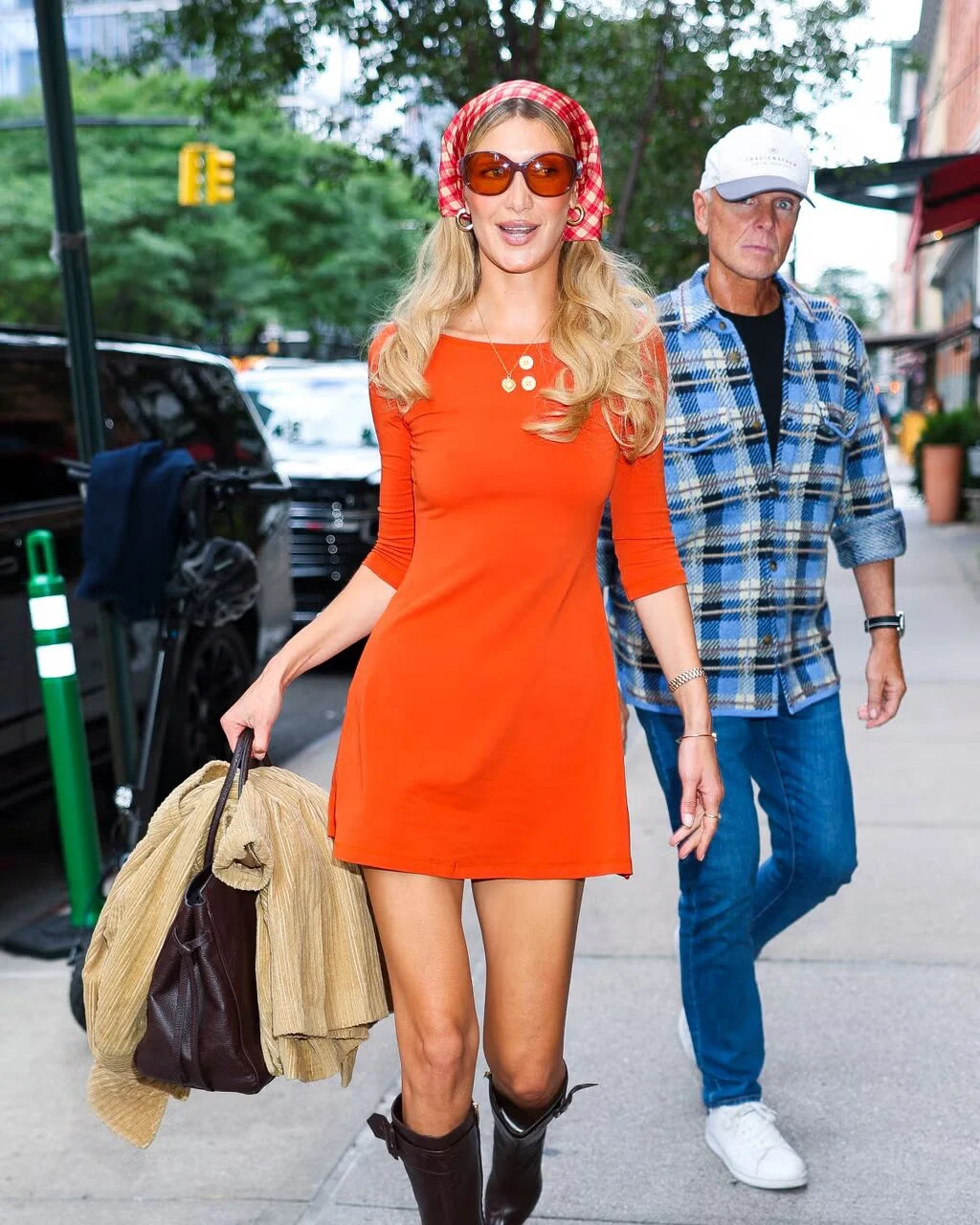
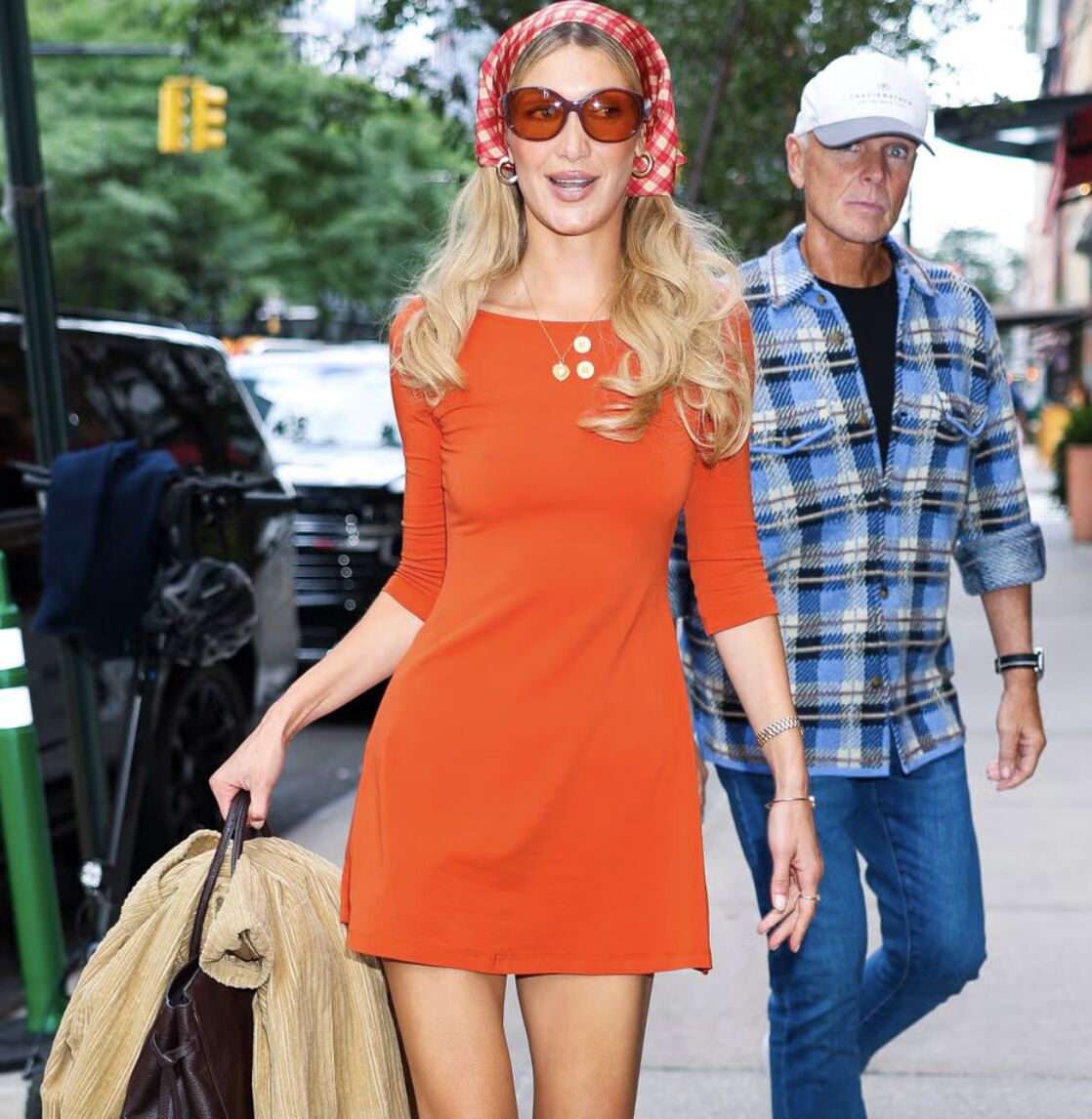
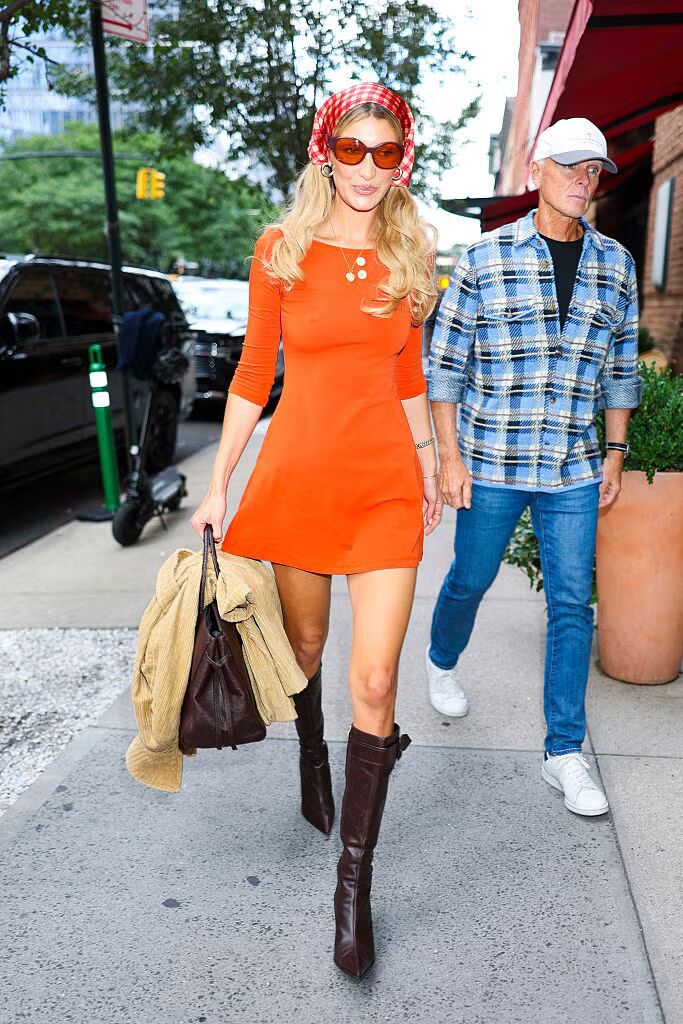
By mid-week, the narrative shifted toward the complexities of transitional dressing. Her ensemble in the Tribeca district served as a definitive case study in seasonal layering. She opted for a blood-orange, long-sleeved minidress, eschewing traditional summer footwear in favor of high-cut, brown leather stiletto boots. This choice of footwear, paired with a substantial chocolate-colored Staud bag, anchored the brightness of the dress with autumn-appropriate earth tones.
The look was further complicated by a deliberate play on texture and pattern. A corduroy trench coat provided the structural weight necessary for cooling temperatures, while a red, checkered headscarf offered a nostalgic nod to summer aesthetics. This juxtaposition of a structured, heavy-duty coat with a light, decorative head covering exemplifies the nuanced approach required for urban environments during the September-to-October weather pivot.
The Intersection of Vintage and Modern Luxury
Hadid’s sartorial choices frequently reflect an ongoing trend in the fashion industry: the rise of archival fashion. Her ability to synthesize vintage Prada with contemporary luxury accessories speaks to a broader market interest in the longevity and sustainability of fashion. Data from luxury resale platforms, such as The RealReal and Vestiaire Collective, have consistently shown an uptick in consumer interest regarding vintage designer accessories, particularly bowling bags and structured handbags from the late 1990s and early 2000s.
Her selection of accessories further highlights this hybrid approach. By pairing her outfits with oversized burgundy sunglasses from Side Eye NYC and an array of high-jewelry, including chunky gold hoops and pieces from the Chopard Happy Hearts and Happy Sport collections, Hadid bridged the gap between streetwear-inspired casualness and the exclusivity of fine jewelry.
Contextualizing the Chopard Partnership
While Hadid was absent from the runway, her presence in the city was inextricably linked to her professional commitments to the Swiss luxury watch and jewelry house, Chopard. Her arrival in New York coincided with the brand’s celebration of the 50th anniversary of its iconic "Happy Diamonds" collection.
The event was more than a celebratory gala; it served as the official launchpad for Chopard’s latest global campaign, which features Hadid as its primary face. The collaboration represents a strategic move by Chopard to align its heritage-rich collections with a figure whose personal brand is synonymous with both modern youth culture and classic luxury. Industry analysts suggest that such partnerships are increasingly vital for heritage brands looking to maintain relevance among younger, high-net-worth consumers who prioritize both brand history and individual expression.
The Mechanics of Transitional Dressing: An Industry Perspective
Fashion experts often identify the transition from late August to late September as the most challenging period for wardrobe management. This "in-between" season necessitates a strategic layering technique that accounts for significant temperature fluctuations throughout the day.
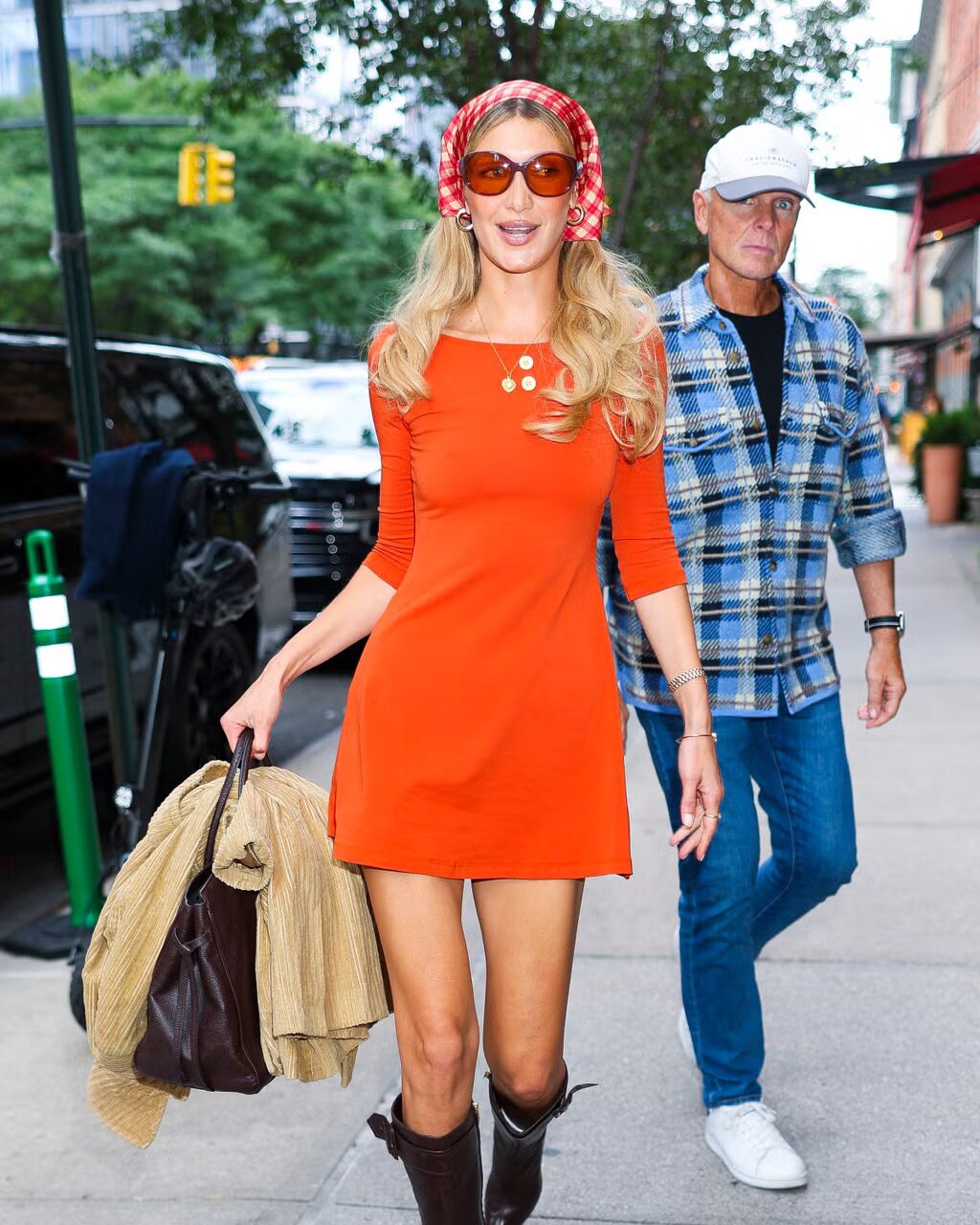
Hadid’s implementation of corduroy and leather during this period is not merely aesthetic; it is functional. Leather boots provide protection against the damp conditions of early autumn, while corduroy—a fabric characterized by its durability and heat-retaining properties—serves as an ideal material for light outerwear. By incorporating these elements alongside lighter summer staples like minidresses and scarves, Hadid demonstrates a "layering-up" philosophy that prioritizes versatility.
The economic implications of such styling are significant for retailers. The "Bella Hadid effect" often translates into immediate demand for specific color palettes and material types. As consumers look for inspiration in navigating the end of the summer season, the emphasis on "transitional staples"—pieces that can be worn in 70-degree weather or layered for 50-degree nights—becomes a key driver of retail activity.
Broader Impact on Global Fashion Trends
The influence of Hadid’s street style extends well beyond Manhattan. In the age of social media, her appearances are documented, dissected, and emulated globally within hours. The rapid dissemination of her look, from the specific hue of her dress to the style of her eyewear, informs the purchasing habits of a global audience.
From an industry standpoint, this underscores the waning dominance of the traditional "seasonal drop" calendar. Designers and retailers are increasingly pivoting toward a continuous release model, acknowledging that consumers, guided by influencers like Hadid, are no longer waiting for specific seasonal transitions to rotate their wardrobes. Instead, the modern consumer is curating a fluid, year-round wardrobe that adapts to the specific climate and lifestyle needs of their immediate environment.
Conclusion: A Shift in Celebrity Influence
Bella Hadid’s activities during and after New York Fashion Week illustrate a shift in how celebrities and supermodels leverage their influence. Rather than relying solely on runway visibility, the modern fashion icon utilizes public appearances to showcase a personal brand that is both relatable and aspirational.
By balancing high-end luxury partnerships with accessible vintage styling, Hadid maintains a unique position in the industry. Her ability to synthesize disparate elements—such as a corduroy trench coat and a summer headscarf—into a coherent, trend-setting ensemble remains a defining characteristic of her career. As the fashion industry continues to navigate a changing retail landscape, the strategies employed by figures like Hadid will continue to serve as a bellwether for consumer preferences and the evolution of personal style in the 21st century.
The integration of her Chopard campaign with her street-style appearances serves as the final piece of this puzzle, demonstrating that the modern celebrity brand is a holistic entity, encompassing red-carpet elegance, professional business ventures, and the daily, off-duty narrative that continues to dictate the pace and direction of global style trends. As New York settles into the deeper phases of autumn, the template provided by Hadid remains a testament to the power of thoughtful, adaptable, and inherently personal fashion choices in an era of constant visual saturation.