The landscape of the entry-level electric vehicle (EV) market is poised for a significant transformation following the revelation of official design sketches for the second-generation BYD Seagull. Known in various markets as the Great Seagull or the Atto 1, this compact hatchback has been a pivotal force in BYD’s global sales strategy. Recent disclosures from Zhang Zhuo, the general manager of the Ocean series sales division, confirm that the upcoming model will feature a substantial increase in dimensions and a radically overhauled aesthetic, signaling a move away from its purely utilitarian roots toward a more premium and aggressive design language.
Evolution of a Global Best-Seller
The original BYD Seagull, which launched in early 2023, rapidly became one of the best-selling electric vehicles in China and an essential part of the company’s international expansion. By leveraging the e-Platform 3.0, the first generation offered an unprecedented balance of price, range, and build quality. It effectively lowered the barrier to entry for consumers transitioning from internal combustion engines to electric powertrains.
However, as the EV market matures, consumer expectations are shifting. The transition to the second generation is not merely a cosmetic update; it represents a strategic pivot to address the primary limitations of the first-generation model, specifically regarding cabin space and road presence. The "Great Seagull" moniker, initially floated as a potential name for the larger variant, appears to have been consolidated into the broader branding of the second-generation lineage, reflecting BYD’s desire to maintain brand continuity while signaling a clear generational leap.
Design Philosophy and Aesthetic Shifts
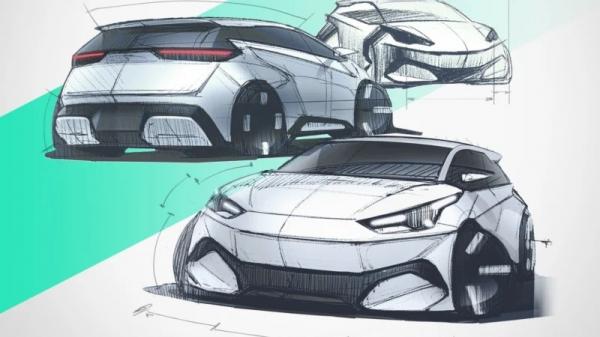
The newly revealed sketches indicate that BYD’s design team, led by Wolfgang Egger, has opted for a bolder, more muscular silhouette. The most striking element is the adoption of a "trident" headlight configuration, which breaks away from the more rounded, friendly aesthetic of the original. This aggressive front fascia is complemented by sharply defined body lines that run along the vehicle’s flank, designed to optimize aerodynamic flow while providing a more athletic stance.
Key design changes noted in the official documentation include:

- Enhanced Proportions: The wheelbase has been stretched, allowing for shorter overhangs and a significantly larger footprint.
- Dynamic Beltline: A lower window line is expected to improve outward visibility and create a sense of interior airiness.
- Structural Integration: The wheel arches have been widened, suggesting a wider track width that will likely improve stability and handling dynamics.
- Modern Rear Lighting: A slim, full-width LED light bar replaces the more conventional cluster of the predecessor, aligning the Seagull with the design language of BYD’s higher-end models, such as the Seal and the Atto 3.
- Wheel Design: The introduction of 16-inch alloy wheels with an eight-spoke design marks a departure from the smaller, efficiency-focused wheels of the past, aiming for a more sophisticated look.
The Engineering Rationale Behind the Growth
The decision to increase the dimensions of the second-generation Seagull is a strategic response to feedback from urban commuters who desired more legroom and trunk capacity without sacrificing the compact form factor required for dense city navigation. Industry analysts suggest that this growth also allows BYD to position the vehicle more competitively against traditional B-segment hatchbacks, not just the A-segment city car category.
By utilizing a new structural layout, BYD engineers have reportedly maximized the "wheelbase-to-length ratio." This architecture, often referred to as a "skateboard" platform, allows for an flat floor and a more flexible interior arrangement. This is critical for maintaining the Seagull’s status as a high-volume product, as it must compete with both domestic Chinese rivals and legacy automakers who are beginning to ramp up their own affordable EV offerings.
Strategic Implications for the Market
The expansion of the Seagull is a direct challenge to established automotive manufacturers in the global market. In regions such as Southeast Asia, Latin America, and potentially Europe, the current Seagull has been hailed as a "disruptor." By introducing a larger, more aggressive second generation, BYD is effectively moving the goalposts for what consumers should expect from an "entry-level" vehicle.

The implications of this move are manifold:
- Market Consolidation: BYD is streamlining its Ocean series, creating a clear hierarchy where the Seagull serves as the gateway to the brand.
- Cost Efficiency: Despite the increase in size, BYD’s vertical integration—specifically its in-house production of batteries and semiconductors—positions it to keep the price point highly competitive.
- Regulatory Compliance: The larger dimensions are likely designed to accommodate more advanced driver-assistance systems (ADAS) and improved safety hardware, which are becoming mandatory in various international markets.
Chronology of the Seagull Lineage
- April 2023: The first-generation BYD Seagull officially launches at the Shanghai Auto Show, quickly garnering thousands of pre-orders due to its aggressive pricing.
- Q4 2023: BYD begins exporting the Seagull to international markets, including South America and Southeast Asia, where it is rebranded to suit local naming conventions.
- Mid-2025: Rumors regarding the development of a "Great Seagull" emerge as spy shots of a larger prototype circulate on Chinese social media.
- September 2026: Official design sketches are released by the Ocean sales division, confirming the transition to a second-generation model with significant dimensional and aesthetic changes.
Analyst Perspective and Future Outlook
Market observers note that BYD’s success has been predicated on its ability to iterate quickly. Unlike traditional automakers that may wait five to seven years for a full model change, BYD’s development cycle is notably shorter. This allows the company to integrate the latest battery chemistry—such as the next iteration of the Blade Battery—into new models as soon as it becomes available.
The shift toward a more "aggressive" design language is also a signal that BYD is shedding its image as a maker of purely functional transport. The company is actively courting a younger demographic that views their vehicle as an extension of their personal style. By incorporating design elements previously reserved for more expensive vehicles, BYD is attempting to capture a larger share of the entry-level segment, making it harder for competitors to argue that a budget EV must be a "compromise."

Looking Ahead
While specific technical specifications—such as battery capacity, range, and motor output—have yet to be officially confirmed, industry insiders expect the second-generation Seagull to offer an improved range-to-price ratio. With the inclusion of more advanced connectivity features and an upgraded infotainment suite, the vehicle is expected to maintain its leadership in the segment.
As BYD continues to refine its global supply chain, the second-generation Seagull is set to play a cornerstone role in the company’s objective to reach even wider demographics. The release of these sketches is merely the first step in a broader campaign that will likely culminate in a formal production launch in the coming months. For competitors, the message is clear: the most formidable player in the entry-level EV space is not resting on its laurels, but rather aggressively expanding its capabilities to ensure its continued dominance in the global electrification race.
As the automotive industry pivots further toward sustainable mobility, the success of vehicles like the BYD Seagull will serve as a barometer for the feasibility of mass-market electric vehicle adoption. By prioritizing design, space, and efficiency, BYD is setting a benchmark that will force the industry to rethink the value proposition of the modern compact car.