
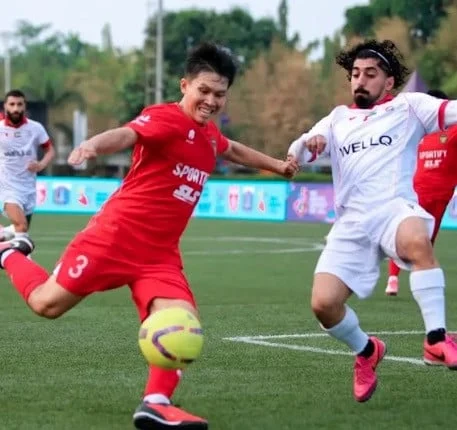
The Indonesian National Minifootball Team has officially shifted its strategic focus toward the upcoming 2027 WMF World Championship in the Czech Republic following the conclusion of the Asian Minifootball Championship (AMNC) 2026. Although the campaign ended with a fourth-place finish after a 0-3 defeat to the United Arab Emirates (UAE) at the ASIOP Stadium in Jakarta on Friday, September 18, 2026, the tournament is widely viewed by sports analysts as a significant milestone for the development of the sport within the archipelago.
Securing a semifinal berth in the continental championship was the primary objective for the Indonesian squad, as it guaranteed an automatic qualification ticket to the world stage. Despite the disappointment of missing out on a podium finish in front of a home crowd, the team’s journey throughout the tournament provided a clear roadmap for the technical and tactical improvements required to compete against the global elite in 2027.
A Chronological Overview of the 2026 Campaign
The road to the semifinal began with a series of high-intensity matches that tested the depth and resilience of the Indonesian roster. Placed in Group A, Indonesia entered the tournament with clear momentum, emphasizing an aggressive attacking style that produced significant results early on.
The campaign commenced with a statement victory against Bangladesh, where Indonesia dismantled their opponents with an emphatic 8-1 scoreline. This match set the tone for the group stage, showcasing the team’s proficiency in transition play and set-piece efficiency. The momentum continued into the second fixture against Iraq, which resulted in a 5-0 walkover victory after the Iraqi team failed to report to the venue.
The third group stage match against India proved to be a display of absolute dominance, with Indonesia securing a 9-0 victory. This win effectively cemented their standing as one of the most prolific offensive units in the group stages. However, the final group match against Thailand served as a reality check. In a tight, defensive battle, Indonesia fell 0-1. While the loss was disappointing, the nine points collected from the previous matches were sufficient to secure a runner-up position in Group A, behind Thailand, who finished with 12 points.
Advancing to the knockout stages, Indonesia was paired against a physically imposing Uzbekistan side. While the specific details of the semifinal loss have been a point of internal review, the defeat pushed Indonesia into the bronze medal match against the UAE. The 0-3 loss in the third-place play-off concluded the tournament for the Garuda squad, officially placing them fourth in the regional rankings.
Technical Analysis and Strategic Evaluation
Head Coach Indra Kurnia Purnomo has been vocal regarding the necessity of a comprehensive post-tournament review. Speaking at the ASIOP Stadium following the match against the UAE, Purnomo emphasized that the transition to the world stage requires more than just physical preparation.
"Evaluation is mandatory, and it extends far beyond simple set plays," Purnomo stated. "We have identified several technical and tactical elements that must be refined. To compete at the level of the WMF World Championship in 2027, we must elevate our overall game intelligence and consistency under pressure. The gap between Asian-level competition and the global stage is substantial, and our preparation must reflect that reality."
From a tactical perspective, analysts note that Indonesia’s reliance on high-scoring victories against lower-ranked teams in the early stages masked vulnerabilities in defensive transitions. Against more organized teams like Thailand and the UAE, the Indonesian squad struggled to maintain defensive shape when possession was lost. Future preparations are expected to focus on high-pressing systems that do not leave the backline exposed, as well as developing a more robust rotation policy to manage player fatigue across back-to-back matches—a common challenge in the high-intensity format of minifootball.
The Significance of Minifootball in Indonesia
Minifootball, played on a smaller pitch with fewer players than traditional 11-a-side football, has seen a surge in popularity globally, governed primarily by the World Minifootball Federation (WMF). For Indonesia, the AMNC 2026 served as a vital platform to raise awareness of the sport. The hosting of the event at the ASIOP Stadium provided a professional backdrop that allowed for improved broadcasting and fan engagement, which is essential for attracting sponsorship and grassroots participation.
The success of qualifying for the 2027 World Championship is arguably the most significant achievement for the Indonesian Minifootball Association (IMA) since its inception. Participation in the Czech Republic will grant the players invaluable exposure to European styles of play, which are characterized by high-tempo pressing and technical discipline. This experience is expected to serve as a catalyst for the long-term professionalization of the sport in Indonesia.
Looking Toward the 2027 WMF World Championship
The road to the Czech Republic is fraught with logistical and physical challenges. Unlike traditional football, minifootball places an immense premium on cardiovascular endurance and rapid decision-making. The WMF World Championship is known for its grueling schedule, where teams often play multiple matches within a short span of days.
According to preliminary reports, the Indonesian training camp for the 2027 tournament is expected to commence early in 2027, focusing on three core pillars:
- Player Conditioning: Implementing a rigorous sports science program to ensure the squad can maintain high intensity for the duration of the tournament.
- Tactical Versatility: Developing multiple tactical frameworks to ensure the team can adapt to opponents that utilize different defensive blocks, ranging from low-block counter-attacking teams to high-pressing European outfits.
- International Friendlies: Establishing a schedule of warm-up matches against top-tier Asian and potentially European minifootball nations to ensure the team is battle-hardened before traveling to the Czech Republic.
Implications for the Future of the Sport
The fourth-place finish at the AMNC 2026, while short of the podium, provides a stable foundation for the future. The Indonesian team has proven that they can dominate weaker opposition, a trait often lacking in emerging football nations. The challenge now lies in bridging the gap between being a regional competitor and a global challenger.
Industry experts suggest that the continued support of the Ministry of Youth and Sports, combined with private sector investment, will be critical. The transition from amateur or semi-professional status to a fully professionalized national program will require sustainable funding to support training camps, travel, and the employment of specialized coaching staff.
Moreover, the psychological aspect of the game—learning how to recover from defeats like the one against the UAE—will be a defining characteristic of the 2027 squad. The resilience shown by the players in the aftermath of the tournament suggests a group that is eager to learn and improve. As the team prepares for the global stage, the Indonesian public and the international minifootball community will be watching to see if the lessons learned in Jakarta can be translated into success in Europe.
In conclusion, the AMNC 2026 has provided the Indonesian National Minifootball Team with a vital reality check. While the disappointment of the final result is palpable, the qualification for the 2027 World Championship offers a unique opportunity for growth. Under the guidance of Coach Indra Kurnia Purnomo, the team is now set on a path of rigorous evaluation and preparation, aiming to represent the nation with increased tactical sophistication and physical conditioning on the world’s most prestigious minifootball stage. The journey to the Czech Republic is not merely about participation; it is about establishing Indonesia as a credible, competitive force in the world of minifootball.
