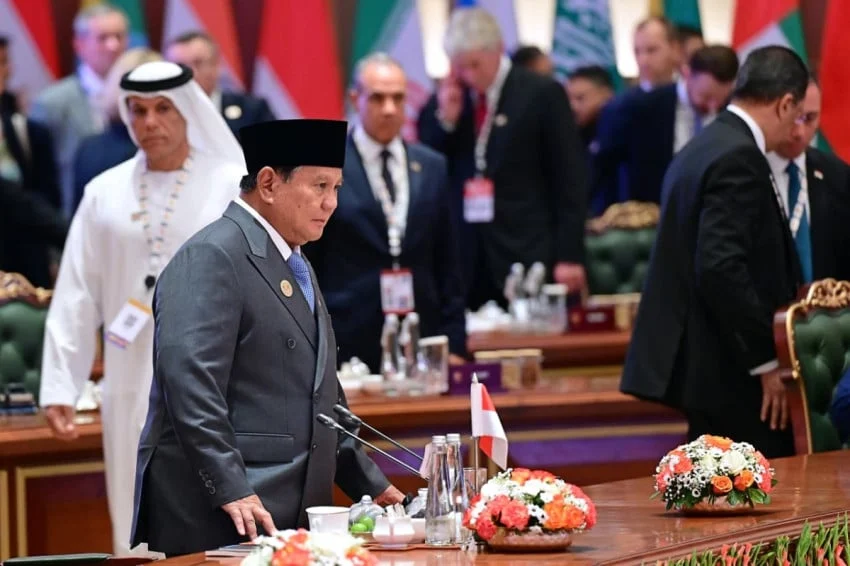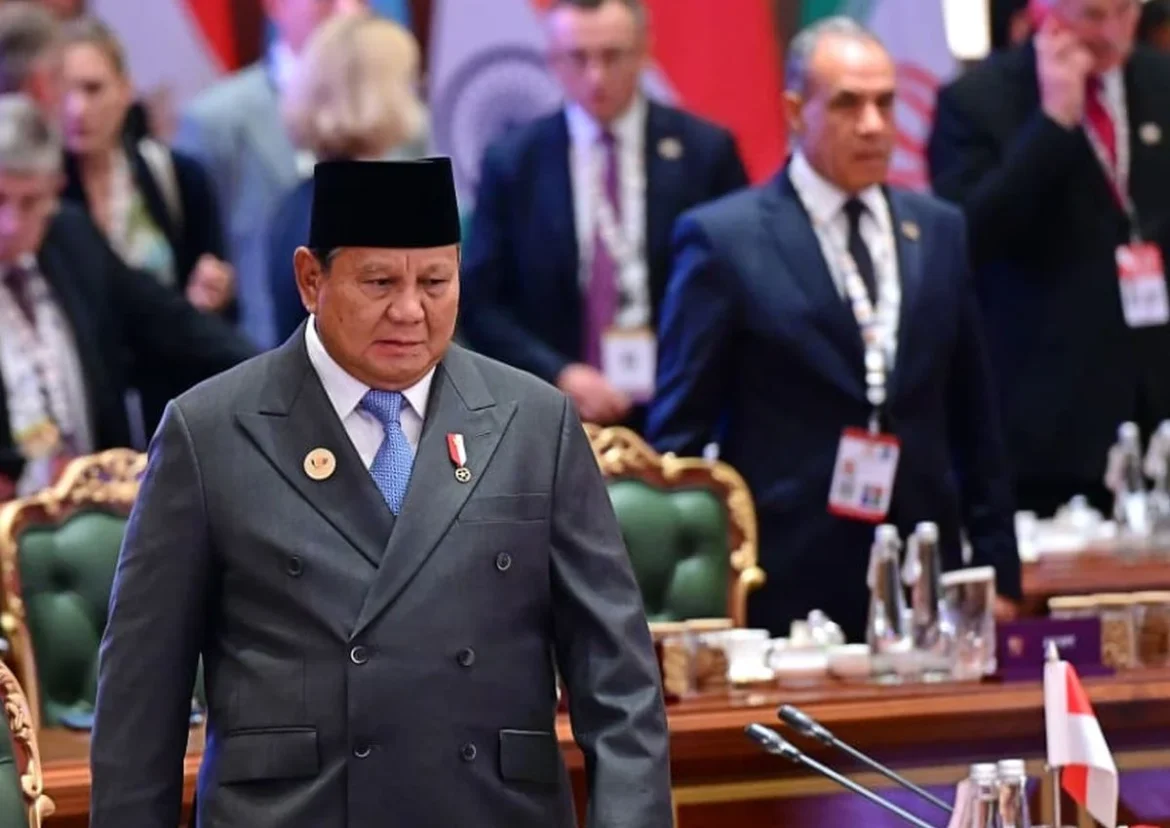
President Prabowo Subianto of Indonesia underscored the critical importance of national resilience and economic self-sufficiency during his address at the 18th BRICS Summit held in New Delhi, India, on Saturday, September 12, 2026. Speaking during a high-level closed session titled Inclusive Global Governance and Strengthening Multilateralism, the Indonesian leader articulated a vision where domestic stability serves as the foundational pillar for effective international cooperation. His remarks come at a pivotal time as the BRICS bloc—originally comprising Brazil, Russia, India, China, and South Africa—continues to expand its influence and membership, positioning itself as a central counterweight in the evolving landscape of global governance.
The focus on self-reliance reflects a broader strategic shift in Indonesian foreign policy, which seeks to balance its non-aligned tradition with proactive participation in emerging economic powerhouses. President Prabowo argued that true sovereignty in the 21st century is not merely a political construct but an economic reality anchored in the state’s capacity to provide for its populace.
The Foundation of National Sovereignty
Addressing fellow heads of state and government representatives, President Prabowo laid out a clear hierarchy of national priorities. He contended that international alliances, including membership in BRICS, are most effective when member nations possess the internal strength to sustain their own populations. According to the President, the strength of a nation begins at home, starting with the fundamental ability to guarantee food security, ensure a stable and sustainable energy supply, provide quality education, and create economic opportunities that lead to widespread prosperity.
"With unity, we become stronger," President Prabowo stated during the session. "However, strength must always originate from within—through our ability to meet the food requirements of our citizens, secure the energy supplies they depend on, educate the next generation, and provide them with the pathways to a dignified and prosperous life. This is the only way to build a nation that is truly resilient and independent."
This emphasis on "bottom-up" resilience is a core tenet of the Prabowo administration’s domestic policy, which emphasizes downstreaming industries and increasing agricultural productivity to reduce dependence on volatile global supply chains.
Contextualizing the 18th BRICS Summit
The 18th BRICS Summit in New Delhi represents a milestone for the bloc, which has increasingly sought to define itself as a champion of the "Global South." Since the bloc’s initial expansion in 2023, the organization has navigated the complexities of integrating new member states while attempting to standardize its collective economic agenda. The theme of this year’s summit, Inclusive Global Governance, addresses the long-standing critique by developing nations that international financial institutions—such as the IMF and the World Bank—are skewed toward the interests of the Global North.
For Indonesia, joining the dialogue and formalizing deeper ties with BRICS is seen as a strategic maneuver to broaden market access and strengthen diplomatic leverage. The summit serves as a platform for Jakarta to advocate for a more equitable global order, where the interests of developing economies are prioritized in trade negotiations, climate finance, and technology transfer.
Chronology of Indonesia’s Engagement with BRICS
Indonesia’s journey toward its current involvement with BRICS has been marked by a cautious but deliberate progression:
- 2023: During the BRICS Summit in Johannesburg, Indonesia participated as an observer, signaling its interest in the group’s economic potential without immediately seeking full membership.
- Early 2024: Following his election, President Prabowo signaled that his administration would pursue an active, "good neighbor" policy that seeks economic partnerships regardless of ideological divisions.
- Late 2024–2025: Technical working groups were established between the Indonesian Ministry of Foreign Affairs and BRICS secretariats to assess the feasibility of integration and its impact on Indonesia’s existing trade agreements.
- September 12, 2026: President Prabowo attends the 18th BRICS Summit in New Delhi, marking a significant milestone in Indonesia’s high-level engagement with the bloc’s leadership.
Economic Data and Strategic Implications
The push for resilience is supported by economic realities facing the Indonesian archipelago. Indonesia, as the largest economy in Southeast Asia, maintains a GDP growth rate consistently hovering around 5%. However, the country remains vulnerable to global price fluctuations in energy and agricultural commodities.
Data from the Indonesian Central Bureau of Statistics (BPS) indicates that while the nation has made strides in food security, the import dependency for certain commodities—such as wheat and sugar—remains a strategic vulnerability. Furthermore, the global energy transition presents both a challenge and an opportunity; as a major coal exporter, Indonesia is under pressure to pivot toward renewable energy sources. Prabowo’s focus on energy security, as mentioned at the summit, is intrinsically linked to the national "Green Energy Transition" program, which aims to leverage Indonesia’s massive nickel reserves for the global battery and electric vehicle (EV) supply chain.
Analysts suggest that alignment with BRICS could offer Indonesia a hedge against Western protectionism. By diversifying trade routes and exploring alternative payment mechanisms—such as the potential use of local currencies in cross-border transactions—Indonesia aims to insulate its economy from the shocks of the U.S. dollar’s volatility.
Global Reactions and Diplomatic Perspectives
The rhetoric adopted by President Prabowo in New Delhi has been welcomed by other emerging economies within the bloc. Observers in India and China have noted that Indonesia’s pragmatic approach—focusing on food and energy security—aligns closely with the "BRICS Plus" objective of fostering internal cooperation rather than external confrontation.
Dr. Aris Nugroho, a senior analyst at the Institute for Global Strategic Studies, commented on the significance of the address: "President Prabowo is recalibrating the narrative. By focusing on food and energy, he is shifting the conversation from abstract geopolitical alignments to concrete, tangible benefits for the citizen. This is a language that resonates across the Global South. It effectively legitimizes the bloc as a vehicle for real development rather than just a diplomatic club."
However, Western diplomats have monitored the summit with a degree of caution. There is lingering concern that the expansion of BRICS could lead to a fragmented global trading system. In response to these concerns, the Indonesian government has consistently maintained that its involvement with BRICS does not signal a departure from its traditional "Free and Active" foreign policy. Instead, it is framed as a policy of "multiplexity"—engaging with all major power centers to maximize national interest.
Broader Impact on Multilateralism
The 18th BRICS Summit highlights the limitations of current multilateral frameworks. The discussions in New Delhi reflect a growing consensus among participating nations that the status quo of global governance is increasingly incapable of addressing the challenges of the 21st century, such as climate change, pandemics, and debt crises.
By emphasizing "Inclusive Global Governance," the summit is attempting to propose an alternative architecture. President Prabowo’s call for self-sufficiency acts as a stabilizing element within this, suggesting that a strong, independent Indonesia is a better partner to the world than one reliant on the charity of others.
The implications for Indonesia are twofold. Domestically, the government is likely to accelerate investments in infrastructure and agriculture to meet the standards of the "resilience" model proposed by the President. Internationally, Indonesia is expected to play a bridging role, using its position to advocate for middle-power interests and ensuring that the BRICS agenda remains focused on economic development and poverty alleviation.
Conclusion
The address delivered by President Prabowo Subianto in New Delhi serves as a defining moment for his administration’s foreign and domestic policy. By linking national resilience to the broader goals of the BRICS bloc, the President has articulated a clear, pragmatic path forward. As the summit concludes, the world will be watching to see how these ambitious goals translate into specific policy outcomes, trade agreements, and regional cooperation.
For now, the message from the Indonesian delegation is clear: the path to global influence is paved with the strength of one’s own nation. In an era of increasing uncertainty, this focus on domestic foundation, coupled with strategic international partnership, may well be the blueprint for Indonesia’s trajectory as a rising global player. The 18th BRICS Summit has not only solidified Indonesia’s seat at the table but has also provided a clear framework for how the nation intends to navigate the complex waters of international diplomacy in the years to come.