
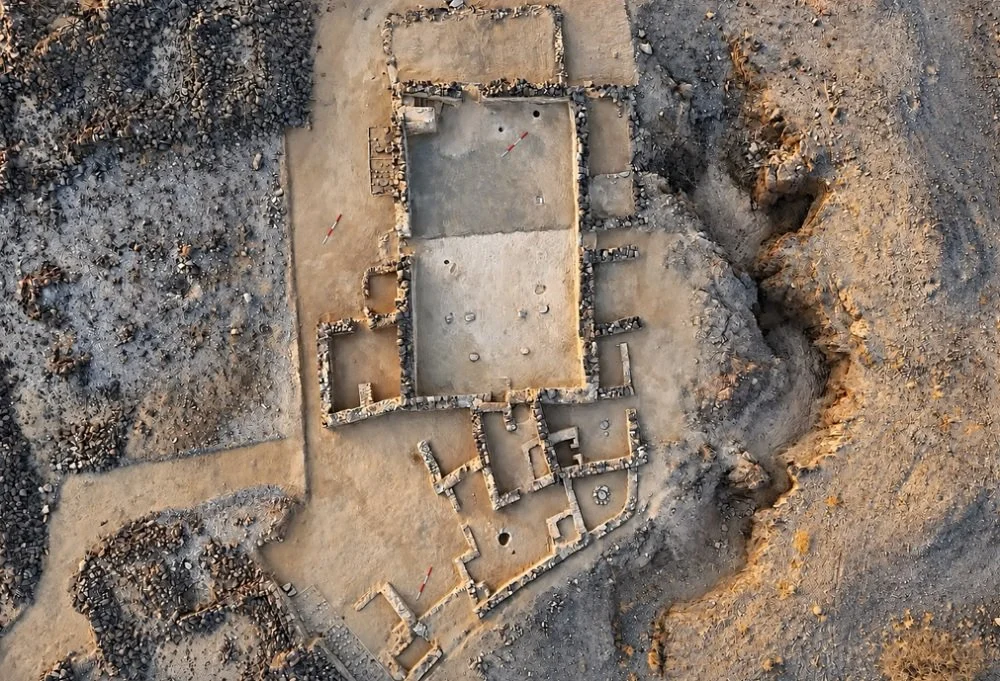
Archaeologists operating within the Al-Ma’malah archaeological site in the Al-Baha region of southwestern Saudi Arabia have unearthed the remnants of a mosque dating back to the first century of the Hijri calendar. This significant discovery, which marks a pivotal moment in the study of early Islamic architectural history, sheds new light on the expansion of religious and social infrastructure during the foundational era of the Islamic civilization, approximately 1,300 years ago.
The findings, announced following the conclusion of the fourth excavation season at the site near Al-Aqiq, provide a rare glimpse into the transition of architectural styles and the socio-religious fabric of the early Islamic period. The Saudi Heritage Commission, which spearheaded the research, confirmed that the structure dates back to the first century Hijri, aligning with the late 7th or early 8th century AD.
Architectural Features and Structural Integrity
The mosque, situated on the western periphery of a larger ancient settlement, measures approximately 16 meters in length from north to south and 10 meters in width from east to west. Despite the passage of thirteen centuries, the structural footprint remains remarkably intact, allowing experts to reconstruct the building’s original layout with high precision.
The construction methodology reflects the sophisticated masonry skills of the era. The primary walls were erected using meticulously hewn blocks of local granite, a durable material that has allowed the structure to withstand the harsh environmental conditions of the region for over a millennium. Evidence of gypsum plastering on the interior walls indicates that the early occupants prioritized both aesthetics and interior comfort, creating a smooth, refined surface finish that likely helped regulate temperature and provided a clean environment for congregational worship.
A defining feature of the mosque is its well-preserved mihrab, the niche that denotes the qibla, or the direction of prayer toward the Kaaba in Mecca. The presence of this architectural element is crucial for historians, as it confirms the orientation of early Islamic religious spaces in remote provinces, demonstrating a high degree of navigational and mathematical accuracy consistent with early Islamic science. Additionally, the structure features three distinct entrances located on the eastern, western, and southern sides, suggesting a site designed for high accessibility for the local population.
Uncovering the Ancillary Structures
Beyond the main prayer hall, the excavation revealed a complex of eight interconnected rooms. Preliminary analysis suggests these chambers served multiple functions, ranging from administrative quarters to housing for travelers or students. Most notably, archaeologists identified a distinct square structure in the southeastern corner of the complex. Expert consensus points to this as the remains of a minaret, one of the earliest examples of such a structure in the region.
The presence of a dedicated tower for the call to prayer (adhan) at this early stage of Islamic history is a noteworthy find. While early mosques in Medina and Kufa often lacked elaborate vertical features, the Al-Ma’malah discovery suggests that architectural innovations—including the minaret—began to proliferate across the Arabian Peninsula much earlier than some previous academic models had proposed.
The Historical Significance of Al-Ma’malah
The Al-Baha region has long been recognized as a historical crossroads, home to ancient trade routes that connected the southern Arabian Peninsula with the northern centers of the Islamic Caliphate. The discovery of a mosque of this scale in Al-Ma’malah implies that the site was a thriving hub of economic and social activity during the Umayyad or early Abbasid periods.
The site is not merely a religious monument but a testament to the stability of the early Islamic state. By the first century Hijri, the Islamic administration had established a network of urban and semi-urban centers that ensured the cohesive governance of the region. The mosque served as the heart of this community, acting as a place of worship, a forum for public discourse, and a center for local administration. The presence of epigraphic inscriptions found within the site provides further evidence of the literacy levels and the cultural identity of the inhabitants, offering historians a treasure trove of linguistic data that may clarify the evolution of early Arabic scripts.
The Saudi Heritage Commission’s Strategic Vision
The excavation at Al-Ma’malah is part of a broader, long-term initiative by the Saudi Heritage Commission to survey, preserve, and promote the Kingdom’s archaeological heritage. Under the framework of Vision 2030, Saudi Arabia has significantly increased its investment in archaeological research, seeking to recontextualize the peninsula as a central player in global human history.
"The discovery at Al-Ma’malah is a cornerstone of our efforts to document the architectural evolution of the early Islamic era," a spokesperson for the Commission noted in a summary report. By cataloging these sites, the Saudi government aims to foster a deeper understanding of the Islamic Golden Age’s precursors and to integrate these findings into the national identity, while simultaneously developing the sites as cultural tourism destinations.
Chronology of Excavation and Preservation
The archaeological work at Al-Ma’malah has been conducted in a phased approach:
- Initial Survey: Preliminary surface surveys identified the site’s potential based on pottery shards and stone alignments.
- Phase I & II: Focused on mapping the settlement perimeter and identifying the primary residential zones.
- Phase III: Excavation moved toward the central area, uncovering the foundations of the main public structure.
- Phase IV: The current phase, which successfully unearthed the mosque, the mihrab, and the ancillary rooms, and identified the minaret foundation.
The systematic nature of these excavations reflects modern archaeological standards. Each layer of soil is carefully excavated to preserve fragile artifacts—ranging from pottery and coins to everyday domestic tools—that provide a complete picture of the site’s historical occupancy.
Broader Implications for Islamic Architecture
The discovery at Al-Ma’malah forces a re-evaluation of the geographical distribution of early Islamic architecture. Traditionally, scholarship focused heavily on the architectural developments in major urban centers like Damascus, Baghdad, and Cairo. However, this find highlights that rural and regional settlements were not peripheral; they were actively adopting and adapting new architectural standards as they emerged.
The use of granite—a material requiring significant labor to carve—suggests that the community in Al-Ma’malah possessed considerable resources and that the construction of a mosque was a state-supported or community-led endeavor of high importance. Furthermore, the layout of the mosque suggests that early Islamic architects were already experimenting with multi-functional space, integrating living and administrative areas into the religious complex, a practice that would later influence the design of larger mosque-madrasa complexes in later centuries.
The Role of Technology in Modern Archaeology
The success of the Al-Ma’malah project is also a victory for modern technological application in archaeology. The use of high-resolution drone photography, ground-penetrating radar, and 3D laser scanning allowed the research team to visualize the site before physical excavation began. This non-invasive approach minimized damage to the sensitive archaeological layers and allowed for more accurate documentation of the site’s spatial relationships.
As the team prepares for future excavation seasons, the focus will likely shift toward carbon dating the organic materials found within the layers, such as charred wood or seeds, to provide an even more precise timeline of the mosque’s construction and eventual abandonment.
Looking Toward the Future
The preservation of the Al-Ma’malah site is now a primary concern for the Saudi Heritage Commission. Plans are already in motion to stabilize the remaining walls and protect the site from environmental degradation. The commission intends to implement a long-term conservation plan that will eventually allow for public access, providing researchers and tourists alike with the opportunity to walk through a site that has remained silent for over a thousand years.
The discovery serves as a reminder that the desert landscapes of the Arabian Peninsula hold vast, untapped archives of human history. With every site uncovered, the narrative of the early Islamic world becomes more nuanced, replacing generalized historical assumptions with tangible, evidence-based facts. As the academic community begins to analyze the findings from the fourth season at Al-Ma’malah, it is expected that this 1,300-year-old mosque will become a focal point for studies regarding early Islamic urban planning, socio-economic structures, and religious practice.
In conclusion, the unearthing of this ancient mosque in the Al-Baha region represents a significant milestone in archaeological research. It not only fills a critical gap in our knowledge of early Islamic architecture but also reaffirms the importance of systematic preservation in telling the story of humanity’s past. As the Saudi Heritage Commission continues its work, the world awaits further revelations from the sands of Al-Ma’malah, which promise to continue enriching our understanding of the profound cultural and religious developments that occurred during the first century of the Hijri era.
