
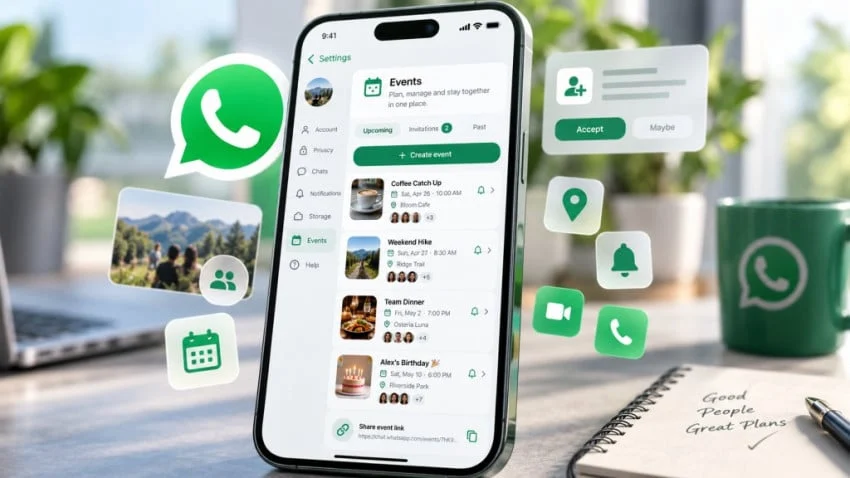
WhatsApp is currently rolling out a sophisticated new feature known as the Events Hub, designed to centralize the creation, management, and monitoring of events directly within the messaging interface. This development marks a significant shift in the platform’s utility, moving beyond simple real-time communication into the realm of comprehensive productivity and organizational management. Previously restricted to the confines of large-scale communities and specific group chats, the Events Hub is now being integrated into personal, one-on-one conversations, signaling Meta’s broader strategic intent to consolidate personal and professional scheduling within its ecosystem.
Evolution of WhatsApp as a Productivity Tool
The history of WhatsApp has been defined by its transition from a basic SMS alternative to a multifaceted digital communication infrastructure. Since its acquisition by Facebook (now Meta) in 2014, the platform has steadily introduced features that cater to the evolving needs of its two billion-plus global users. The introduction of the Events Hub is the latest iteration of this expansion.
Historically, coordinating an event through WhatsApp involved a fragmented experience. Users relied on manual text entries, pinning messages to keep track of details, or jumping between the app and external calendar services like Google Calendar or Apple Calendar. By embedding a dedicated events interface, Meta is addressing the "friction of context switching"—the inefficiency caused by moving between multiple applications to organize a single meeting or social gathering. This move positions WhatsApp as a direct competitor to specialized event-planning tools and lightweight project management software.
Functional Mechanics of the Events Hub
The architecture of the Events Hub is designed for simplicity and efficiency. Within the updated interface, users can initiate an event creation prompt that opens a structured form. This form requires specific data points: a descriptive name for the event, a comprehensive description, start and end dates, exact timestamps, and a physical or virtual location.
One of the most notable features is the integration of WhatsApp Call links. By allowing organizers to append a video or audio call link directly to the event metadata, WhatsApp ensures that virtual meetings can commence without the need to distribute separate meeting invites. Furthermore, the platform introduces a sophisticated notification layer. By default, the system triggers an automated reminder one hour prior to the event, though users retain the granular control to modify these notification intervals based on their personal preferences.
Perhaps the most innovative aspect of the update is the accessibility layer designed for non-users. Organizers can generate a unique, shareable link that directs invitees to a web-based portal. This allows individuals who do not possess a WhatsApp account to view the event details, venue information, and scheduling, and to confirm their attendance using only their name and telephone number. This feature effectively bridges the gap between the closed ecosystem of WhatsApp and the open internet, lowering the barrier to entry for event participation.
The Timeline of Meta’s Feature Integration
The path to the Events Hub began with the introduction of "Communities" in 2022. Communities allowed users to bring together disparate groups under one umbrella, providing a structure for schools, neighborhood associations, and corporate teams. It was within this environment that the initial version of event scheduling was tested. The positive reception of these tools, combined with data indicating that users were increasingly utilizing WhatsApp for professional and administrative coordination, prompted the engineering teams at Meta to prioritize a standalone hub.
In early 2024, beta testers in select regions began reporting the appearance of an "Events" icon within the attachments menu of personal chats. Throughout the second and third quarters of the year, Meta refined the user interface, focusing on reducing the number of taps required to create an event. The current global rollout represents the culmination of this testing phase, with the feature now being pushed to both Android and iOS versions of the application.
Market Context and Strategic Implications
The decision to expand event management to personal chats is not an arbitrary design choice; it is a calculated response to the competitive landscape of messaging apps. Platforms like Telegram and Slack have long prioritized organizational tools, attracting power users who require more than just instant messaging. By integrating these tools, WhatsApp is reinforcing its position as a "super-app" in emerging markets, where it is often the primary, if not exclusive, tool for digital coordination.
From an analytical perspective, this update serves three primary objectives for Meta:
- Increased User Retention: By embedding calendar and event management into the chat experience, users spend more time within the WhatsApp environment, reducing the necessity to migrate to external apps.
- Data Enrichment: While Meta has maintained its commitment to end-to-end encryption, the metadata generated by these events provides the company with valuable insights into the social and professional patterns of its user base, which can be leveraged for future product development.
- Monetization Potential: Although the current iteration of the Events Hub is free, the ability for businesses to host professional events through the platform provides a clear path for future premium integration, particularly for the WhatsApp Business API.
Industry Reactions and Expert Analysis
Tech industry analysts have largely viewed the rollout as a pragmatic evolution. "WhatsApp is essentially cannibalizing the functionality of basic calendar apps," says Marcus Thorne, a digital infrastructure analyst. "By keeping the user within the ecosystem, they aren’t just selling a messaging service; they are selling a digital workspace. The ability for non-users to RSVP is particularly clever, as it serves as a subtle marketing tool to encourage adoption among those who have resisted the platform until now."
However, privacy advocates have raised questions regarding the handling of attendee data, particularly for those who do not have a WhatsApp account. Meta has responded by stating that the data collected from non-users is strictly limited to what is necessary for the event’s operation and is subject to the company’s broader privacy policies. The company emphasizes that the end-to-end encryption that defines WhatsApp’s messaging remains the foundation of its security posture.
The Future of Social and Professional Coordination
The introduction of the Events Hub is unlikely to be the final step in WhatsApp’s transformation. Industry observers expect that the next phase will involve tighter integration with external calendar services, allowing for two-way synchronization. Currently, the Events Hub functions as a silo; while it manages events within the app, it does not automatically export those events to a user’s primary system calendar unless the user performs the action manually.
If WhatsApp can resolve this interoperability issue, it would eliminate the last major hurdle preventing the app from becoming a true personal assistant. Furthermore, the inclusion of location data suggests that future updates may include real-time navigation integration or mapping services, further deepening the app’s utility.
Conclusion
The Events Hub represents a significant milestone in WhatsApp’s transition from a communication tool to a central hub for digital organization. By extending sophisticated scheduling capabilities to individual chats, Meta is acknowledging that the boundaries between personal, social, and professional communication are increasingly blurred.
For the average user, the benefits are clear: reduced clutter, better organization, and a more streamlined process for managing commitments. For Meta, the move is a strategic fortification of its dominance in the messaging space. As the feature reaches all corners of the globe, the impact on how we coordinate our daily lives will likely be substantial, reinforcing the reality that for billions of people, the digital world is increasingly contained within the familiar green-and-white interface of WhatsApp. Whether this leads to increased productivity or merely more frequent digital notifications remains to be seen, but the intent to integrate deeper into the fabric of daily life is unmistakable.
