
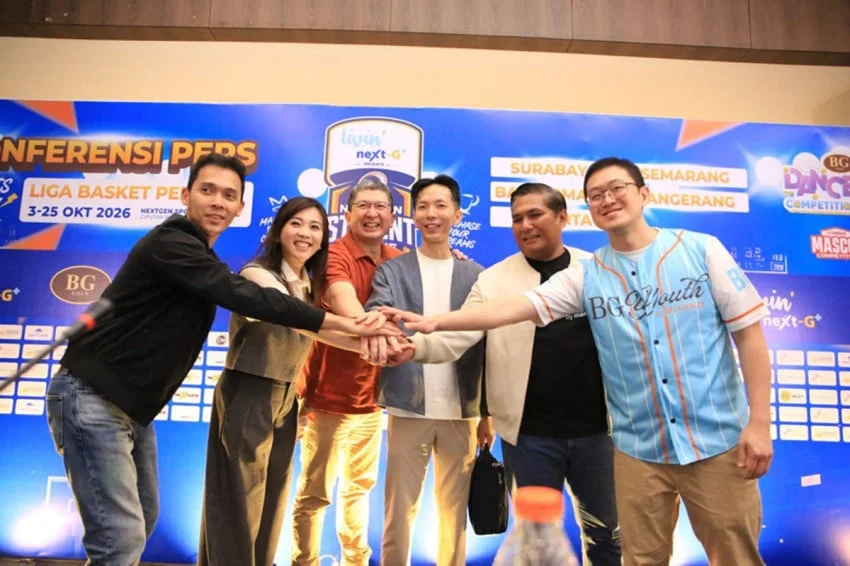
The landscape of youth sports in Indonesia is undergoing a significant transformation as the Nextgen Student League (NSL) marks its fourth consecutive year of operation. With the official launch of the Livin Next-G Presents Cleo Nextgen Student League With BG Gold Season 2026–2027, organizers have announced an ambitious expansion strategy that will see the competition hosted simultaneously across five major metropolitan hubs: Surabaya, Semarang, Banjarmasin, Tangerang, and Jakarta. This development signals a shift from a localized regional tournament to a national-scale developmental ecosystem, designed to address the growing demand for structured athletic competition among school-aged youth.
The 2026–2027 season represents a critical juncture for the league, which began as a modest initiative in Surabaya. By scaling operations to include cities in Java and Kalimantan, the NSL is positioning itself as a primary incubator for high-level basketball talent, bridging the gap between grassroots physical education and professional-grade athletic pathways.
The Evolution of a Grassroots Phenomenon
When the Nextgen Student League was first conceptualized, the primary objective was to provide a platform for student-athletes in Surabaya to showcase their skills in a competitive, regulated environment. Over the past four years, the league has systematically refined its operational model, moving from a single-city tournament to a comprehensive regional circuit.
The timeline of the NSL’s growth reflects a deliberate strategy of gradual scaling. The inaugural season focused exclusively on establishing the administrative and logistical framework within East Java. Subsequent seasons prioritized the standardization of officiating, the implementation of professional statistical tracking, and the development of a proprietary league management system. By the third season, the league had successfully integrated a tiered participation structure, allowing for greater inclusivity across different age groups, ranging from elementary school (SD) to senior high school (SMA).
For the 2026–2027 season, the organizers have chosen to prioritize the East Java Zone as the inaugural stage for the competition. Scheduled to run from October 3 to October 25, 2026, the matches will be held at the Nextgen Arena, located on the fourth floor of the Ciputra World Mall in Surabaya. This venue serves as the flagship facility for the league, offering a high-standard playing surface that aligns with the professional requirements of the participating teams.
Statistical Scale and Participation Metrics
The growth of the NSL is best quantified by its burgeoning participation numbers. According to official data released by the league founder, Sudiantowi Limanauw—commonly known as Awen—the 2026–2027 season is set to host an unprecedented volume of talent.
The league has confirmed the involvement of over 500 schools and 750 individual teams. Perhaps most significantly, the total participant count exceeds 8,000 student-athletes. This massive influx of participants necessitates a sophisticated logistical operation, involving coordination between school administrators, athletic directors, coaching staff, and local government bodies.
The expansion into Semarang, Banjarmasin, Tangerang, and Jakarta is not merely a geographic convenience; it is a calculated effort to tap into the diverse basketball cultures of Indonesia’s major islands. By decentralizing the competition, the NSL aims to identify talent that might otherwise go unnoticed in the traditional talent-scouting hubs of Jakarta and Surabaya.
Strategic Vision and Holistic Development
During a press briefing held on Saturday, September 19, 2026, Awen emphasized that the mission of the NSL extends far beyond the pursuit of trophies or championship titles. The league is structured as an educational vehicle, utilizing the sport of basketball as a medium to instill character, discipline, and emotional intelligence in participants.
"The expansion to five cities is a milestone that marks our commitment to the sustainability of Indonesian basketball," Awen stated. "Our objective has always been to build a sustainable pipeline. We are looking at a system where a player can grow through the league over several years, transitioning from the elementary division to the high school level with consistent exposure to high-pressure, organized play."
This philosophy of "holistic athlete development" is integrated into every facet of the league. Players are coached not only on technical fundamentals—such as ball handling, shooting mechanics, and defensive positioning—but also on the psychological aspects of the game. The league’s curriculum emphasizes critical decision-making under pressure, the nuance of teamwork, and the ability to manage the emotional volatility inherent in competitive sports, including both the highs of victory and the lessons learned from defeat.
Impact on the Broader Sporting Ecosystem
The NSL has evolved into a multi-stakeholder ecosystem. Its current iteration involves a complex network of participants that includes private and public schools, professional coaching staff, parents, community organizers, and corporate sponsors. The involvement of major sponsors, such as Livin by Mandiri and Cleo, underscores the commercial and cultural viability of youth basketball in Indonesia.
Industry analysts suggest that the league’s model addresses a long-standing structural deficiency in Indonesian sports: the lack of a standardized, multi-year developmental pathway. Historically, student-athletes have struggled to find consistent competition once they move past local school-based tournaments. The NSL fills this void by creating a recurring, season-long structure that forces teams to maintain competitive standards throughout the academic year.
Furthermore, the league’s expansion into Kalimantan (Banjarmasin) highlights an effort to foster inter-regional competitive integration. This cross-pollination of basketball styles and athletic cultures is essential for raising the overall quality of the sport in the country. By providing scouts and coaches from higher tiers of basketball with a centralized database of performance statistics and historical data on these 8,000+ athletes, the NSL is effectively modernizing the recruiting process.
Challenges and Future Prospects
Despite the rapid success, the NSL faces the inherent challenges of scaling any youth-centric organization. Maintaining consistency in the quality of officiating, ensuring the safety of all participants across disparate venues, and managing the academic commitments of students alongside their athletic schedules are ongoing operational priorities.
However, the organizational infrastructure appears robust. By establishing the Nextgen Arena as a center of excellence in Surabaya, the league has set a benchmark that other cities are expected to emulate. The league’s administration has also noted that they are implementing stricter safety protocols and training for staff to ensure that the rapid expansion does not compromise the quality of the student experience.
Looking ahead, the success of the 2026–2027 season will likely determine the potential for further expansion. Industry experts observe that if the league can successfully navigate the complexities of a multi-city tournament of this magnitude, it could become the blueprint for national student leagues in other sports disciplines across Indonesia.
The Role of Corporate Support
The backing from corporate entities like Bank Mandiri and Cleo is vital. In the modern sports landscape, financial support provides the necessary resources for state-of-the-art facilities, digital infrastructure for match tracking, and the ability to host events in high-visibility locations like shopping malls, which helps to normalize basketball as a central part of the lifestyle of Indonesian youth.
These partnerships also create a professional environment for the students. For many of the participants, competing in an environment supported by major national brands provides a sense of prestige and motivation that is often lacking in standard school-based intramural competitions.
Conclusion
The Livin Next-G Presents Cleo Nextgen Student League With BG Gold Season 2026–2027 is a significant development in the trajectory of Indonesian youth sports. By successfully transitioning from a local tournament to a five-city national league, the organizers are creating a sustainable, high-performance environment for the next generation of Indonesian basketball players.
As the matches begin in October, the focus will be on whether the league can maintain its foundational values of sportsmanship and character development while managing the scale of 750 teams. With its emphasis on structured progression and a holistic approach to athlete development, the NSL is well-positioned to remain at the forefront of the nation’s athletic culture, serving as a vital bridge between school sports and the professional dreams of thousands of young Indonesians. The success of this season will not only be measured in scores and standings but in the long-term impact on the development of the youth who participate in its rigorous, well-organized competitive environment.
