
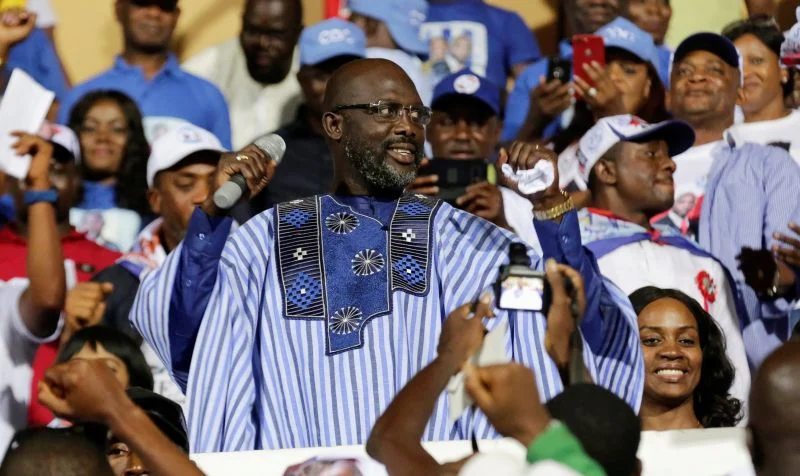
The transition of athletes from the sporting arena to the political stage is a phenomenon observed across various cultures and eras, yet few have achieved a trajectory as monumental as that of George Tawlon Manneh Oppong Ousman Weah. Long before he assumed the presidency of Liberia in December 2017, Weah captured global attention as a footballing icon, breaking barriers as the first and, to date, only African player to win both the FIFA World Player of the Year and the prestigious Ballon d’Or in 1995. His journey from the sandy pitches of Monrovia to the corridors of executive power represents a rare convergence of athletic excellence, humanitarian dedication, and national leadership. By leveraging his immense popularity and deep-rooted connection to the Liberian populace, Weah successfully pivoted from a celebrated career in Europe’s elite football leagues to steering a nation recovering from decades of civil conflict and socio-economic devastation.
Main Facts of the Historic Transition
In December 2017, George Weah was officially elected as the 25th President of Liberia, succeeding Ellen Johnson Sirleaf in what was heralded as the country’s first democratic transfer of power in over seven decades. Winning the runoff election against then-Vice President Joseph Boakai under the banner of the Coalition for Democratic Change (CDC), Weah secured a decisive democratic mandate. This electoral victory was not merely a political milestone; it was the culmination of a decade-long political evolution that began immediately after his retirement from professional football in 2003.
Weah’s rise to the presidency was underpinned by a profound narrative of national identity and hope. In a country deeply scarred by two brutal civil wars spanning from 1989 to 2003, Weah’s global success served as a unifying symbol of national pride. Unlike many of his political contemporaries who hailed from elite backgrounds, Weah’s humble beginnings in the Clara Town slum of Monrovia resonated powerfully with the country’s marginalized youth and working-class citizens. His campaign focused heavily on combating corruption, reforming the education system, improving infrastructure, and generating employment opportunities—core issues that struck a chord with a population yearning for systemic change.
Early Life and the Genesis of a Sporting Prodigy
Born on October 1, 1966, in Monrovia, George Weah’s introduction to football was entirely grassroots. Raised by his grandmother in a modest household, Weah spent his formative years playing barefoot on the sandy, unstructured pitches of the Liberian capital. Despite the absence of formal training facilities or coaching infrastructure, his natural athleticism, imposing physical stature, and exceptional ball control quickly set him apart from his peers.
Weah’s talent soon caught the attention of local clubs, leading to stints with several Liberian teams, including Invincible Eleven, Mighty Barolle, Bongrange Bonguine, and Young Survivors of Clara Town. It was during his time with Young Survivors—a club notably operating without a formal coach—that Weah’s leadership qualities began to manifest. Displaying skill and tactical awareness far beyond his years, he played an instrumental role in guiding the team from local obscurity to the upper echelons of the Liberian football league system. These formative experiences forged a resilience and adaptability that would characterize both his athletic career and his subsequent political endeavors.
Chronology of a Stellar European Football Career
Weah’s breakthrough into professional international football began in 1987 when he was scouted and signed by Tonnerre Yaoundé, one of Cameroon’s most prestigious clubs. Capitalizing on the opportunity, Weah made an immediate impact, helping the team secure the Cameroonian championship in his debut season. His performances in Central Africa did not go unnoticed by European scouts, marking the beginning of a remarkable trajectory across the continent’s top leagues.
In 1988, French club AS Monaco, then managed by Arsène Wenger, acquired the young Liberian forward. Wenger’s mentorship proved crucial in refining Weah’s raw talent into disciplined, world-class execution. During his five seasons with Monaco (1987–1992), Weah netted 57 goals and played a pivotal role in capturing the French Cup (Coupe de France) in 1991. His combination of blistering acceleration, technical proficiency, and clinical finishing established him as one of the most formidable strikers in French football.
Following his success at Monaco, Weah transferred to Paris Saint-Germain (PSG) in 1992. His tenure in the French capital cemented his status as a global superstar. At PSG, Weah won the French league title, secured another French Cup, and spearheaded the club’s memorable run to the semi-finals of the UEFA Champions League in the 1994–1995 season, finishing as the tournament’s top scorer. Over 123 appearances for PSG, he contributed 37 goals and numerous assists, dominating defenses with his relentless work ethic and uncompromised technical ability.
The pinnacle of Weah’s club career, however, came during his spell with Italian giants AC Milan from 1995 to 2000. Purchased for a substantial fee, Weah adapted seamlessly to the tactical rigor of Serie A. In his debut 1995–1996 season, he fired Milan to the Scudetto, repeating the feat in 1999. Across 114 league appearances for the Rossoneri, Weah scored 51 goals. It was during this golden period that he achieved historic individual recognition, being named FIFA World Player of the Year, the Ballon d’Or, and the African Footballer of the Year in 1995—a rare treble that solidified his legacy as an immortal of the sport. Following his departure from Milan, Weah enjoyed brief spells in the English Premier League with Chelsea and Manchester City, before concluding his professional playing career with Al-Jazira in the United Arab Emirates in 2003.
The Pivot to Politics: From Humanitarian to Statesman
Upon hanging up his boots in 2003, George Weah faced a critical juncture. While many retired athletes transition into coaching, broadcasting, or commercial ventures, Weah turned his focus toward the socio-political reconstruction of his homeland. Liberia was emerging from a devastating fourteen-year civil conflict that had claimed an estimated 250,000 lives and displaced a large portion of the population. Weah had already utilized his wealth and international platform during his playing days to fund humanitarian initiatives, serving as a UNICEF Goodwill Ambassador and financing educational and health programs for underprivileged Liberian youth.
Recognizing that philanthropy alone could not resolve the systemic structural failures plaguing Liberia, Weah entered formal politics. In 2005, just two years after retiring from football, he announced his candidacy for the presidency. Despite winning the first round of the 2005 election, he was ultimately defeated in the runoff by Ellen Johnson Sirleaf, an economist and former high-ranking official at the World Bank. Political analysts attributed his initial loss to criticisms regarding his lack of formal education and political experience at the time.
Undeterred by the defeat, Weah adopted a long-term strategic approach to his political career. Demonstrating a commitment to personal and professional growth, he enrolled at DeVry University in Miami, Florida, earning a Bachelor of Arts degree in Business Administration in 2011. Concurrently, he remained active in Liberian politics, serving as a senator for Montserrado County from 2014 to 2018. This legislative tenure provided him with essential governance experience, policy formulation skills, and a deeper understanding of institutional administration, positioning him as a viable and credible candidate for the nation’s highest office in the subsequent electoral cycle.
Official Responses and International Reactions
Weah’s victory in the 2017 presidential election drew widespread acclaim and congratulatory messages from global leaders, international organizations, and sporting bodies. The transition marked a historic moment for the Economic Community of West African States (ECOWAS) and the African Union (AU), both of which praised Liberia for executing a peaceful and transparent democratic process.
FIFA, under the leadership of president Gianni Infantino, issued a formal statement celebrating Weah’s transition from a legendary footballer to a democratically elected head of state, highlighting his journey as an inspiration to youth worldwide. Diplomats from the United States, the European Union, and the United Nations underscored the importance of the peaceful transfer of power, viewing it as a testament to the strengthening of democratic institutions in West Africa following years of regional instability.
Domestic reactions were characterized by a mixture of profound optimism and cautious realism. Supporters flooded the streets of Monrovia in jubilant celebration, viewing Weah as a populist champion capable of breaking the cycle of political elitism. Conversely, political opponents and civil society organizations emphasized the immense challenges awaiting the incoming administration, urging the new government to prioritize economic stabilization, judicial transparency, and infrastructure rehabilitation.
Broader Impact and Implications of Weah’s Presidency
The election of George Weah holds significant implications not only for Liberia but for the broader discourse on political leadership in Africa. His presidency challenged traditional paradigms of political recruitment, proving that non-traditional candidates with strong populist backing and unblemished moral authority can successfully challenge entrenched political establishments.
From an economic and developmental perspective, Weah’s administration inherited a nation grappling with hyperinflation, high unemployment rates, and severe infrastructural deficits, which were further exacerbated by external shocks such as the aftermath of the West African Ebola virus epidemic. Observers note that while Weah’s populist appeal and emotional connection to the electorate served as powerful electoral tools, governing a post-conflict nation required complex technocratic execution, fiscal discipline, and sustained international partnerships.
Furthermore, Weah’s tenure highlighted the intersection of celebrity culture and modern governance. His global network allowed him to advocate effectively for international aid, debt relief, and foreign investment. At the same time, his administration faced rigorous domestic scrutiny regarding governance transparency, anti-corruption enforcement, and public sector accountability.
Ultimately, the legacy of George Weah extends far beyond his athletic achievements on the European football pitch or his historic occupancy of the Executive Mansion in Monrovia. His life story remains a unique case study in modern history—illustrating how individual excellence, national loyalty, and an unwavering commitment to public service can alter the destiny of both an individual and an entire nation. Whether viewed through the lens of sports history or political science, Weah’s journey from the dust of Clara Town to the global stage stands as a testament to the transformative power of ambition, resilience, and democratic participation.
