The human hand, a complex instrument of anatomy, has long been a subject of fascination not only in medicine and evolutionary biology but also in the realms of behavioral psychology and non-verbal communication. While the primary function of the hand is tactile exploration and manipulation of the environment, many researchers suggest that involuntary physical habits, such as how an individual clenches their fist, can serve as a subconscious reflection of internal personality traits. This phenomenon, often explored through the lens of body language analysis, posits that the way a person positions their thumb during a clenched fist maneuver reveals deep-seated emotional tendencies and decision-making styles.
The Psychology Behind Non-Verbal Cues
In the field of behavioral science, non-verbal cues—also known as kinesics—account for a significant portion of human communication. The act of making a fist is a primitive, instinctual response often associated with defense, determination, or internal stress. According to practitioners of behavioral analysis, individuals rarely consciously think about where to place their thumbs when forming a fist. Because this action is performed subconsciously, it bypasses the "social mask" people often wear, potentially revealing a more authentic snapshot of their temperament.
The study of such physical indicators, often categorized under "pop psychology," has gained traction in digital wellness spaces, such as The Minds Journal, which provides frameworks for individuals to engage in self-reflection. While these tests are not clinical diagnostic tools, they offer a methodology for individuals to observe their own behavioral patterns, potentially leading to increased self-awareness regarding stress management, social interaction, and leadership styles.
Categorizing Fist Formations: A Behavioral Overview
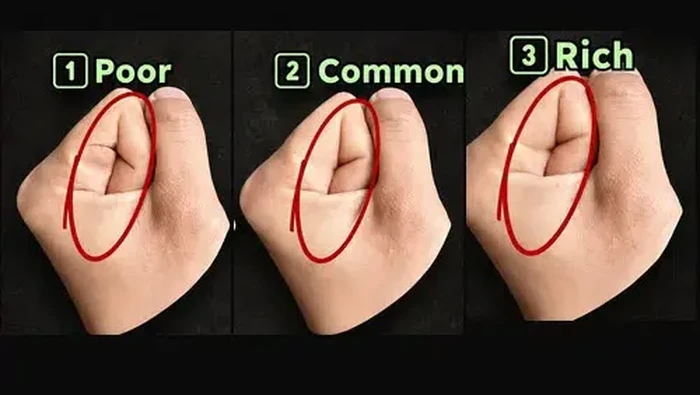
Psychological observations of hand clenching generally identify three primary configurations. Each configuration is associated with specific psychological profiles that have been documented in observational studies of non-verbal behavior.
The Reserved Internalizer (Thumb tucked low)
Individuals who clench their fists with the thumb tucked low and pressed against the fingers or the palm often exhibit a highly controlled, introverted personality. In professional and personal settings, these individuals are frequently perceived as reliable, calm, and composed. However, the internal landscape of this group is often characterized by a high degree of self-reliance. They tend to shoulder burdens alone rather than seeking support, which can lead to chronic stress or, in some cases, burnout.
Analysis of this personality type suggests that the subconscious decision to hide the thumb is a protective mechanism. It reflects a desire to shield oneself from external intrusion. While this provides a sense of self-sufficiency, psychological consultants often advise that these individuals learn to delegate and communicate their needs, as the habit of "bottling up" emotions can lead to a sense of isolation or unexpressed resentment.
The Balanced Mediator (Thumb positioned in the middle)
The second category involves the thumb resting comfortably across the middle of the fingers. This configuration is widely associated with a balanced, socially adaptive personality. Individuals in this group are often the "social glue" within their peer groups or organizations. They are capable of navigating both high-energy, chaotic environments and quiet, reflective spaces with relative ease.
From an organizational standpoint, these individuals are often effective mediators. However, they face a specific challenge: decision-making paralysis. Because they are adept at seeing multiple sides of a situation—an essential trait for diplomacy—they often struggle to finalize decisions, particularly when stakes are high. To improve their efficiency, behavioral experts suggest that these individuals should rely more heavily on their intuition and set firm time limits for evaluation to prevent becoming caught in a cycle of analysis paralysis.
The Decisive Leader (Thumb raised or leading)
The final category features the thumb resting high, often acting as a "leading" digit in the clenched fist. This formation is frequently linked to high self-confidence, a strong sense of purpose, and an optimistic outlook. Individuals who favor this style tend to view failure not as a terminal event, but as a necessary component of the learning process.
Despite their positive traits, this group is prone to the "trap of certainty." Because they are inherently decisive, they may inadvertently become rigid or dismissive of alternative viewpoints, viewing the adoption of new information as a sign of weakness or inconsistency. For these individuals, the developmental goal is to cultivate cognitive flexibility and the humility to acknowledge when a change in course is necessary.
Scientific Context and Limitations
It is crucial to note that while these personality tests provide interesting insights into behavioral patterns, they lack the empirical rigor of standardized personality assessments such as the Big Five personality traits (Openness, Conscientiousness, Extraversion, Agreeableness, and Neuroticism). The scientific community generally classifies these visual tests as "Barnum Effect" examples—where individuals believe vague or general personality descriptions are highly accurate for them personally.

However, the value of such exercises lies in their role as a catalyst for mindfulness. By encouraging individuals to pay attention to their physical habits, these tests prompt a pause in daily life. This moment of reflection can help individuals identify potential stress indicators or areas for personal growth.
Implications for Modern Workplace and Social Interaction
The rise of interest in these behavioral markers coincides with an increasing global emphasis on emotional intelligence (EQ). In the modern workplace, the ability to recognize one’s own behavioral tendencies—whether one is a natural mediator, a reserved worker, or a decisive leader—is a significant asset.
For instance, understanding that one has a tendency toward "internalizing" (the first fist type) can help an employee recognize the need to utilize support systems or mental health resources before reaching a state of exhaustion. Conversely, those who identify as "mediators" (the second type) can learn to proactively seek structure to expedite their decision-making processes.
A Chronology of Behavioral Insight
The history of interpreting physical traits to understand character is ancient. Physiognomy, the practice of assessing personality from physical features, dates back to ancient Greece, with philosophers like Aristotle writing on the subject. While modern science has largely debunked the notion that physical appearance dictates morality or intelligence, the study of behavioral indicators—how we move, hold our bodies, and express ourselves—has evolved into the reputable field of behavioral psychology.

Over the last decade, the digitization of these theories has allowed for rapid dissemination. In September 2026, interest in these self-diagnostic tools saw a resurgence, driven by a growing social movement toward holistic wellness and self-improvement. The current discourse highlights a shift from looking at external achievements to understanding internal mechanisms, such as how we react to stress, how we perceive failure, and how we interact with our peers.
Conclusion: Moving Toward Self-Awareness
The exercise of analyzing one’s own fist configuration serves as a microcosm of the broader journey of self-discovery. Whether an individual finds themselves in the category of the reserved, the balanced, or the decisive, the real utility of the test is not the categorization itself, but the invitation to reflect on one’s own nature.
As society continues to place higher value on mental health and interpersonal communication, these simple, accessible tools for introspection play an important role. By fostering a deeper understanding of our own subconscious habits, we are better equipped to refine our interactions with the world, improve our decision-making capacities, and lead more balanced lives. While these tests are not a replacement for professional psychological evaluation, they serve as a gentle, engaging entry point into the complex and fascinating landscape of the human psyche.