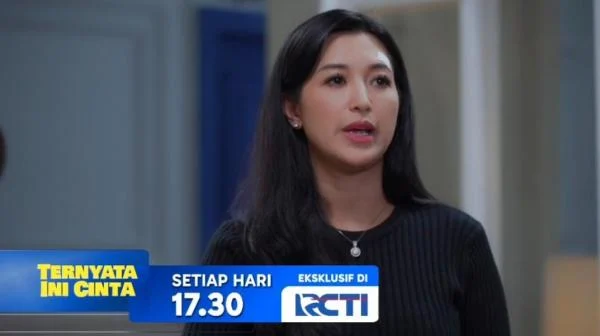
The landscape of Indonesian television drama continues to evolve, capturing millions of viewers through intricate storytelling that weaves together familial betrayal, youthful resilience, and high-stakes suspense. Among the frontrunners in this competitive entertainment sector is the acclaimed sinetron Ternyata Ini Cinta, broadcast daily on RCTI Channel 28. Pulling in strong viewership numbers at its 17.40 WIB timeslot, the series has successfully carved out a dedicated audience by anchoring its narrative in a potent blend of emotional family conflict, loyalty among friends, and the turbulent realities of teenage life.
Produced with high production values and featuring a dynamic ensemble cast, the series has recently reached a critical narrative turning point. As dark secrets surface, the characters find themselves thrust into perilous situations that test their moral boundaries, their courage, and the very limits of their endurance. The unfolding plot developments have not only heightened viewer engagement across social media platforms but have also cemented the show’s status as a dominant force in contemporary Indonesian primetime television.
Star-Studded Ensemble and Production Background
The compelling narrative of Ternyata Ini Cinta is brought to life by a carefully curated cast that bridges seasoned acting veterans with some of the most popular young talents in the Indonesian entertainment industry. The series stars Elsa Japasal in the pivotal role of Luna, alongside Ari Irham as Marco, Betrand Peto as Bima, Yusuf Kartiko as Saga, and Bebby Hatami as Mila. Supporting this youthful core are accomplished actors Sylvia Fully as Martha and Dafina Jamasir as Prisil, whose performances add considerable emotional depth and gravitas to the overarching storyline.
The integration of these diverse talents reflects a strategic programming choice by RCTI to appeal to a multi-generational audience. By pairing established names known for dramatic television with rising digital and musical stars like Elsa Japasal and Betrand Peto, the production successfully draws demographic segments ranging from teenagers to family households. This casting strategy has translated into sustained audience retention, making the 17.40 WIB slot a crucial anchor for the network’s early evening schedule. Industry analysts note that contemporary sinetrons must rely heavily on such synergistic casting to maintain relevance in an era where viewers have immediate access to alternative streaming platforms.
The Unraveling of a Dark Legacy: Saga’s Quest for Truth
At the heart of the current storyline is a devastating revelation that shatters the foundational trust within a prominent family. For weeks, viewers have followed the subtle breadcrumbs of a hidden past, which finally culminated in a narrative explosion when Saga uncovers the horrifying reality regarding his own father, Dewa. Armed with undeniable evidence, Saga learns that Dewa is the mastermind behind the tragic, fatal accident that claimed the life of Ryan—an event that has cast a long, dark shadow over the community.
This discovery places Saga in an untenable psychological and moral dilemma. Bound by filial duty yet repulsed by the monstrous criminality of his father, Saga chooses a path of resistance. Rather than remaining silent and complicit in the cover-up, he determines to break free from the psychological and physical confines of his father’s corrupt empire. His objective is clear: to expose Dewa’s systemic corruption and bring the truth to light, regardless of the personal cost.
However, the pursuit of justice in the world of Ternyata Ini Cinta is fraught with immediate danger. Dewa, accustomed to controlling every aspect of his domain, moves swiftly to neutralize the threat posed by his own son. Saga’s initial attempts to gather allies and broadcast the truth are brutally interrupted when he is intercepted, captured, and subjected to confinement by Dewa’s loyal and ruthless enforcers.
Despite being locked away and isolated from external communication, Saga’s resilience proves to be his defining trait. Through a calculated and daring escape maneuver, he manages to breach his confinement, elude his pursuers, and set his sights on a critical objective: finding Rifky. Only by reaching Rifky can Saga ensure that the documentary evidence and the verbal confession of his father’s sins are placed in hands capable of executing justice.
Escalating Peril: The Shadow over Luna and Rifky
While Saga fights his way out of captivity, the danger expands to encompass other key figures within the circle of truth-seekers. Recognizing that Luna and Rifky represent an ongoing vulnerability to his carefully constructed façade, Dewa issues explicit orders to his primary fixers, Reno and Ivan. Their mandate is uncompromising: place Luna and Rifky under 24-hour surveillance and eliminate any possibility of them uncovering further evidence.
Reno and Ivan execute this directive with cold efficiency, shadowing the pair as they navigate their daily routines. Yet, the antagonists soon escalate their tactics from mere surveillance to active sabotage, transforming routine activities into life-threatening hazards. The psychological tension reaches a boiling point during what should have been a carefree recreational outing—a motorcycle riding session featuring Luna and Rifky.
Unaware of the malignant forces operating in their immediate vicinity, Luna and Rifky embark on the journey, trusting in the safety of their equipment. However, an unseen saboteur has systematically compromised Luna’s vehicle. In a calculated act of sabotage, the braking system of Luna’s motorcycle has been deliberately dismantled.
As the journey progresses along a winding route, the inevitable mechanical failure occurs. When Luna attempts to engage her brakes to navigate a hazardous stretch of road, she is met with total unresponsiveness—the brakes have completely failed. The resulting crash is catastrophic, propelling Luna into a severe impact that leaves her critically injured and unconscious. This harrowing sequence not only highlights the ruthless nature of the antagonists but also serves as a pivotal emotional anchor for the upcoming episodes, as friends and allies must rally to save Luna while dealing with the fallout of the ongoing conspiracy.
Chronology of Conflict: Key Events Driving the Narrative
To fully understand the current trajectory of Ternyata Ini Cinta, it is essential to examine the chronological progression of events that have shaped the modern narrative arc. Serialized television of this magnitude relies on precise pacing to maintain audience investment over dozens of episodes.
The foundational conflict began with the unexplained circumstances surrounding Ryan’s death. Initially framed as a tragic, accidental occurrence, the incident lingered as an unresolved narrative wound, generating suspicion among the younger characters. As Luna, Rifky, and Saga began comparing notes, the veneer of normalcy surrounding Dewa’s business empire began to crack.
The timeline intensified dramatically over a compressed sequence of narrative days:
- The Discovery: Saga uncovers documentation and circumstantial proof linking Dewa directly to the sabotage that killed Ryan.
- The Confrontation and Capture: Saga attempts to confront his father and plan an escape route to publicize the truth, resulting in his violent abduction and detention by Reno and Ivan.
- The Escape: Utilizing an unguarded moment and leveraging his knowledge of his family’s estate, Saga breaks free from captivity, prioritizing a rendezvous with Rifky.
- The Surveillance Phase: Dewa tasks Reno and Ivan with clamping down on Luna and Rifky, leading to close-range tracking and psychological intimidation.
- The Sabotage and Crash: The antagonists compromise the braking system of Luna’s motorcycle, culminating in a high-speed mechanical failure and a near-fatal accident.
This tight chronology demonstrates the efficient storytelling structure employed by the production team, ensuring that every episode drives the plot forward without unnecessary exposition.
Societal Implications and the Cultural Role of the Sinetron
The enduring popularity of productions like Ternyata Ini Cinta extends far beyond mere entertainment, reflecting broader cultural themes prevalent in modern Indonesian society. Family dynamics, generational trauma, the clash between traditional filial obedience and modern ethical imperatives, and the struggle for institutional accountability are themes that resonate deeply with domestic viewers.
Media scholars note that contemporary sinetrons often act as a mirror for social anxieties. The archetype of the corrupt, authoritarian patriarch—exemplified by the character of Dewa—speaks to broader discussions regarding power structures, ethics in business and family, and the courage required by younger generations to challenge entrenched wrongdoing. When characters like Saga risk their safety to expose corruption, or when individuals like Luna face peril due to corporate and personal malice, the narrative validates the audience’s instinctive desire for justice and moral clarity.
Furthermore, the integration of high-risk scenarios such as vehicular sabotage and physical confinement elevates the stakes, shifting the genre from a traditional domestic melodrama into a high-tension thriller. This hybrid approach has proven highly effective in capturing younger demographics who gravitate toward fast-paced, suspenseful storytelling.
Production Insights and Industry Reception
Behind the scenes, the success of Ternyata Ini Cinta is a testament to the rigorous coordination required in daily television production. Producing a high-rating daily drama demands seamless collaboration between writers, directors, stunt coordinators, and the cast. Industry insiders highlight that maintaining the quality of complex action sequences—such as the motorcycle sabotage and subsequent crash involving Elsa Japasal’s character—requires meticulous planning to ensure actor safety while delivering the visual impact necessary for primetime television.
The positive reception from viewers, reflected in daily ratings share and active engagement across digital fandoms, underscores the health of the Indonesian sinetron market. RCTI’s strategic scheduling ensures that the series captures the crucial pre-evening viewing block, a time when families gather in living rooms across the archipelago.
As the narrative progresses past this latest crisis, the central question for fans and critics alike is how the characters will recover from the dual blows of Saga’s ongoing battle against his father and Luna’s critical medical condition following the engineered crash. With Rifky now in possession of vital information and Saga fighting to reach him, the stage is set for a dramatic confrontation that promises to redefine the power dynamics within the series.
Conclusion and Future Outlook
Ternyata Ini Cinta has successfully established itself as a cornerstone of RCTI’s evening programming through its fearless exploration of dark family secrets, moral courage, and high-stakes survival. The convergence of Saga’s desperate bid to expose his father’s murderous past and the targeted attack on Luna and Rifky has pushed the narrative to unprecedented levels of tension.
As viewers tune in each day at 17.40 WIB, they are not merely watching a fictional drama; they are participating in a shared cultural experience that explores the eternal struggle between corruption and integrity, cruelty and loyalty. With the lives of key characters hanging in the balance and the truth inching closer to the light, the upcoming episodes of Ternyata Ini Cinta are poised to deliver even more dramatic twists, cementing the series’ legacy as a defining achievement in modern Indonesian television storytelling.