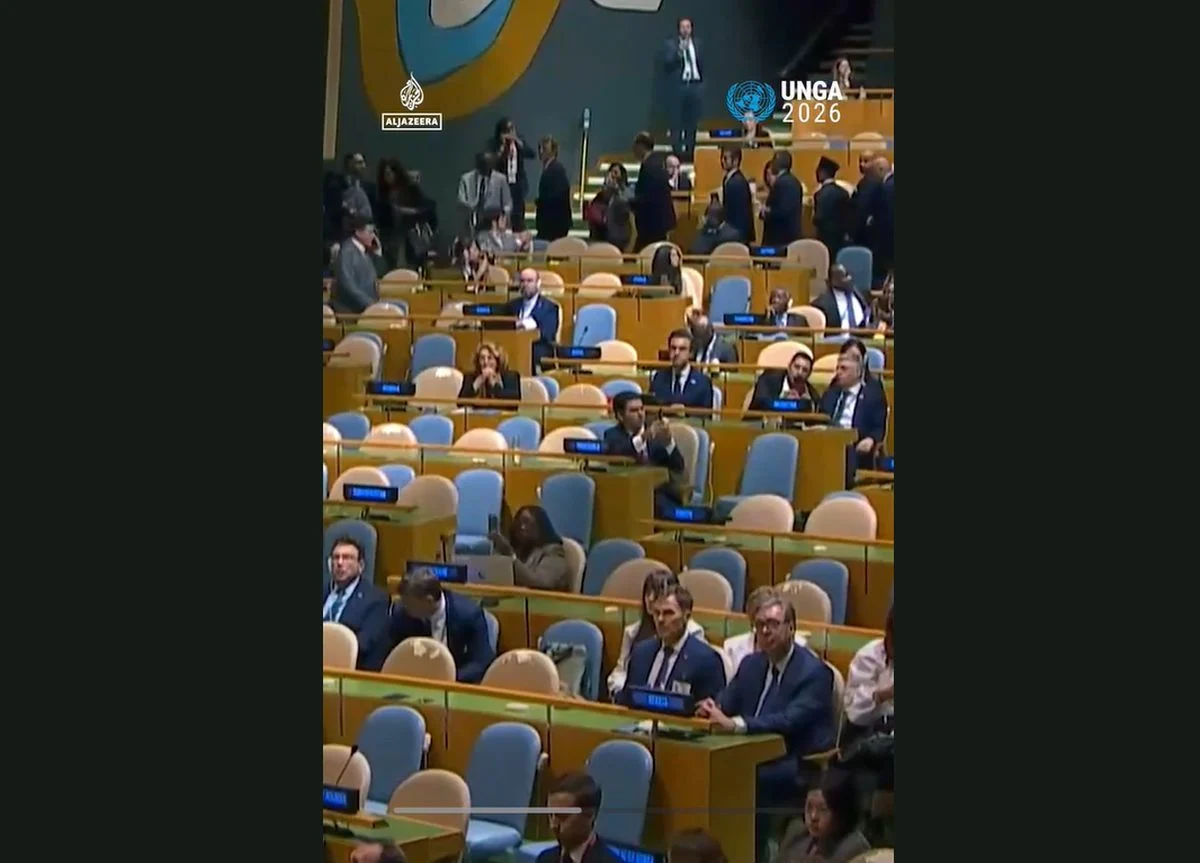
In a striking display of diplomatic defiance, the Indonesian delegation staged a coordinated walkout during the address of Israeli Prime Minister Benjamin Netanyahu at the 81st United Nations General Assembly (UNGA) in New York. The incident, which took place on Thursday, September 24, 2026, underscored the deepening rift between Jakarta and Tel Aviv regarding the ongoing humanitarian crisis in the Gaza Strip and the broader occupied Palestinian territories. As the Israeli leader approached the podium to deliver his keynote address, members of the Indonesian diplomatic mission rose in unison and exited the assembly hall, a move that reverberated through the international diplomatic community.
Chronology of the Diplomatic Protest
The 81st UN General Assembly session has been characterized by intense geopolitical tensions, particularly regarding the Middle East conflict. According to official reports from the United Nations Secretariat, the session was intended to serve as a platform for global leaders to discuss peace and security, yet it became a theater for silent protest.
As the program reached the segment allocated for the Israeli Prime Minister, delegates from several countries, led by the Indonesian delegation, stood up and departed the chamber. This action was not a spontaneous outburst but a pre-meditated diplomatic maneuver intended to signal profound disapproval. Witnesses observed that the departure was conducted with measured formality, ensuring the message was conveyed without disrupting the orderly conduct of the session. The move was followed by several other nations aligned with the Palestinian cause, highlighting a fractured consensus within the General Assembly regarding Israel’s military conduct.
Official Stance of the Republic of Indonesia
Vahd Nabyl Achmad Mulachela, the Spokesperson for the Ministry of Foreign Affairs of the Republic of Indonesia, addressed the media on Friday, September 25, 2026, to clarify the rationale behind the action. "The walkout was a calculated expression of solidarity with the Palestinian people," Mulachela stated. "It serves as a formal protest and a condemnation of the crimes against humanity and the systemic violations of international law perpetrated by Israel against the residents of Gaza and the broader occupied Palestinian territories."
The Ministry emphasized that this gesture is not merely symbolic but represents a fundamental pillar of Indonesia’s foreign policy. Since the country’s independence, Indonesia has maintained an unwavering commitment to the principles of decolonization and the right to self-determination. By absenting themselves from the chamber, the Indonesian delegates aimed to deny the Israeli leadership the legitimacy of their presence, effectively communicating that the normalization of violence is unacceptable in the international arena.
Contextualizing the Humanitarian Crisis
The protest at the UN occurs against a backdrop of prolonged and escalating violence that has significantly degraded the humanitarian situation in the region. Since the events of late 2023, the conflict has seen an unprecedented number of casualties and the widespread destruction of critical infrastructure. International aid organizations, including the United Nations Relief and Works Agency (UNRWA) and the World Health Organization (WHO), have repeatedly warned of famine, disease, and the total collapse of medical services in Gaza.
Data provided by international monitors indicates that the death toll has reached levels rarely seen in 21st-century conflicts. The destruction of housing, educational institutions, and healthcare facilities has displaced millions, creating a refugee crisis that continues to strain the resources of neighboring nations. It is within this context that Indonesia’s diplomatic representatives felt compelled to take a stand. The Indonesian government has consistently argued that the international community has failed to hold the involved parties accountable to the standards set by the Geneva Conventions and the United Nations Charter.
Indonesia’s Foreign Policy: A Legacy of Solidarity
Indonesia, the world’s most populous Muslim-majority nation, has historically utilized its diplomatic influence to champion the Palestinian cause. The nation’s Constitution mandates the abolition of colonialism, which has translated into a steadfast policy of non-recognition of Israel and strong support for a two-state solution based on pre-1967 borders.
For Jakarta, the walkout is a continuation of its "Free and Active" (Bebas-Aktif) foreign policy doctrine. This doctrine allows Indonesia to remain independent in its international relations while actively engaging in global issues that align with its moral and legal commitments. Analysts suggest that the 2026 walkout is an evolution of this policy, moving beyond mere verbal condemnation toward more visible, disruptive diplomatic actions that force the international community to confront the uncomfortable realities of the occupation.
Global Reactions and Diplomatic Implications
The walkout by Indonesia and its counterparts has sparked a range of reactions across the geopolitical spectrum. While proponents of the protest laud it as a brave defense of human rights, critics and some Western allies of Israel argue that such actions undermine the potential for diplomatic dialogue. The United Nations General Assembly is theoretically designed to be a venue where even the most bitter adversaries can engage in discourse. By walking out, some argue, the space for necessary negotiation is narrowed.
However, supporters of the action point out that years of dialogue and debate have failed to halt the expansion of settlements or the intensity of military operations. From this perspective, the walkout is a necessary escalation in the diplomatic protest cycle, intended to remind the Israeli government that their actions have tangible consequences for their standing in the global community.
Analytical Perspective: The Future of Middle East Diplomacy
The incident at the UN raises questions about the future of international relations in the Middle East. With the failure of traditional mediation efforts, the international system is witnessing a decline in the effectiveness of conventional diplomatic norms. The move by Indonesia suggests that "middle powers" are increasingly willing to use unconventional diplomatic tools to protest perceived injustices.
Furthermore, this action highlights the deep polarization within the UN. As the organization faces criticism for its inability to resolve the crisis, member states are increasingly looking for ways to signal their discontent. The Indonesian delegation’s departure is likely to influence other nations that have remained neutral or passive, potentially leading to a more unified front against the ongoing occupation.
The Legal and Moral Dimensions
The Indonesian government’s focus on "violations of international law" is a critical component of their diplomatic strategy. By framing the protest around international legal standards, Jakarta is attempting to shift the discourse from a religious or regional dispute to one of global governance and the rule of law. The International Court of Justice (ICJ) and other legal bodies have been the focus of increased attention, as the world looks for legal avenues to end the cycle of violence.
Indonesia’s stance is that the international legal order is being eroded by the impunity enjoyed by aggressors. Therefore, the walkout serves as a reminder to the UN body itself—that its credibility depends on its ability to enforce international law equally, regardless of the political influence of the parties involved.
Conclusion: A Message of Resolute Defiance
The walkout in New York on September 24, 2026, serves as a significant milestone in the current chapter of the Israeli-Palestinian conflict. It is a potent reminder that for many nations, the situation in Gaza is not just another foreign policy issue, but a litmus test for the moral integrity of the global order.
As the Indonesian delegation leaves the hall, they leave behind a silence that speaks volumes. It is a silence that signals the refusal to accept the status quo and a demand for a fundamental reassessment of how the international community approaches the protection of human life and the enforcement of justice. Whether this act will lead to any immediate change in the behavior of the Israeli government remains to be seen; however, its impact on the diplomatic narrative is undeniable. Indonesia has once again signaled that its commitment to the Palestinian cause is not merely rhetoric, but a core component of its identity as a global citizen committed to the universal principles of freedom and justice.
As the 81st UN General Assembly continues its sessions, the echoes of this walkout will likely linger, serving as a catalyst for further debate on the role of the UN and the necessity of finding a sustainable, just, and lasting resolution to one of the world’s most enduring and tragic conflicts. The world watches closely, noting which nations choose to sit and listen, and which choose to stand and walk away in the name of their principles.