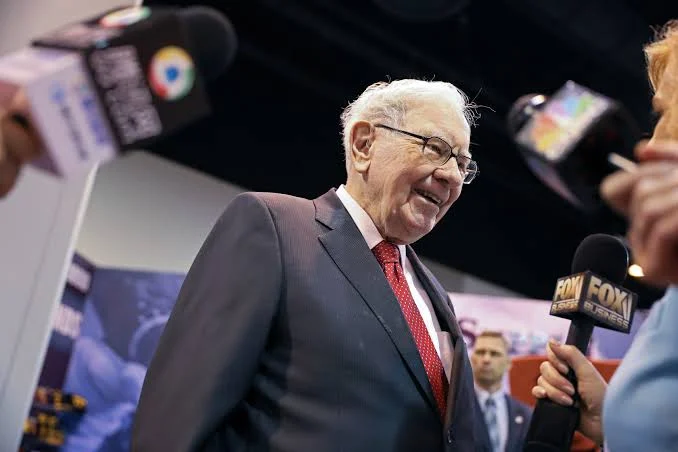
The landscape of global finance shifted irrevocably on Friday, September 19, 2026, as Warren Buffett, the nonagenarian "Oracle of Omaha," officially stepped down from his position as Chairman of Berkshire Hathaway Inc. This transition marks the conclusion of a historic six-decade tenure that saw the company evolve from a struggling New England textile mill into one of the most powerful and valuable conglomerates in human history. Buffett, now 96, will transition into the role of chairman emeritus, while his son, Howard Buffett, assumes the role of Chairman of the Board. This leadership shift follows the earlier succession of Greg Abel, who transitioned into the Chief Executive Officer role nine months prior, effectively completing a long-anticipated transition of power at the Omaha-based giant.
A Legacy Defined by Value and Patience
Warren Buffett’s departure is more than a change in corporate governance; it represents the retirement of the world’s most influential investor. Since taking control of Berkshire Hathaway in 1965, Buffett transformed the company into a diversified powerhouse with a market capitalization currently hovering around $1.1 trillion. His investment philosophy—rooted in the principles of value investing, long-term capital allocation, and an aversion to unnecessary debt—has served as the blueprint for generations of institutional and retail investors alike.
The journey began in the mid-1960s when Buffett identified the potential in Berkshire Hathaway, a company that was, at the time, failing to compete in the textile industry. Through strategic acquisitions in insurance, energy, railroads, and retail, he built an empire that prioritized the intrinsic value of businesses over short-term stock market fluctuations. His annual shareholder meetings in Omaha, often referred to as "Woodstock for Capitalists," became a global pilgrimage for investors seeking wisdom from both Buffett and his late partner, Charlie Munger, who passed away in 2023.
The New Guard: Continuity and Oversight
The appointment of Howard Buffett as Chairman is a strategic move designed to ensure institutional stability. Unlike the CEO position, which carries the burden of day-to-day operations and strategic execution, the chairmanship under Howard Buffett will focus primarily on cultural stewardship. Howard has been a member of the Berkshire Hathaway board of directors since 1993 and is deeply familiar with the ethos that his father instilled.
"The culture that Warren built and the values he has championed will remain at the heart of Berkshire, and Howard will be the guardian of that legacy," said Greg Abel in a statement released on Friday. This explicit focus on "culture" suggests that Berkshire’s management is acutely aware of the risks inherent in the post-Buffett era. The company’s unique structure—characterized by extreme decentralization—grants subsidiary managers significant autonomy, a practice that has historically been the bedrock of Berkshire’s success. Howard Buffett’s role is to ensure that this autonomy does not devolve into a lack of oversight, maintaining the standard of honesty and ethical conduct that defined his father’s career.
Chronology of a Succession
The road to this moment was meticulously planned. For over a decade, investors and analysts debated who would succeed Buffett. The eventual selection of Greg Abel was widely praised for his operational expertise, particularly in the energy sector.
- 1965: Warren Buffett takes controlling interest in Berkshire Hathaway.
- 2018: Greg Abel and Ajit Jain are promoted to vice-chairmen roles, signaling the narrowing of the successor pool.
- 2023: The passing of Charlie Munger creates a significant void, accelerating the need for formalizing the succession plan.
- January 2026: Greg Abel officially assumes the CEO role, with Warren Buffett remaining as Chairman to oversee the transition.
- September 19, 2026: Warren Buffett steps down as Chairman, transitioning to Chairman Emeritus. Howard Buffett is named Chairman.
This timeline reflects a deliberate, multi-year process intended to prevent the market volatility that often follows the departure of a founding visionary. By separating the roles of CEO and Chairman, the board has created a system of checks and balances that separates operational management from long-term cultural and ethical oversight.
Financial Implications and Market Impact
Berkshire Hathaway currently operates with a massive cash pile, a point of contention among some analysts who argue that the company has struggled to find "elephant-sized" acquisitions in recent years. As of mid-2026, the company’s cash reserves remained at record levels, providing Greg Abel with a significant war chest to navigate future economic cycles.
Financial analysts note that the transition occurs at a time when the broader economy faces significant headwinds, including shifts in energy policy and the integration of artificial intelligence in industrial management. However, the market’s reaction to the announcement has been largely muted, reflecting the high degree of confidence in the systems Buffett left behind. The $1.1 trillion valuation remains a testament to the durability of the "moat" Buffett spent decades constructing around his portfolio companies.
The Role of the Chairman Emeritus
While the title "Chairman Emeritus" is largely honorific, Buffett’s decision to remain on the board of directors ensures that his institutional memory remains available to the company. In his final letter to shareholders as Chairman, Buffett wrote, "Time always wins. However, time has been generous to me." This sentiment encapsulates the humility that defined his final years at the helm. He will continue to provide counsel, but he has explicitly stated his intention to step back from the direct pressures of governance.
The board’s reliance on his continued presence is a pragmatic acknowledgment that Buffett’s judgment is an asset the company is not yet ready to fully discard. However, the operational power is now firmly in the hands of Greg Abel, a leader known for his intense work ethic and his ability to manage the vast complexities of Berkshire’s insurance and energy subsidiaries.
Challenges Ahead for Berkshire Hathaway
The primary challenge facing the new leadership is not necessarily financial, but existential. Can a conglomerate, built on the singular intuition of one man, continue to outperform the market when that man is no longer in the driver’s seat? Berkshire Hathaway is fundamentally a collection of businesses held together by a culture of trust. Without the "Buffett factor," the company must prove that its decentralized model can thrive under the guidance of professional managers who lack the public persona of its founder.
Furthermore, the company faces evolving regulatory scrutiny. As one of the largest employers and capital allocators in the world, Berkshire Hathaway’s decisions carry geopolitical weight. The recent decision to delay donations to the Gates Foundation—a move that made headlines earlier this year—highlighted how the personal values of the company’s leadership continue to influence its public perception. Howard Buffett will need to navigate these public relations and governance complexities with the same finesse as his father, while simultaneously maintaining the trust of the company’s massive, diverse shareholder base.
Concluding Reflections on an Era
Warren Buffett’s departure signifies the end of a golden age in American corporate history. He managed the transition from the industrial economy of the 20th century to the digital and service-based economy of the 21st, never abandoning his core principles of value and integrity. As he moves into the background, the corporate world watches with bated breath to see if the "Berkshire way" can persist without its architect.
In his final address to stakeholders, Buffett emphasized that the strength of Berkshire Hathaway was never in one person, but in the collective resilience of its businesses and the integrity of its employees. As he formally hands over the gavel, he leaves behind a company that is not just a financial institution, but a standard-bearer for a specific, disciplined way of doing business. The transition is complete; the era of Warren Buffett has officially concluded, and the era of the "institutionalized Berkshire" has begun. Whether the company continues its trajectory of market-beating performance remains to be seen, but the foundation, by all accounts, remains as solid as the concrete and steel of the industries it controls.