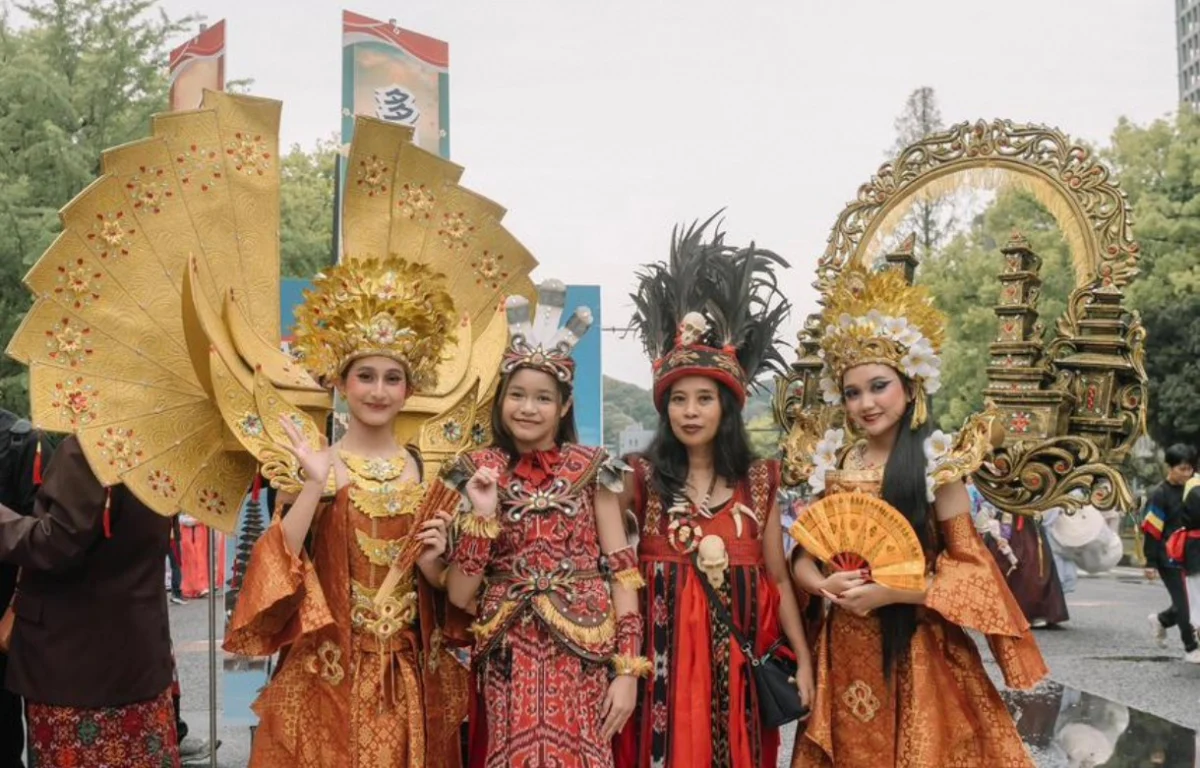
The Hiroshima Flower Festival, one of Japan’s most prestigious and largest annual events held during the Golden Week, provided a vibrant backdrop for Tiara’s showcase. With an attendance that typically exceeds 1.6 million visitors over three days, the festival is a celebration of peace, flowers, and international friendship. By securing a spot in this high-profile event, Tiara Annisa did not merely display clothing; she acted as a young cultural ambassador, translating the complex visual languages of Padang and Bali into wearable art that resonated with an international sensibility.
A Fusion of Tradition and Modernity: The Tialoris Vision
Tiara Annisa’s creative approach through the Tialoris brand is characterized by a bold synthesis of traditional elements and contemporary design. For the 2026 Hiroshima Flower Festival, she meticulously prepared two primary ensembles that highlighted the geographical and cultural diversity of the Indonesian archipelago. The first piece was a tribute to the Minangkabau culture of West Sumatra, specifically inspired by the architectural grandeur of the Rumah Gadang.
The Padang-themed design featured sharp, elegant lines echoing the "Gonjong" or the iconic buffalo-horn-shaped roofs of traditional Minang houses. Utilizing a palette of deep reds, golds, and blacks—colors traditionally associated with prestige and bravery in Minangkabau culture—the outfit incorporated intricate embroidery that mimicked the wood-carved motifs found on the walls of ancestral homes. However, Tiara ensured the design remained accessible to a modern audience by integrating a streamlined silhouette and lightweight fabrics, making the traditional "Bundo Kanduang" aesthetic feel fresh and avant-garde.
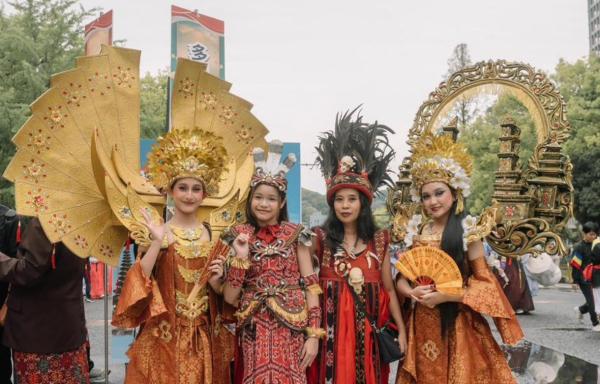
The second masterpiece focused on the spiritual and artistic heart of Bali. This design took the form of a carnival-style costume, centered around the concept of the "Candi Bentar," the iconic split gateway that marks the entrance to Balinese temples and palaces. The costume was a feat of wearable engineering, featuring two symmetrical structures that framed the model, symbolizing the Balinese philosophy of "Rwa Bhineda"—the balance between opposing forces in the universe. The use of vibrant yellows, whites, and checkered "Saput Poleng" patterns added a layer of spiritual depth to the ensemble, while the dramatic scale of the piece captured the high-energy spirit of Indonesian street carnivals, such as the world-renowned Jember Fashion Carnaval.
The Significance of the Hiroshima Flower Festival
The Hiroshima Flower Festival has long been a platform for international exchange since its inception in 1977. Held at the Hiroshima Peace Memorial Park and along Peace Boulevard, the festival emphasizes the beauty of life and the importance of global harmony. For an Indonesian designer, especially one as young as Tiara, participating in such an event is a strategic move for cultural branding.
Historically, Indonesia and Japan have shared deep ties in the arts and textile industries. By bringing Nusantara-inspired designs to Hiroshima, Tiara Annisa tapped into the Japanese appreciation for craftsmanship and detail. The festival’s parade, where the Tialoris collection was prominently featured, allowed for a direct engagement with the Japanese public. Observers noted that the "Candi Bentar" costume, in particular, sparked significant curiosity, as the split-gate motif is a recognizable symbol of Asian spirituality but presented in a way that was uniquely Indonesian.
The timing of the event in May 2026 coincided with a period of renewed interest in "Ethno-Futurism," a design trend where ancient cultural symbols are reimagined through modern technology and materials. Tiara’s ability to navigate this trend while remaining faithful to the "pakem" or the fundamental rules of traditional attire demonstrated a maturity beyond her years.

Chronology of a Cultural Journey
The journey to Hiroshima began months prior in Jakarta, where Tiara Annisa worked closely with mentors and cultural consultants to ensure the authenticity of her designs. The preparation phase involved extensive research into the historical significance of the motifs used. For the Padang design, she consulted with artisans to understand the symbolic meaning of the "Pukua Limo" and "Saik Kalamai" embroidery patterns, ensuring that the modernization of the dress did not strip away its cultural soul.
In March 2026, the initial sketches were finalized, and the construction of the carnival elements began. Given the logistical challenges of transporting large-scale costumes to Japan, Tiara’s team utilized modular design techniques, allowing the "Candi Bentar" structure to be disassembled and reassembled with ease.
Upon arriving in Hiroshima in early May, Tiara participated in a series of cultural workshops and media briefings. Her presence was a point of interest for local Japanese media, who were intrigued by the concept of a "child designer" handling such complex themes. The climax of her participation was the grand parade, where the Tialoris collection was viewed by hundreds of thousands of spectators lining the streets of Hiroshima. The vibrant colors of Indonesia stood out against the floral displays of the festival, creating a visual dialogue between the two nations.
Official Responses and Industry Impact
The success of Tiara Annisa has drawn praise from various quarters of the Indonesian cultural and creative sectors. Diah Kusumawardani Wijayanti, the Founder of Belantara Budaya Indonesia, expressed her immense pride in Tiara’s achievement. Belantara Budaya Indonesia, an organization dedicated to providing free traditional dance and music education to thousands of children, has long advocated for the involvement of the youth in cultural preservation.

"The involvement of the younger generation in introducing Indonesian culture on international forums is a vital step in safeguarding our national heritage," Wijayanti stated. "Tiara Annisa is a prime example of how traditional values can be channeled through creative industries to reach a global audience. When children take the lead in cultural diplomacy, it sends a powerful message that our traditions are not static relics of the past, but living, breathing inspirations for the future."
Government officials from the Ministry of Tourism and Creative Economy (Kemenparekraf) also noted the importance of such international showcases. According to recent data, the fashion subsector is one of the largest contributors to Indonesia’s creative economy GDP, accounting for approximately 17-18%. International appearances by designers like Tiara Annisa help to increase the "brand value" of Indonesian textiles, such as Batik, Tenun, and Songket, on the global market. Furthermore, as the world enters the era of Artificial Intelligence, the Ministry has emphasized that cultural data and unique traditional designs are becoming "new treasures" that must be digitized and protected—a sentiment that aligns with Tiara’s mission to document and display her heritage.
Broader Implications for Indonesian Cultural Diplomacy
Tiara Annisa’s success in Hiroshima is more than just a personal victory; it reflects a broader shift in how Indonesia conducts its soft power diplomacy. By moving away from purely traditional performances and into the realm of "Creative Fusion," Indonesia is positioning itself as a hub for modern ethnic design. This approach appeals to younger global demographics—Gen Z and Gen Alpha—who value authenticity, storytelling, and cultural diversity.
Moreover, the "Tialoris" showcase highlights the importance of the "Orange Economy" (the creative economy) in fostering international relations. Fashion is a universal language that transcends linguistic barriers. When a Japanese spectator sees the Rumah Gadang motif, they may not know the history of West Sumatra, but they recognize the beauty and complexity of the design, which serves as an entry point for deeper cultural curiosity.
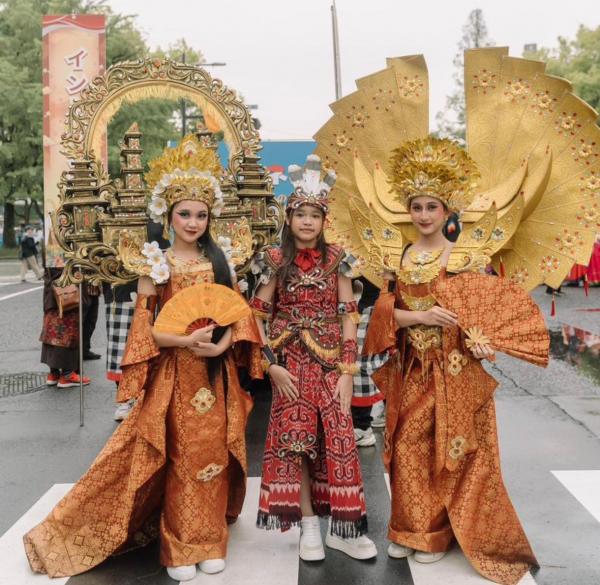
The use of carnival-style costumes also aligns with Indonesia’s growing reputation for world-class street pageantry. Events like the Solo Batik Carnival and the Jember Fashion Carnaval have paved the way for designers like Tiara to think of fashion as a performance art. By bringing this scale of production to Japan, she has helped solidify Indonesia’s position as a leader in the international carnival circuit.
Conclusion: The Future of Tialoris and Youthful Innovation
As Tiara Annisa returns to Indonesia, the impact of her Hiroshima showcase continues to resonate. There are already talks of expanding the Tialoris brand into other international markets, with potential exhibitions in Europe and the United States. Her journey serves as an inspiration for millions of young Indonesians, proving that age is no barrier to becoming a guardian of culture and a pioneer of industry.
In a world that is becoming increasingly globalized, the preservation of unique cultural identities is more important than ever. Through her needles, threads, and visionary designs, Tiara Annisa has ensured that the echoes of Padang’s mountains and Bali’s temples are heard and admired in the heart of Japan. As she continues to evolve as a designer, the world will undoubtedly be watching to see which part of Indonesia’s vast "treasure chest" she will unlock next. The success at the Hiroshima Flower Festival 2026 is not just an end point, but the beginning of a new chapter in Indonesian creative excellence on the world stage.