The Indonesian archipelago, steeped in a rich tapestry of indigenous rhythms and percussive traditions, possesses an undeniable potential to ascend as a beacon for the global development of percussion music. This vibrant heritage, encompassing diverse instruments and intricate rhythmic patterns from Sabang to Merauke, positions Indonesia not just as a regional leader, but as a significant force on the international stage. However, this immense creative reservoir has, until recently, remained largely untapped and underdeveloped. Recognizing this latent power, the Yayasan Musik Amadeus Indonesia (YMAI), or Amadeus Music Foundation of Indonesia, has launched a series of ambitious initiatives, spearheaded by the groundbreaking "Kenopsia" percussion concert, aiming to galvanize and elevate the nation’s percussion scene.
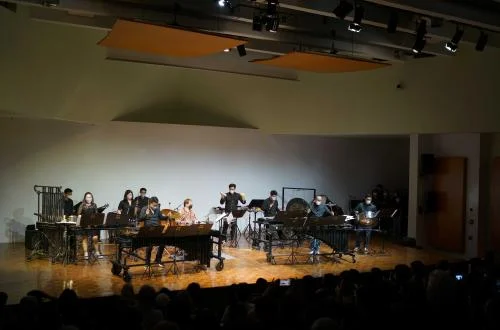
"Kenopsia," a name evoking the eerie, haunting beauty of an abandoned place, marked a significant milestone for YMAI, representing the foundation’s first-ever full percussion concert in its 30-year history. The event showcased the Amadeus Percussion Ensemble (Ampere) and featured the esteemed Austrian percussionist Adi Schober as a special guest artist. This concert, held at the GoetheHaus Jakarta on a recent weekend, was more than just a performance; it was a declaration of intent to push the boundaries of percussion music in Indonesia.
A Multi-Faceted Approach to Percussion Advancement
YMAI’s commitment to nurturing Indonesian percussion extends beyond the singular "Kenopsia" concert. The foundation has strategically integrated a comprehensive program that includes the Indonesia Percussion Composition Competition (IPECC) and the Indonesia Percussion Meeting (IPM). These complementary events serve as crucial platforms for discovery, education, and collaboration within the percussion community.
The IPECC, a vital component of YMAI’s strategy, acts as a catalyst for new compositions, encouraging Indonesian composers to explore the vast possibilities of percussion. The competition culminates in the world premiere of the winning pieces, providing emerging talents with invaluable exposure and performance opportunities. The "Kenopsia" concert itself served as the prestigious venue for these premieres, underscoring the direct link between compositional innovation and performance excellence.
The IPM, on the other hand, fosters a collaborative environment, bringing together percussionists, educators, and enthusiasts for discussions, workshops, and networking. This meeting of minds is essential for sharing knowledge, addressing challenges, and collectively strategizing for the future of percussion in Indonesia.
"Kenopsia" Concert: A Program of Innovation and International Flair
The "Kenopsia" concert program was meticulously curated to highlight both established repertoire and new Indonesian works, demonstrating a commitment to a balanced approach to musical development. The evening commenced with "Novena" by James Swearingen, masterfully arranged by I Nyoman Trieswra Minartha, setting a sophisticated tone. This was followed by the eagerly anticipated world premieres of the IPECC winning compositions. These included "Dialektika, Dualitas, Kontradiksi" by Arya Pugala Kitti and Lucy Freia, a piece likely exploring complex philosophical themes through rhythmic interplay; "Restrained" by Andre, suggesting a controlled yet potent percussive expression; "March 16th" by Jeremia Saputra, perhaps a tribute or a piece inspired by a specific event or date; and the titular "Kenopsia" by Regina Budiyanto Sutisno, which presumably aimed to translate the evocative concept of an abandoned place into sound.
The second half of the concert transitioned to a more eclectic mix, showcasing diverse styles and international influences. This segment featured "Blue Samba" by Murray Houllif, a vibrant exploration of Brazilian rhythms; a solo performance by Adi Schober, offering a personal artistic statement; "The Music of James Bond" by James Bocook, arranged by I Nyoman Trieswara Minartha, a crowd-pleasing rendition of iconic film scores; "Mambo Africano" by Alice Gomez and Marily Rife, a fusion of African rhythms and Latin American mambo; and culminating with "Suite for Solo Drumset and Percussion Ensemble" by David Mancini, with Adi Schober taking center stage as the soloist. This programming demonstrates a deliberate effort to expose the Indonesian audience to a wide spectrum of percussion music, from classical arrangements to contemporary compositions and cross-cultural fusions.
The Amadeus Legacy: Cultivating Musical Excellence Since 1992
The Yayasan Musik Amadeus Indonesia (YMAI) was established in 1992 by Grace Soedargo, who also founded the Sekolah Musik Amadeus (SMA), or Amadeus Music School. Since its inception, SMA has been dedicated to providing comprehensive music education to thousands of students across various age groups, beginning as young as two years old. This long-standing commitment to early music education is a cornerstone of YMAI’s philosophy.
Currently, SMA serves over 200 students who engage with a diverse range of instruments, including piano, strings, woodwinds, and notably, percussion. With a dedicated faculty of 25 teachers, SMA consistently strives to advance the appreciation and practice of classical music in Indonesia. This is achieved not only through rigorous classroom instruction but also through active participation in various student orchestras and ensembles, fostering a holistic learning experience.
A significant distinction of SMA is its unique affiliation with the Johann Sebastian Bach Musikschule (JSBM) in Vienna, Austria. This partnership makes SMA the sole music school in Southeast Asia to hold such a prestigious international connection. This affiliation likely provides access to Viennese pedagogical methods, curriculum standards, and potentially, exchange programs, further enriching the educational offerings and ensuring adherence to world-class musical standards.
A Vision for Global Standards in Indonesian Percussion
Grace Soedargo articulated the driving force behind YMAI’s ambitious percussion initiatives. "By organizing IPECC, IPM, and the ‘Kenopsia’ concert, Amadeus intends to make a significant impact on percussion music in Indonesia," she stated. Her vision extends to inspiring Indonesian percussionists to elevate their skills and creative output to meet global benchmarks. This aspiration underscores YMAI’s role not just as an educational institution but as a proactive force in shaping the future of Indonesian music on an international scale. The hope is that these initiatives will ignite a passion and dedication within the percussion community, encouraging them to innovate and excel.
Spotlight on Adi Schober: A Master Percussionist
The inclusion of Austrian percussionist Adi Schober in the "Kenopsia" concert brought an international dimension to the event, offering Indonesian musicians and audiences a direct connection to a seasoned global artist. Born in 1967 in Holabrunn, Austria, Schober’s musical journey began at the tender age of five with percussion, later expanding to piano, organ, and trumpet.
His formal percussion studies were undertaken at the Hochschule für Musik und darstellende Kunst Wien under the tutelage of Prof. Horst Berger. He further honed his skills in drumset and percussion with Prof. Fritz Ozmec and delved into jazz percussion at the Konservatorium der Stadt Wien with Prof. Walter Grassmann. His pedagogical understanding was shaped by his studies in percussion pedagogy under Prof. Kurt Prihoda.
Schober’s career is marked by extensive teaching experience across Austria, the formation of his "Adi Schober Quintett," and active participation in orchestras and big bands. He has also served as a music director for various festivals in Austria, demonstrating a multifaceted engagement with the music world. Beyond performance and education, Schober has been involved in developing rhythm therapy for individuals with mental health challenges since 2009, in collaboration with Dr. Kurt Sindermann and Dr. Barbara Schaffer. His private recording studio is a testament to his creative output, where he records his improvisations and also hosts recordings for international entities like "Internationale Ignaz J Pleyel Gesellschaft," "Gramola," and "Apollon." Schober’s presence at "Kenopsia" served as a powerful endorsement of YMAI’s vision and provided an invaluable learning opportunity for all involved.
The Genesis of Amadeus Percussion Ensemble (Ampere)
The Amadeus Percussion Ensemble (Ampere) was formally established in August 2017, coinciding with the silver jubilee celebrations of both the Yayasan Musik Amadeus Indonesia and the Sekolah Musik Amadeus. This ensemble’s creation was a direct consequence of the establishment of the percussion department within the Sekolah Musik Amadeus in the same year. Ryan Saputro was appointed as the head of this department, with a clear mandate to cultivate internationally-caliber percussionists. Ampere, therefore, represents the culmination of YMAI’s strategic investment in developing a dedicated percussion program, providing a performance platform for its most promising students and graduates. The ensemble’s participation in "Kenopsia" signifies its growing maturity and its role as a flagship group for percussion in Indonesia.
Broader Implications for Indonesia’s Cultural Landscape
The initiatives spearheaded by YMAI, particularly "Kenopsia," carry significant implications for Indonesia’s cultural landscape and its standing on the global stage. By actively promoting percussion composition, performance, and education, YMAI is contributing to the diversification and enrichment of Indonesia’s musical offerings.
Supporting Data and Context:
Indonesia’s traditional music is replete with percussive elements, from the Gamelan ensembles of Java and Bali, with their intricate metallophones and drums, to the Angklung of West Java, the Kolintang of North Sulawesi, and the various indigenous drums found across the archipelago. These traditions, while rich, have often been viewed separately from contemporary classical and global music trends. YMAI’s approach seeks to bridge this gap, encouraging dialogue and fusion between traditional and modern percussive forms.
Chronology of YMAI’s Percussion Focus:
- 1992: Founding of Yayasan Musik Amadeus Indonesia (YMAI) and Sekolah Musik Amadeus (SMA).
- Prior to 2017: Gradual integration of percussion into the SMA curriculum, likely with limited specialized focus.
- 2017: Establishment of the SMA percussion department under Ryan Saputro, and formation of the Amadeus Percussion Ensemble (Ampere). This year also marked the silver jubilee of YMAI and SMA.
- Recent Years (leading up to "Kenopsia"): YMAI conceptualizes and launches the Indonesia Percussion Composition Competition (IPECC) and the Indonesia Percussion Meeting (IPM).
- Recent Weekend: Premiere of "Kenopsia" concert featuring Ampere, world premieres of IPECC winning works, and guest artist Adi Schober.
Analysis of Impact:
The "Kenopsia" event and its accompanying initiatives serve several critical functions:
- Raising Awareness: They bring percussion music to the forefront of public consciousness, highlighting its artistic merit and potential.
- Talent Development: IPECC and Ampere provide crucial avenues for emerging composers and performers to hone their craft and gain recognition.
- International Collaboration: The involvement of artists like Adi Schober fosters cross-cultural exchange and elevates the standards of Indonesian percussion.
- Economic Potential: A thriving percussion scene can lead to increased opportunities in performance, recording, education, and cultural tourism.
Potential Challenges and Future Outlook:
While these initiatives are promising, challenges remain. Sustaining funding for such ambitious programs is crucial. Furthermore, bridging the gap between traditional percussive practices and contemporary global trends requires continuous dialogue and innovative approaches. The long-term success will depend on the ongoing commitment of YMAI, the engagement of the broader Indonesian music community, and the support of governmental and private cultural institutions.
In conclusion, the Yayasan Musik Amadeus Indonesia’s "Kenopsia" initiative represents a significant step forward in unlocking Indonesia’s vast potential in the realm of percussion. By fostering composition, performance, education, and international collaboration, YMAI is not only enriching the nation’s cultural tapestry but also positioning Indonesia to claim its rightful place as a global leader in percussion music. The reverberations of "Kenopsia" are likely to be felt for years to come, echoing the vibrant and dynamic spirit of Indonesian percussion.