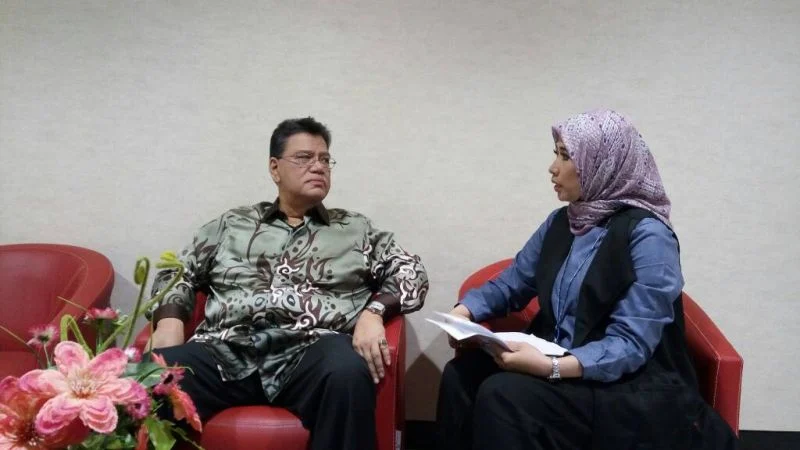
Dato’ Seri Zahrain Mohamed Hashim, a distinguished figure at 62 years old, has carved a significant path through Malaysia’s landscape, transitioning from a successful business magnate to a respected diplomat. His journey, marked by academic rigor in mathematics and advanced degrees from British universities, surprisingly led him away from the theoretical realm and into the dynamic world of commerce, specifically the maritime industry. This pivot laid the foundation for a career that would eventually see him serve his nation on a broader stage.
The Genesis of a Maritime Leader
Hashim’s initial foray into the professional world began in 1993 when he assumed the pivotal role of Head of the Port at the Penang Port Commission. In this capacity, the father of four was entrusted with the critical responsibility of overseeing and managing the multifaceted commercial operations of one of Malaysia’s key maritime gateways. His tenure at the Penang Port Commission was not merely a job; it was a testament to his nascent leadership and strategic acumen.
The impact of his stewardship was swiftly evident. Under his direction, the Penang Port Commission experienced a significant surge in activity and efficiency. This success was a direct catalyst for his subsequent appointment as the Executive Director of Penang Port Sdn Bhd, a position he held for seven impactful years. During this period, the port flourished, witnessing a notable increase in shipping traffic and the inauguration of numerous new shipping routes that extended Penang’s reach across global trade networks. This expansion was crucial for Malaysia’s economic development, bolstering its position as a vital hub in regional and international trade.
Establishing Expertise and National Contribution
Hashim’s profound understanding and proven track record in port management quickly cemented his reputation as an authority in the field. He became a sought-after speaker and motivator at various industry seminars, sharing his insights on best practices in port administration and operational excellence. His commitment extended beyond his immediate responsibilities, as he became an active member of the International Cargo Handling Coordination Association (ICHCA), a global organization dedicated to improving cargo handling efficiency and safety. Furthermore, he played an instrumental role in the formation of the Federation of Malaysian Port Operating Companies (FMPOC), a significant step towards unifying and strengthening the Malaysian port sector.
His leadership within the FMPOC was particularly noteworthy. Dato’ Seri Zahrain Mohamed Hashim was elected as the inaugural chairman of the organization, a position from which he championed the forging of closer ties between the private port sector and government agencies. This collaborative approach was vital for aligning industry development with national economic strategies and infrastructure planning. His advocacy contributed significantly to the nation’s development, ensuring that the maritime sector remained a robust engine of economic growth.
Reflecting on this period, Hashim shared in a special dialogue with Okezone in June 2017, "At that time, I thought I would continue with the family business. To be the head of the port in Penang. I was involved in the port for 10 years." This statement underscores his initial dedication to the maritime domain and his commitment to serving his local community and national interests through his expertise.
A Shift Towards Public Service and Political Engagement
Despite achieving considerable success and personal satisfaction in the business world, Dato’ Seri Zahrain Mohamed Hashim felt a deeper calling. The pursuit of personal enrichment was not his ultimate goal; he was driven by a profound desire to serve the community and dedicate himself to the nation. This intrinsic motivation led him to transition from the corporate arena into the realm of politics.
His political journey began with his successful nomination as the Head of Division for the Tanjong United Malay Nation Organization (UMNO). This marked his entry into the political fray, where he aimed to channel his leadership skills and understanding of national development into public policy and governance. However, his political trajectory soon took another turn. Not long after joining UMNO, he made the decision to leave the party and align himself with the Parti Keadilan Rakyat (PKR) in 2004. This move signaled a potential shift in his political philosophy or a search for a platform that better resonated with his evolving vision for Malaysia.
The Diplomatic Chapter
The culmination of his diverse experiences and public service aspirations saw Dato’ Seri Zahrain Mohamed Hashim appointed as Malaysia’s Ambassador to Indonesia. This significant diplomatic role, which commenced during his tenure as a Member of Parliament for Permatang Pauh and a State Assemblyman for Penanti, placed him at the forefront of bilateral relations between two of Southeast Asia’s most important nations. His appointment underscored Malaysia’s commitment to strengthening its ties with its closest neighbor.
As Ambassador, Hashim was tasked with a wide array of responsibilities, including fostering political, economic, and socio-cultural cooperation. His background in business and his understanding of national development provided him with a unique perspective on how to leverage these connections for mutual benefit. In his address during his tenure, he emphasized the imperative for Indonesia and Malaysia to be close friends, recognizing the shared history, cultural ties, and intertwined economic destinies of both nations. He articulated a vision where cooperation extended beyond governmental interactions to encompass people-to-people connections, cultural exchanges, and robust trade partnerships.
Strategic Implications and Bilateral Relations
The role of an ambassador, particularly between two countries with such deep historical and cultural links as Malaysia and Indonesia, is multifaceted. Dato’ Seri Zahrain Mohamed Hashim, with his extensive experience in leadership and negotiation, was well-equipped to navigate the complexities of this crucial diplomatic position. His mandate included promoting Malaysian interests, facilitating dialogue on regional issues, and enhancing understanding between the two populations.
His emphasis on "sahabat karib" (close friends) was not merely rhetorical; it reflected a strategic understanding of the importance of a strong, cooperative relationship for regional stability and economic prosperity. Indonesia and Malaysia, as founding members of ASEAN, play pivotal roles in shaping the regional agenda. A harmonious relationship between them is therefore essential for the effective functioning of the Association of Southeast Asian Nations and for addressing common challenges such as economic development, security, and environmental sustainability.
During his tenure, initiatives aimed at boosting trade and investment were likely a key focus. Malaysia has consistently been a significant investor in Indonesia, and vice-versa. Hashim’s business acumen would have been invaluable in identifying new opportunities and removing potential barriers to economic collaboration. Furthermore, cultural exchange programs and tourism promotion would have been crucial in fostering greater mutual understanding and appreciation between the two diverse societies.
Broader Impact and Legacy
Dato’ Seri Zahrain Mohamed Hashim’s career trajectory offers a compelling narrative of a professional who successfully transitioned across different sectors, from private enterprise to public service and diplomacy. His contributions to the maritime industry laid a crucial foundation for Malaysia’s trade infrastructure. His subsequent foray into politics and his role as an ambassador demonstrate a sustained commitment to national development and international relations.
His legacy is likely to be defined by his ability to bridge different worlds – the commercial and the political, the domestic and the international. By leveraging his expertise and experience, he has undoubtedly played a role in strengthening Malaysia’s economic base and its diplomatic standing in the region. The emphasis he placed on the "close friendship" between Malaysia and Indonesia serves as a reminder of the enduring importance of robust bilateral ties in a dynamic global landscape. His journey from managing ports to representing his nation on the international stage is a testament to his versatility, dedication, and unwavering commitment to serving his country.