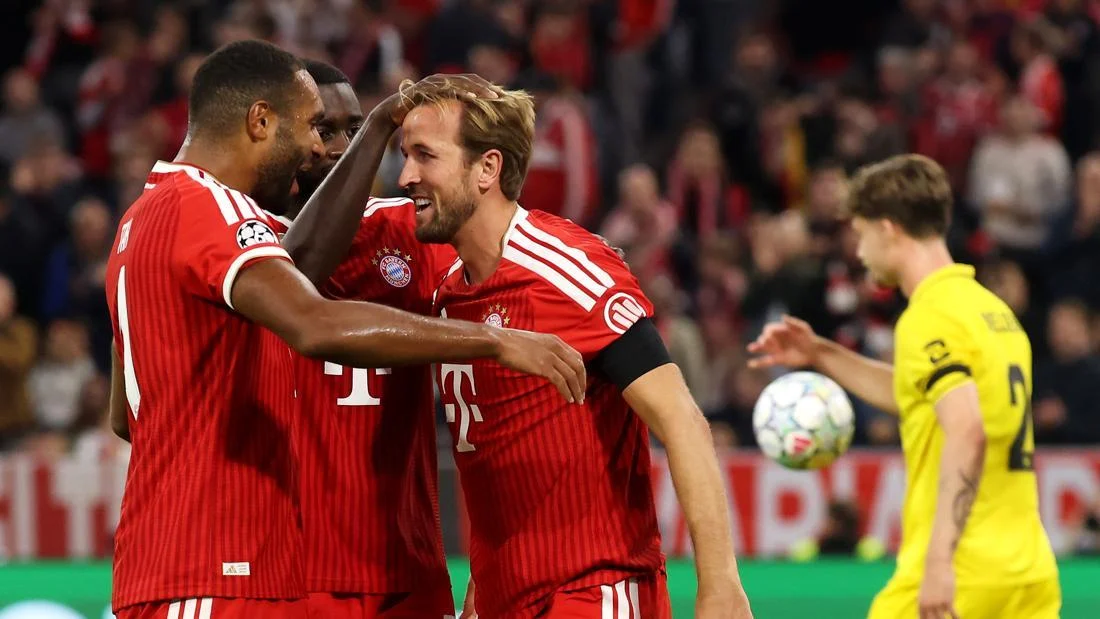
The Allianz Arena bore witness to a clinical display of attacking football on Friday, September 11, 2026, as Bayern Munich dismantled Norwegian side Bodo/Glimt 5-0 in their opening fixture of the 2026/2027 UEFA Champions League season. Under the bright lights of Munich, the German giants showcased why they remain a perennial favorite for European silverware, overcoming a frustrating first-half stalemate to unleash an offensive onslaught that left the visitors helpless. While the final scoreline suggests an easy evening, the match was a tale of two halves, reflecting both the tactical patience of the Bundesliga side and the eventual erosion of the visitors’ defensive resolve.
A Stagnant Opening Act
The match began with the expected script: Bayern Munich immediately seized control of possession, pinning Bodo/Glimt deep into their own half. The German side, looking to improve upon their status as semifinalists in the previous campaign, moved the ball with rhythmic precision. As early as the fifth minute, the home side signaled their intent, with Jamal Musiala and Michael Olise weaving through the tight lines of the Norwegian defense.
However, the opening thirty minutes revealed a recurring theme for Bayern: a lack of clinical edge in the final third. Despite maintaining over 75 percent possession, the home side struggled to penetrate the disciplined low block employed by Bodo/Glimt. The visitors, aware of the gulf in class, prioritized compactness, often keeping ten men behind the ball.
The tension in the Allianz Arena grew palpable in the 23rd minute when a rare lapse in concentration almost proved fatal for the hosts. A misplaced backpass from Dayot Upamecano bypassed Manuel Neuer, narrowly missing the goal and resulting in a collective gasp from the home faithful. Shortly after, in the 35th minute, Joshua Kimmich rattled the post with a powerful strike from the edge of the box, marking the closest call of the first half. By the time the referee signaled for halftime, the score remained 0-0, leaving many to wonder if Bodo/Glimt could pull off the shock of the opening round.
The Second-Half Avalanche
Whatever adjustments were made in the dressing room during the interval, they bore fruit almost immediately. The second half saw a more direct, high-tempo Bayern side that sought to exploit the flanks more aggressively.
The breakthrough arrived just two minutes after the restart. Harry Kane, dropping deep to facilitate the attack, delivered a pinpoint cross into the path of Jamal Musiala. The German wunderkind connected with a perfectly timed volley that sailed past Nikita Haikin, finally breaking the deadlock. The goal acted as a dam-bursting moment; with the tactical structure of Bodo/Glimt compromised, the floodgates swung open.
In the 61st minute, Harry Kane turned from provider to scorer. After a sustained period of pressure, the English captain found himself in space inside the box, finishing with the composure that has defined his career in Bavaria. With the score at 2-0, the momentum became insurmountable.
The third goal, arriving in the 77th minute, was a testament to the versatility of the Bayern squad. Alphonso Davies, marauding forward from his left-back position, capitalized on a rebound from a corner kick, lashing a thunderous strike into the top corner. As Bodo/Glimt’s defensive shape disintegrated, Michael Olise took center stage. The Frenchman added a fourth in the 83rd minute and completed his brace in stoppage time (90+2′), sealing a comprehensive 5-0 victory. The evening went from bad to worse for the visitors in the 87th minute when Odin Bjortuft was dismissed for a cynical challenge on Olise, leaving them to finish the match with ten men.
Tactical Analysis and Supporting Data
The match data highlights a lopsided affair that was only kept level by Bodo/Glimt’s defensive discipline in the first half. Bayern Munich finished the match with 28 attempts on goal, 12 of which were on target. In contrast, Bodo/Glimt managed only two shots throughout the entire 90 minutes, neither of which forced Manuel Neuer into a meaningful save.
The inclusion of new signings and tactical shifts under the current management has clearly empowered Bayern’s attack. The partnership between Kane, Musiala, and Olise showed fluidity, with all three players interchanging positions constantly. This movement made it impossible for the Bodo/Glimt central defensive pairing of Villads Nielsen and Odin Bjortuft to mark them effectively.
Furthermore, the introduction of Aleksandar Pavlovic in midfield provided a stable platform for Kimmich to advance. This balance allowed Bayern to maintain a high line without being vulnerable to the counter-attack, effectively suffocating any offensive aspirations from the Norwegian side.
Post-Match Reactions
While official press conferences following the match were brief, the sentiment from the Bayern camp was one of professional satisfaction. "We knew they would make it difficult for us in the first 45 minutes," a member of the coaching staff noted. "The key was not to become frustrated. Once the first goal went in, the space opened up, and our quality in the final third became the deciding factor."
For Bodo/Glimt, the result is a harsh introduction to the elite level of European football. Their manager acknowledged the quality of the opposition, stating that while the scoreline was painful, the experience of playing at the Allianz Arena was an invaluable lesson for his squad. The focus now shifts for both teams; Bayern looks toward a domestic league fixture with momentum, while Bodo/Glimt must regroup to address the defensive lapses that emerged once their concentration waned.
Broader Implications for the Tournament
This victory places Bayern Munich at the top of the Champions League table after the first matchday, boasting a superior goal difference that could prove vital in the new league phase format. By securing three points and a five-goal cushion, Bayern has set an early benchmark for other European heavyweights.
The 2026/2027 season format, which emphasizes total points and goal difference across a larger league table, places a premium on "piling on" goals against lower-ranked opponents. Bayern’s clinical second-half display demonstrates that they are well-versed in the math of the new competition.
For Bodo/Glimt, the road ahead remains steep. However, the club’s presence in this stage of the competition is a significant achievement for Norwegian football. The challenge will now be to recover from this defeat and demonstrate resilience in their upcoming home fixtures.
As the dust settles on this opening round, the narrative of the Champions League begins to take shape. Bayern Munich, consistent and formidable, has signaled that they are not just aiming to qualify for the knockout stages, but to do so with a statement of dominance that serves as a warning to the rest of the continent. The journey to the final has only just begun, but the German giants have already established themselves as the team to beat in this opening week of the competition.