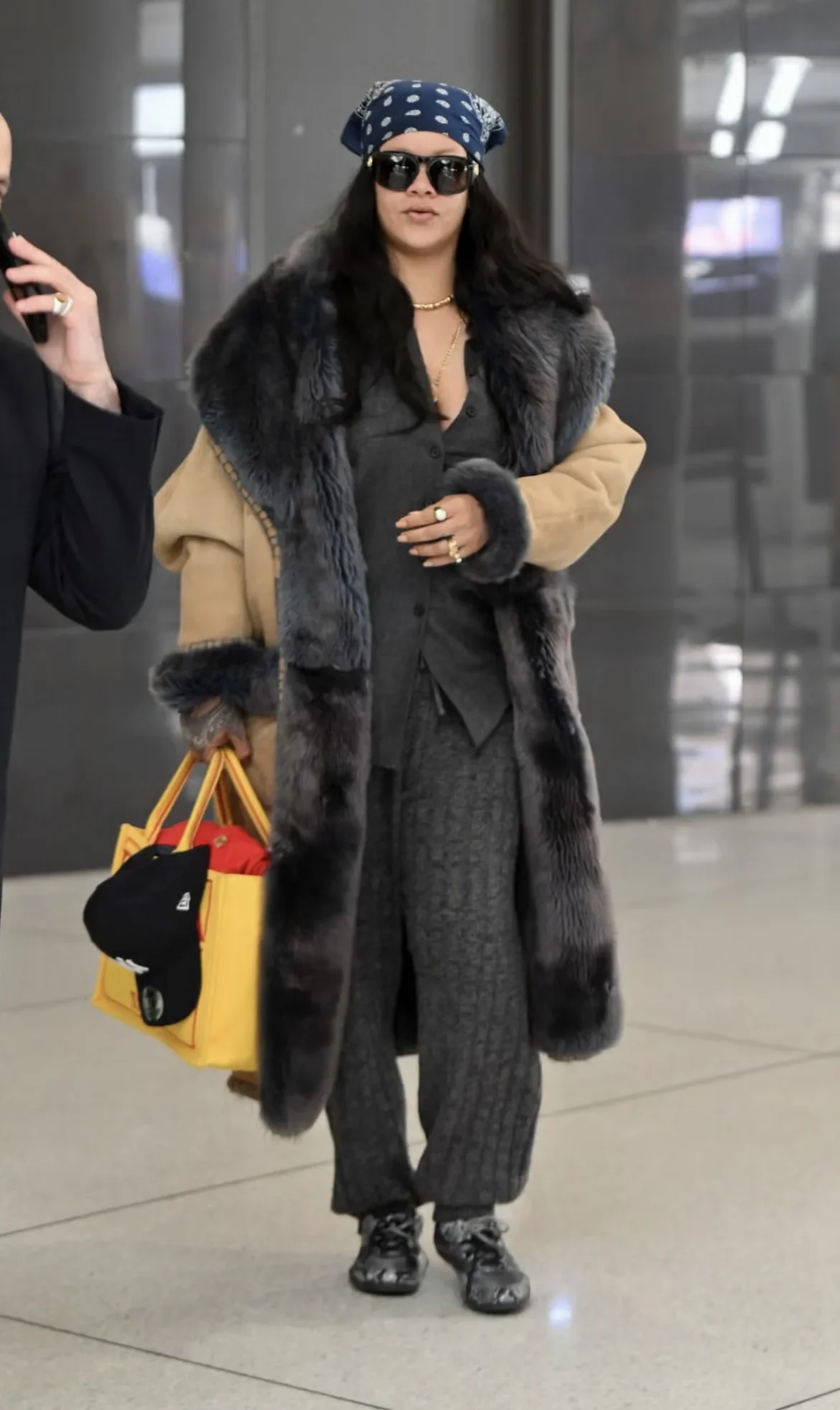
The intersection of high fashion and utilitarian street style was redefined this past weekend as Rihanna, the globally recognized musician and business mogul, appeared on the streets of New York City showcasing a masterclass in accessory-led wardrobing. While the "Diamonds" singer has long been regarded as a primary architect of modern fashion trends, her latest ensemble highlighted a specific shift toward the revitalization of the classic bandana—a "cousin" to the silk scarf trend that has dominated celebrity wardrobes throughout the current season. This appearance underscores a broader movement within the luxury fashion industry where historical accessories are being repurposed to add layers of texture and cultural narrative to otherwise minimalist silhouettes.
The Anatomy of the Ensemble
Upon her arrival in Manhattan on Sunday, Rihanna presented a look that balanced comfort with high-concept luxury. The foundation of her outfit consisted of a monochromatic grey set, featuring a structured vest paired with matching sweatpants. This choice of "elevated loungewear" served as a neutral canvas for more aggressive styling choices. Over this base, she layered a heavy camel-colored overcoat, notable for its substantial grey fur trim, which provided a textural contrast to the soft cotton of the sweatpants.
Footwear played a critical role in the ensemble’s complexity. Rihanna opted for sneakers featuring a subtle snakeskin pattern, bridging the gap between athletic wear and exotic luxury. However, it was the accessories that drew the most significant attention from fashion analysts. Rihanna carried a Dior tote bag—specifically the "Dracula" book tote from the collection designed by Jonathan Anderson for the house. In a move that demonstrated her penchant for high-low styling, she attached a New York Yankees baseball cap to the handle of the five-figure handbag, effectively grounding the luxury item in local sports culture.
Despite these high-profile elements, the defining feature of the look was a navy blue paisley bandana tied around her head. This specific choice of headwear acted as a visual anchor, providing a nostalgic 1990s aesthetic that transformed the outfit from a standard "celebrity in transit" look into a curated fashion statement.
The Evolution of the Scarf and Bandana Trend
Rihanna’s adoption of the bandana is not an isolated event but rather the latest iteration of a growing obsession with silk and cotton wraps among the fashion elite. In recent months, the industry has observed a diverse range of applications for the traditional scarf. Jennifer Lawrence has been seen utilizing silk scarves as improvised belts or waist-wraps resembling a sarong, while Rosé of Blackpink has popularized the "bag-scarf" by knotting them around the handles of her accessories. Similarly, Charli XCX has experimented with the accessory by draping it over her shoulders in a cape-like fashion.
Rihanna, however, has a storied history with the foulard. She has previously pioneered its use as a makeshift tube top, a wrap-around skirt, and a traditional head covering. By shifting from the high-shine finish of a silk scarf to the matte, rugged texture of a cotton bandana, she has signaled a move toward a more "street-ready" and accessible form of the trend. Analysts suggest this transition reflects a desire for "approachable luxury," where items with low price points (like a standard bandana) are integrated into wardrobes featuring items from Dior and Loewe.
Historical Context and Cultural Significance
The bandana holds a unique place in the history of American fashion. Originally derived from the Sanskrit word ‘badhnati’ (to tie), the accessory traveled through colonial trade routes before becoming a staple of the American working class, cowboys, and later, the 1970s and 80s subcultures. In the 1990s, the bandana became synonymous with hip-hop culture, utilized by icons to signify regional pride and stylistic defiance.
Rihanna’s reintroduction of the paisley bandana into a 2024 high-fashion context serves as a bridge between these historical eras. By pairing it with a camel coat and a Dior tote, she strips the accessory of its purely utilitarian or subcultural connotations and repositions it as a versatile tool for "quiet luxury" enthusiasts. This "90s-meets-modernity" vibe allows the wearer to transition seamlessly from the urban environment of the "Big Apple" to the refined settings of the Italian coast, proving the accessory’s geographic and social fluidity.
The "Rihanna Effect" and Market Implications
The business of Rihanna’s fashion choices is well-documented. Often referred to as the "Rihanna Effect," her public appearances frequently lead to immediate spikes in search volume for the brands and styles she wears. Following her appearance in New York, market data suggests a renewed interest in classic paisley patterns and oversized outerwear.
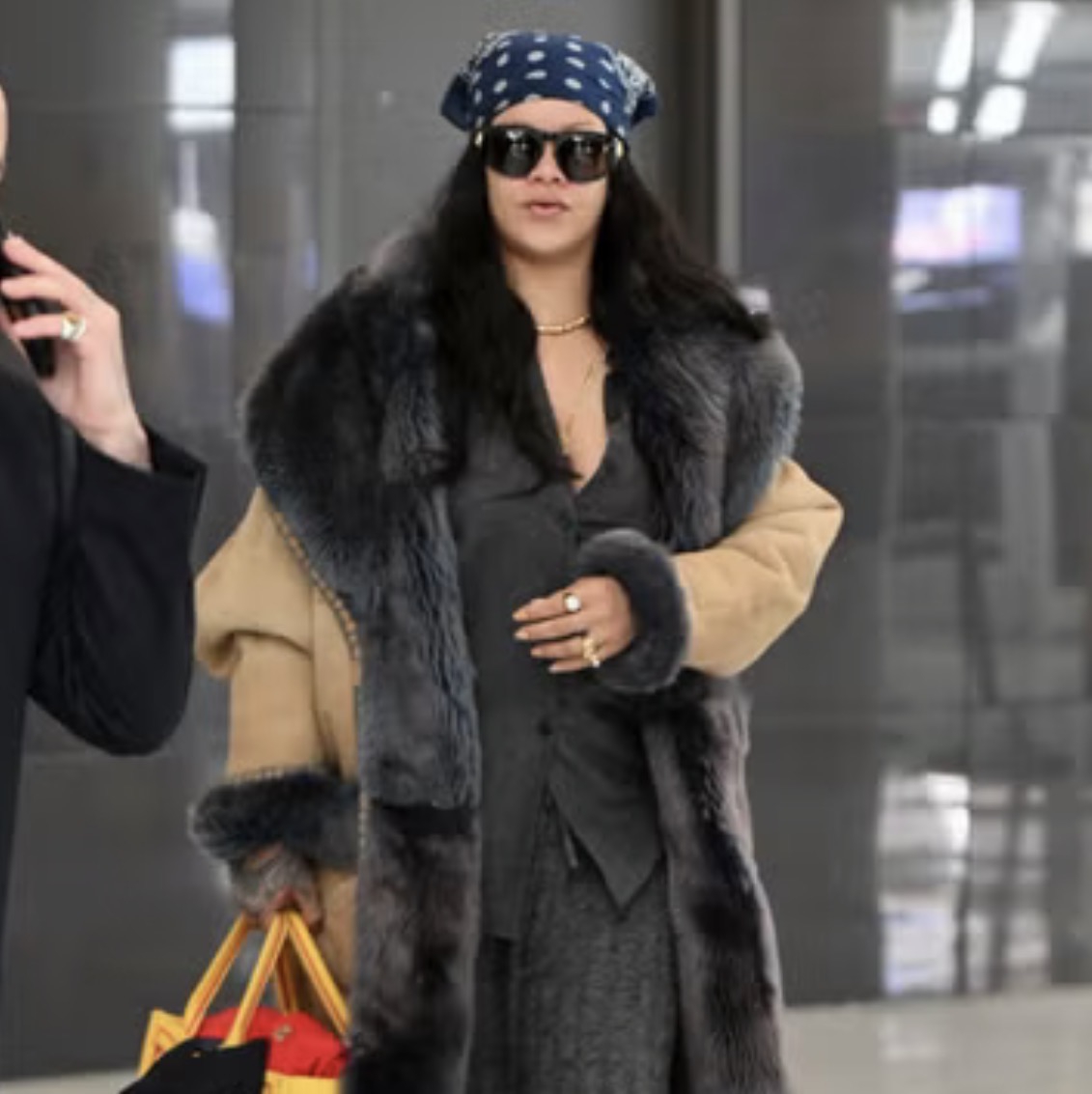
Furthermore, her choice of the Dior "Dracula" tote highlights the continued success of Jonathan Anderson’s creative direction, which often blends literary references with commercial appeal. By showcasing this specific bag, Rihanna reinforces the narrative that luxury fashion is currently in a "literary" and "intellectual" phase, where accessories tell a story beyond their brand name.
Industry experts note that Rihanna’s strategy—focusing on a single, transformative accessory—is a savvy response to the current economic climate in fashion. As consumers become more conscious of spending, the emphasis shifts from purchasing entire new outfits to "refreshing" existing wardrobes with strategic additions. The bandana is the quintessential example of this: a low-cost item that can entirely alter the perception of an outfit.
A Timeline of Recent Style Milestones
To understand the significance of this NYC appearance, one must look at Rihanna’s stylistic trajectory over the past several months. Her fashion narrative has been one of constant evolution, blending motherhood, moguldom, and high-octane glamour:
- The Winter Blizzard Chic: Earlier this year, Rihanna made headlines for her "storm-ready" fashion, utilizing oversized faux-fur aviator jackets to maintain a chic silhouette despite inclement weather. This established her preference for "statement outerwear" as a protective yet stylish shell.
- The Leather and Celine Phase: More recently, she was spotted frequenting high-end establishments in a series of distressed leather jackets, often paired with the latest Celine handbags. This period emphasized a "tougher" edge to her style, moving away from the softer palettes of previous seasons.
- The Diamond-Studded Birthday: For her birthday celebrations hosted by A$AP Rocky, the aesthetic shifted toward pure opulence. The event, characterized by diamond-encrusted accessories and evening wear, reminded the public of her status as a "High Fashion" icon, contrasting sharply with her more recent "street-casual" looks.
This weekend’s bandana look represents a synthesis of these phases: the comfort of her "blizzard" gear, the edge of her leather phase, and the curated intentionality of her high-fashion moments.
Inferred Industry Reactions and Style Analysis
While major fashion houses rarely comment officially on street-style appearances, the ripple effects are felt in the styling rooms of major publications and the design studios of fast-fashion retailers. Stylists have noted that Rihanna’s ability to make a "messy" accessory—like a baseball cap clipped to a Dior bag—look intentional is what separates a trendsetter from a follower.
The "logic" of the outfit follows a specific rule of three:
- The Foundation: Neutral, comfortable, and functional (The grey set).
- The Statement: High-value, architectural, and bold (The camel fur coat and Dior tote).
- The Personality: Relatable, vintage, and culturally grounded (The bandana and Yankees cap).
This formula is increasingly being adopted by Gen Z and Millennial consumers who value authenticity and "vibe" over the rigid structure of traditional luxury.
Conclusion: The Philosophy of the Final Touch
Rihanna’s outing in New York City serves as a potent reminder that in the world of modern fashion, the "final touch" is often the most important. By choosing a bandana—a simple piece of cloth with centuries of history—she has once again shifted the conversation toward the power of individual styling.
As the fashion industry moves toward the latter half of 2024, the lessons from Rihanna’s street style are clear: versatility is the new luxury. Whether it is a silk scarf used as a belt or a paisley bandana used to ground a fur coat, the focus remains on how an individual can manipulate classic items to create something entirely new. Rihanna has taught the fashion world many lessons over her decades-long career, but perhaps the most enduring is that accessories are not merely additions to an outfit; they are the outfit. Through her lens, even the most humble bandana becomes a crown.