
The Narrative Architecture of Labuhan Angsana
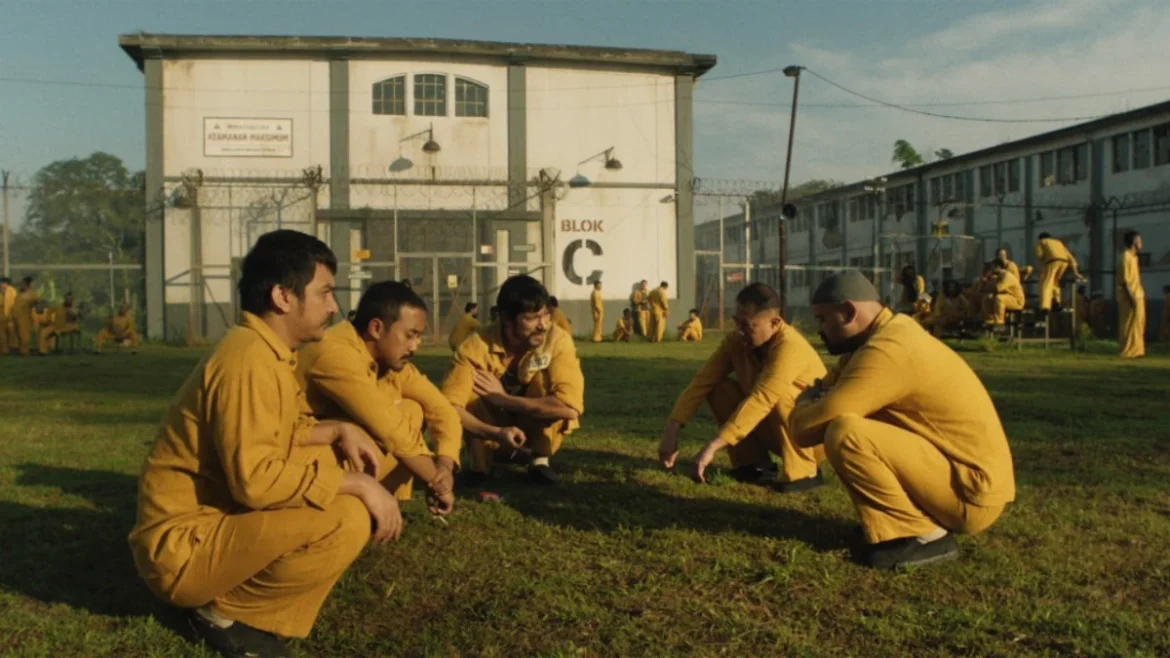
The story of Ghost in the Cell unfolds within the grim, damp walls of Labuhan Angsana, a fictional correctional facility that serves as more than just a backdrop; it is a living, breathing character in its own right. The plot is set in motion by the arrival of Dimas, portrayed with nuanced vulnerability by Endy Arfian. Dimas is not a typical inmate; he is an investigative journalist whose incarceration coincides with a series of inexplicable and increasingly gruesome deaths in the prison’s notorious Block C. These are not the standard casualties of prison riots or gang warfare. Instead, the victims are discovered in positions that defy the laws of physics and biology—corpses arranged with a chilling, surgical precision that resembles avant-garde art installations.
As the body count rises, the traditional hierarchies of the prison begin to crumble. The inmates, who are usually divided by gang affiliations, ethnic backgrounds, or criminal seniority, find themselves facing an adversary that cannot be intimidated by shivs or sheer physical force. This central conflict forces an unlikely alliance between rivals, most notably involving Anggoro, played by the veteran Abimana Aryasatya. Anggoro embodies the "tough guy" archetype of the Indonesian underworld, yet even his hardened exterior begins to crack as he realizes that the violence haunting Block C is fueled by something far more abstract than a grudge: it is fueled by the very atmosphere of the prison itself.
A Study in Grotesque Aesthetics: The Artistic Collaboration
One of the most striking aspects of Ghost in the Cell is its commitment to a visual language that Joko Anwar describes as "grotesque beauty." To achieve this, the production departed from standard special effects protocols, instead engaging a collective of six prominent Indonesian illustrators—Anwita Citriya, Benediktus Budi, Benny Bennos Kusnoto, Coki Greenway, Hafidzjudin, and Rudy AO. This collaboration was instrumental in designing the "staged" nature of the murders. Each corpse in the film is treated as a piece of macabre sculpture, intended to provoke a visceral reaction of both horror and fascination.
The decision to treat death as a visual statement serves a dual purpose. First, it elevates the film from a standard slasher or ghost story into the realm of body horror and surrealism. Second, it reinforces the film’s theme of the "spectacle." In Labuhan Angsana, life is cheap, but death—under the influence of the supernatural entity—becomes a permanent, undeniable monument. The involvement of these illustrators ensured that the "poses" of the deceased felt intentional and symbolic, reflecting the internal sins or specific angers of the victims before they were taken. This attention to detail has been cited by critics as a high-water mark for production design in Indonesian cinema, bridging the gap between fine art and commercial horror.
Masculinity and the Metaphysics of Anger
At its core, Ghost in the Cell is an exploration of toxic masculinity and the volatility of suppressed emotion. The prison environment is an incubator for "angkara"—a term referring to a deep-seated, destructive wrath. The film introduces a pivotal character named Six, played by Yoga Pratama, who possesses a form of spiritual sensitivity or "indigo" perception. Six acts as a human barometer for the supernatural threat, identifying that the entity in the cell is attracted to negative energy, specifically the "red" aura of boiling anger.
The cinematic device of Six shouting "Merah! Merah!" (Red! Red!) whenever a conflict is about to boil over serves as a recurring tension-builder. It shifts the stakes of the action scenes; whereas in a typical prison film, a fight is a climax, in Ghost in the Cell, a fight is a death sentence from the shadows. This narrative choice forces the characters—men who have spent their lives using violence to solve problems—to learn the radical act of restraint. The survival of the group depends not on who is the strongest, but on who can most effectively suppress their ego. This subversion of the "action hero" trope provides a profound commentary on the cycle of violence that persists in both the prison system and broader society.

Satire as a Narrative Tool
Despite its dark themes and horrifying visuals, Ghost in the Cell is notably infused with a sharp, satirical wit. Joko Anwar utilizes humor not as a distraction, but as a lens to highlight the absurdity of the characters’ situations. The dialogue is peppered with dry observations that reflect the mundanity of prison life intermingled with the extraordinary nature of the haunting.
A standout moment of this tonal balancing act occurs during a visitation scene involving Anggoro and his family. The emotional weight of a father seeing his children from behind bars is suddenly undercut by a domestic concern: his daughter’s fear that her mother will marry a "jelek" (ugly) man named Alexander. This moment of levity serves to humanize the inmates, reminding the audience that these men, despite their crimes, are tethered to a world of trivial, everyday anxieties. Similarly, the "kuning telor" (egg yolk) comment during a moment of tactical huddling serves to deconstruct the self-importance of the prison gangs. By allowing the characters to be funny, Anwar makes their eventual terror more relatable and their deaths more tragic.
Production Background and International Trajectory
The journey of Ghost in the Cell to Indonesian screens began with its prestigious debut at the Berlin International Film Festival, where it was praised for its unique blend of "Asian horror" tropes and "European arthouse" sensibilities. The film’s success on the international circuit provided the momentum needed for its wide release in 2026, a year that has seen a resurgence in high-concept Indonesian genre films.
Industry analysts point to the film’s budget and technical ambition as a sign of the growing maturity of the local film industry. The use of practical effects, combined with high-end digital grading to create the oppressive atmosphere of Labuhan Angsana, demonstrates a level of craft that rivals global productions. Furthermore, the film’s ability to secure a cast of high-profile actors like Abimana Aryasatya alongside rising stars like Endy Arfian speaks to the script’s depth and its appeal across different demographics of the movie-going public.
Broader Implications and Social Commentary
Beyond the confines of the theater, Ghost in the Cell has sparked a broader conversation about the state of the Indonesian penal system and the social hierarchies it mirrors. By presenting the prison as a "miniature society," Anwar invites the audience to reflect on how power is wielded and how the marginalized are often left to fend for themselves against forces—both systemic and supernatural—that they cannot control.
The film suggests that the "ghosts" in the cell are not merely external spirits, but the manifestations of the energy we bring into our environments. It is a cautionary tale about the infectious nature of hatred. If a society is built on a foundation of violence and suppression, the film argues, it will eventually manifest a horror that consumes everyone, regardless of their place in the hierarchy. This thematic resonance has ensured that Ghost in the Cell remains a topic of discussion in academic and social circles, transcending its status as a mere "scary movie."
In conclusion, Ghost in the Cell stands as a masterclass in genre-blending. It satisfies the primal urge for horror through its grotesque and inventive visuals while providing intellectual stimulation through its satirical take on human behavior. Joko Anwar has once again proven that horror is at its most effective when it is used to hold a mirror up to the audience, revealing that the most terrifying specters are those born from our own inability to find peace within ourselves. As the film continues its run in theaters and transitions to digital platforms, its legacy as a landmark of 2026 cinema is firmly secured, offering a haunting reminder that in the cells of our own making, anger is the only true ghost.