
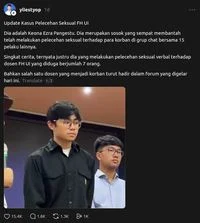
A significant internal forum has been convened by the Deanship of the Faculty of Law at Universitas Indonesia (FH UI), in collaboration with the Student Executive Body (BEM) of FH UI and the broader BEM UI, to address deeply concerning allegations of sexual harassment. The forum, held recently, brought together sixteen male students from FH UI who are reportedly implicated in perpetuating sexual harassment within a WhatsApp group chat. While the university has maintained a degree of discretion regarding the full identities of all involved, the live broadcast of the forum, which subsequently circulated widely on social media, inadvertently revealed the faces of these accused individuals, amplifying public scrutiny and concern.
At the heart of this unfolding situation is the alleged misconduct within the faculty, a matter that has sent ripples of disquiet through the academic community. The internal forum, held at the esteemed Auditorium Djokosoetono, was reportedly the venue where the sixteen students were formally confronted and urged to offer apologies to the alleged victims. This step, while a move towards accountability, has also sparked debate about the appropriate mechanisms for addressing such serious accusations within an educational institution.
One individual whose identity has become a focal point of public discussion is Keona Ezra Pangestu. His alleged involvement has garnered particular attention, reportedly due to accusations of verbal harassment directed at several faculty members. The gravity of these claims has positioned him as a prominent figure in the public discourse surrounding the case.
The Unfolding Narrative: From Denial to Exposure
Initial reports, disseminated through social media platforms, indicate that Keona Ezra Pangestu initially denied any participation in the alleged harassment group and the accompanying offensive conversations. An account, identified as @yliestyop on Threads, shared details suggesting that Pangestu had actively disavowed his involvement alongside the other fifteen accused students. "He is Keona Ezra Pangestu. He was the one who initially denied having committed sexual harassment against the victims in the group chat with the other 15 perpetrators," the Threads post reportedly stated, as observed on Wednesday, April 15th.
However, subsequent information, as shared on social media, appears to contradict this initial denial. The narrative suggests that Keona Ezra Pangestu was, in fact, a member of the FH UI student WhatsApp group where the alleged misconduct took place. This revelation, if proven, would undermine his earlier assertions of non-involvement.
Further complicating the situation are allegations that Keona Ezra Pangestu was not merely a passive participant but actively engaged in verbal harassment targeting faculty members. Reports circulating online claim that he directed such harassment towards approximately seven lecturers. The presence of one of these alleged victimized lecturers at the internal forum has been cited as a significant element in the proceedings, underscoring the direct impact of the alleged actions on the academic staff.
Escalating Allegations and Public Scrutiny
The scope of the alleged harassment has also been a subject of considerable discussion. Rumors have intensified regarding the number of victims, with claims suggesting that as many as seven lecturers may have been subjected to verbal abuse. This figure, if accurate, indicates a pattern of behavior that extends beyond isolated incidents and raises broader questions about the safety and respect within the faculty environment.
The public dissemination of Keona Ezra Pangestu’s personal information, including his identity and alleged role, has not gone unnoticed. Reports indicate that he has expressed significant reservations concerning the public exposure of his private details on social media. He reportedly views this widespread publication as potentially detrimental to his reputation, especially in the absence of a definitive legal resolution to the accusations.
In response to this perceived invasion of privacy, Keona Ezra Pangestu is said to have formally requested that those responsible for sharing content that includes his personal account details promptly remove such information. Furthermore, it has been reported that he is prepared to pursue legal avenues if his demands are not met, signaling a potential escalation of the situation beyond the internal university forum.

Context and Broader Implications
The allegations of sexual harassment within FH UI come at a time when universities globally are grappling with the complex issue of student misconduct and the creation of safe learning environments. The digital age, while facilitating communication, also presents new challenges in managing online behavior and ensuring accountability for actions taken in virtual spaces.
The use of WhatsApp groups for academic-related communication is commonplace, but these platforms can also become conduits for inappropriate conduct if not properly monitored and regulated. The current case highlights the potential for such groups to be misused, leading to serious consequences for both victims and perpetrators.
The involvement of student representative bodies, such as BEM FH UI and BEM UI, in organizing the forum demonstrates a commitment from student leadership to address internal issues and foster a culture of responsibility. Their participation suggests a recognition that student well-being and academic integrity are shared responsibilities that require collaborative efforts from all stakeholders within the university.
The public nature of the forum’s broadcast and the subsequent viral spread of information raise important questions about due process, privacy, and the role of social media in adjudicating such matters. While public awareness can be crucial in bringing issues to light and demanding accountability, it also carries the risk of pre-judging individuals and potentially infringing upon their rights before formal investigations are concluded.
University’s Stance and Future Steps
While the initial report focuses on the internal forum and the alleged actions of the students, the official response from the Deanship of FH UI and Universitas Indonesia as a whole will be critical in determining the long-term implications of this case. Universities typically have established protocols for handling allegations of sexual harassment, which often involve thorough investigations, disciplinary proceedings, and support services for victims.
The fact that an internal forum was convened suggests that the university is taking these allegations seriously. However, the specific outcomes of this forum, including any disciplinary actions taken or apologies offered, will be closely watched by the university community and the wider public.
The alleged verbal harassment of lecturers is a particularly sensitive aspect of this case. Academic environments are built on a foundation of respect between students and faculty. Any breach of this trust, especially through harassment, can have a profound impact on the educational process and the morale of academic staff.
The potential for legal action, as indicated by Keona Ezra Pangestu’s stance, adds another layer of complexity. This could involve defamation claims related to the public dissemination of his identity or potentially criminal proceedings depending on the nature and severity of the alleged harassment.
Data and Supporting Information (Inferred and Contextual)
While specific data points regarding the exact number of group members or the frequency of the alleged harassment were not detailed in the initial report, the context of university disciplinary cases often involves:
- Investigation Phases: Universities typically conduct thorough investigations, which may include interviewing witnesses, collecting digital evidence (such as chat logs), and reviewing institutional policies.
- Disciplinary Sanctions: Depending on the findings, disciplinary actions can range from warnings and mandatory counseling to suspension or expulsion from the university.
- Support for Victims: Institutions are increasingly expected to provide comprehensive support services for victims of harassment, including psychological counseling, academic accommodations, and assistance with reporting procedures.
- Legal Frameworks: Universities operate within broader legal frameworks that address sexual harassment and misconduct. In Indonesia, relevant laws may include those pertaining to personal data protection and criminal offenses related to harassment.
The case of FH UI’s alleged sexual harassment scandal serves as a stark reminder of the ongoing challenges in ensuring a safe and respectful environment within higher education institutions. The swiftness with which information spreads online underscores the need for transparency, robust internal procedures, and a commitment to justice that balances accountability with due process. The coming days and weeks will likely see further developments as the university navigates these complex issues and the public continues to follow the unfolding narrative.