
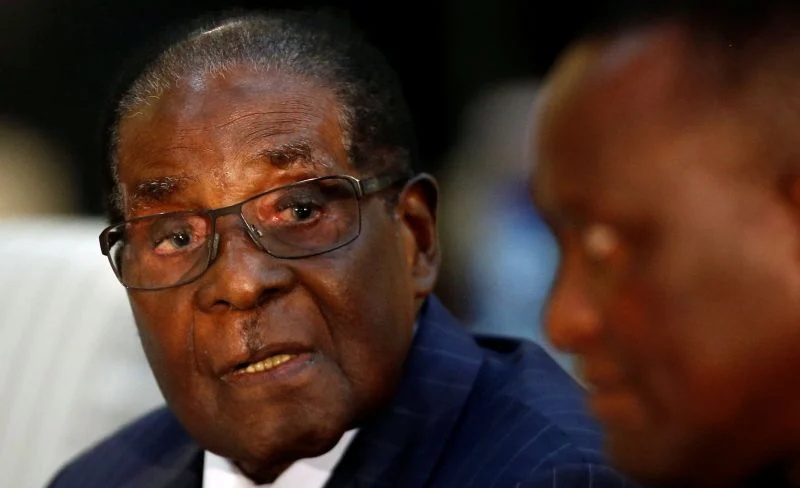
Robert Gabriel Mugabe’s nearly four-decade reign as President of Zimbabwe came to an official end on Wednesday, November 22, 2017. The departure of the world’s then-oldest head of state followed a dramatic series of events initiated by a military intervention that effectively ended his authoritarian rule. The news of his resignation was met with widespread jubilation across Zimbabwe, as citizens poured into the streets to celebrate the long-awaited transition of power.
For 37 years, Mugabe, who was 93 at the time of his resignation, had been the dominant figure in Zimbabwean politics, guiding the nation from its independence in 1980. His tenure, however, was increasingly marked by accusations of political repression, electoral manipulation, and the severe degradation of the nation’s economy. The military’s decisive action, framed as an intervention to address a "criminal element" within the ruling ZANU-PF party, ultimately compelled Mugabe to relinquish his presidential powers, bringing an end to an era that profoundly shaped the southern African nation.
A Nation Celebrates the End of an Era
The scenes of public elation following Mugabe’s announcement were a stark contrast to the often somber atmosphere that had characterized his later years in power. In cities and towns across Zimbabwe, citizens erupted in spontaneous celebrations. People danced, sang, and cheered in the streets, embracing strangers and sharing in a collective sense of relief and hope for a new beginning. The overwhelming public sentiment was one of profound joy and the anticipation of a future free from Mugabe’s autocratic grip.
Members of the Zimbabwean Parliament also echoed this sentiment, with many reportedly celebrating the end of Mugabe’s 37-year political dominance. The legislative body, often seen as a rubber stamp for Mugabe’s decisions in recent years, was poised to usher in a new leadership and potentially a new direction for the country. This widespread public and political endorsement underscored the deep-seated desire for change that had been building for years.
The Rise of Robert Mugabe: From Freedom Fighter to President
Robert Gabriel Mugabe was born on February 21, 1924, in Kutama, located in the northeastern region of what was then Southern Rhodesia. His early life was shaped by the realities of colonial rule, a system he would later dedicate his life to dismantling. Before entering the political arena, Mugabe was a highly educated individual, amassing seven university degrees, a testament to his intellectual prowess. He began his career as a teacher, a profession that likely honed his oratorical skills and his ability to connect with and inspire others.
His journey into the forefront of the liberation struggle began in earnest when he became involved in nationalist politics. In 1964, Mugabe was imprisoned for 10 years for delivering "subversive speeches" against the white minority government. This period of incarceration, rather than breaking his spirit, seemed to solidify his resolve and further cemented his image as a key leader in the fight for independence.
Upon his release in 1974, Mugabe emerged as a pivotal figure in the burgeoning political movement against the Rhodesian colonial regime. He played a crucial role in galvanizing nationalist sentiment and mobilizing the populace to resist racial discrimination and oppression. He then crossed the border into neighboring Mozambique, where he helped lead a protracted guerrilla war aimed at achieving full independence for his country.
The protracted struggle eventually bore fruit. Mugabe returned to Rhodesia in 1979, and in 1980, with Zimbabwe finally achieving independence, he was inaugurated as the nation’s first Prime Minister. This marked the beginning of his ascent to absolute power, initially as Prime Minister and later as President, a position he would hold until his dramatic fall from grace.
The Mugabe Presidency: Achievements and Criticisms
Mugabe’s early years in power were often lauded for their focus on reconciliation and development. He prioritized education and healthcare, leading to significant improvements in literacy rates and access to medical services. His government also implemented land redistribution programs, aiming to correct historical injustices and empower the black majority.
However, as the years progressed, Mugabe’s leadership style became increasingly authoritarian. His government was accused of widespread human rights abuses, including the Gukurahundi massacres in the early 1980s, which targeted the Ndebele ethnic group, perceived as political rivals. Critics also pointed to his consistent manipulation of election processes to maintain his grip on power.
The economic policies enacted under Mugabe’s leadership, particularly the often chaotic and violent land seizures that began in the year 2000, are widely believed to have devastated Zimbabwe’s economy. Hyperinflation, unemployment, and food shortages became endemic, leading to a severe economic crisis and mass emigration of skilled professionals. International sanctions imposed by Western countries in response to human rights concerns further exacerbated the economic downturn.
The Unraveling of Power: A Military Intervention
The events leading to Mugabe’s resignation were set in motion in late 2017. The immediate catalyst appeared to be a power struggle within the ruling ZANU-PF party, particularly concerning the succession of the aging president. In November 2017, Mugabe dismissed Vice President Emmerson Mnangagwa, a move widely seen as an attempt to pave the way for his wife, Grace Mugabe, to succeed him.
This action triggered a swift and decisive response from the Zimbabwe Defence Forces (ZDF). On November 14, 2017, the ZDF announced it had taken control of the country, stating its objective was to target "criminals" around Mugabe who were allegedly committing crimes that were causing social and economic suffering. While the military leadership insisted it was not a coup, the operation effectively placed Mugabe under house arrest and placed the country under military control.
For several days, the nation and the world watched with bated breath as negotiations reportedly took place between Mugabe, the military, and ZANU-PF officials. During this period, Mugabe made a public appearance at a university graduation ceremony, a move that surprised many and fueled speculation about his true intentions or his level of control.
The Resignation and its Aftermath
The tension finally broke on November 21, 2017, when the Speaker of Parliament, Jacob Mudenda, announced that Mugabe had submitted his resignation. The letter of resignation, read aloud to a packed parliamentary session, stated that Mugabe was stepping down with immediate effect to "allow for a smooth, peaceful and non-violent transfer of power."
The announcement was met with thunderous applause and jubilant scenes in the parliament and across the country. The resignation marked the end of an era, ushering in a period of profound uncertainty and immense hope for Zimbabwe.
Following his resignation, Emmerson Mnangagwa, who had been sacked as Vice President just weeks prior, was sworn in as the new President of Zimbabwe on November 24, 2017. Mnangagwa, a long-time ally of Mugabe and a veteran of the liberation war, promised a "new dawn" for Zimbabwe, vowing to reform the economy, fight corruption, and foster democratic principles.
Legacy and Future Implications
Robert Mugabe’s legacy is one of profound complexity and deep division. For many, he will be remembered as a key figure in the liberation of Zimbabwe, a nationalist hero who fought against colonial oppression and championed black empowerment. His early policies in education and healthcare are also credited with improving the lives of many Zimbabweans.
However, for a significant portion of the population and for the international community, Mugabe will be remembered as an authoritarian leader whose pursuit of power led to the erosion of democratic institutions, widespread human rights abuses, and the economic ruin of his country. The legacy of his long rule is inextricably linked to the economic hardships, political repression, and social divisions that have plagued Zimbabwe for decades.
The departure of Robert Mugabe presented Zimbabwe with a critical juncture. The challenges facing the new leadership under Emmerson Mnangagwa were immense. These included the urgent need to revive a shattered economy, address high unemployment, attract foreign investment, and rebuild trust both domestically and internationally. The success of the "new dawn" promised by Mnangagwa would depend on his ability to implement genuine reforms, uphold the rule of law, and ensure a truly democratic and inclusive future for all Zimbabweans, moving beyond the shadow of Mugabe’s long and often controversial presidency. The global community watched closely, hoping that this transition would indeed mark a turning point towards a more prosperous and free Zimbabwe.