
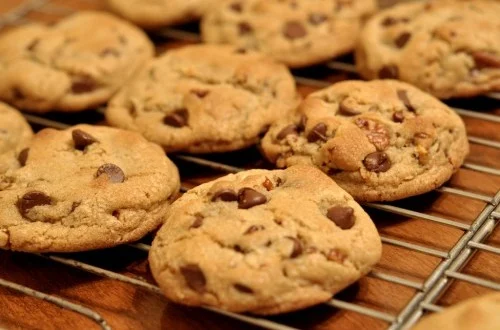
The landscape of home baking has undergone a significant transformation in the digital age, shifting from traditional family recipes passed down through generations to viral, scientifically-backed techniques shared by professionals across social media platforms. Among the most prominent figures in this culinary movement is Villy Vovnyar, a professional baker whose expertise has garnered widespread acclaim. Operating under the TikTok handle @cutie.goods, Vovnyar has become a pivotal source of inspiration for millions of aspiring bakers worldwide. Her recent insights into the construction of the "perfect" chocolate chip cookie have sparked a renewed interest in the technical nuances of pastry arts, emphasizing that the difference between a standard cookie and a gourmet masterpiece lies in the precision of the process and the quality of the ingredients.
Vovnyar’s instructional content, which has amassed over 410,000 views, transcends basic recipe sharing by delving into the "why" behind specific baking actions. Her methodology focuses on three primary pillars: the structural integrity of the chocolate used, the chemical enhancement provided by brown butter, and the critical importance of dough hydration. By deconstructing the classic chocolate chip cookie, Vovnyar provides a roadmap for home bakers to achieve professional-grade results without the need for industrial equipment.
The Strategic Selection of Chocolate: Chopped Bars Versus Chips
One of the most impactful tips shared by Vovnyar involves a departure from the convenience of pre-packaged chocolate chips. In her professional assessment, purchasing high-quality chocolate bars and manually chopping them into irregular chunks is vastly superior to using standard chips. This recommendation is rooted in both economic practicality and culinary excellence. From a financial perspective, purchasing bulk chocolate bars or "couverture" chocolate often yields a lower price per ounce compared to premium branded chips. More importantly, however, the manual chopping process allows the baker to exercise complete control over the size and distribution of the chocolate within the dough.
"Combine chopped chocolate with chocolate chips to create different layers of flavor," Vovnyar suggests. "I like to mix milk chocolate, dark chocolate, and semi-sweet chocolate." This layering technique creates a complex flavor profile that prevents the cookie from being one-dimensionally sweet. When a chocolate bar is chopped, it produces a variety of sizes—from large, molten pools of cocoa to fine "chocolate dust" that permeates the entire dough. This results in a marbled effect, ensuring that every bite offers a different ratio of chocolate to cookie. Furthermore, many commercial chocolate chips contain stabilizers like soy lecithin, designed to help the chip retain its shape under high heat. While this is useful for structural uniformity, it often results in a waxy texture. High-quality bars, conversely, melt more fluidly, contributing to a more luxurious mouthfeel.
The Chemistry of Brown Butter: Enhancing Flavor Through the Maillard Reaction
A cornerstone of Vovnyar’s signature cookie is the use of brown butter, or beurre noisette. While many traditional recipes call for softened or creamed butter, the professional approach involves melting the butter slowly over a heat source until the water content evaporates and the milk solids begin to toast. This process initiates the Maillard reaction—a chemical reaction between amino acids and reducing sugars that gives browned food its distinctive, savory flavor.
Vovnyar explains that brown butter provides a "strong flavor" and a "nutty texture" to the finished product. Beyond the aromatic benefits, the use of brown butter alters the moisture content of the dough. Because the water has been cooked out, the resulting cookie tends to be denser and more "fudgy" rather than cake-like. Vovnyar also introduces a unique step in her process: incorporating the brown butter and milk while they are still hot. This technique, though requiring caution due to the potential for splashing and bubbling, helps to partially dissolve the sugars and initiate the hydration of the flour more rapidly. The result is a cookie with a more uniform crumb and a deeper, caramelized undertone that cannot be achieved with standard butter.
The Science of Hydration: Why Patience is a Key Ingredient
Perhaps the most overlooked aspect of home baking is the resting period. Vovnyar emphasizes that the dough must be allowed to sit before it ever enters the oven. She recommends covering the dough with cling film and letting it rest at room temperature—or preferably in the refrigerator—for at least thirty minutes. "By letting it rest for just half an hour, the flour will be fully hydrated and improve the flavor of the cookie dough," she notes.
From a food science perspective, this resting period is crucial for several reasons. First, it allows the starches in the flour to break down into simpler sugars, which enhances the browning process during baking. Second, it gives the proteins (gluten) time to relax, which prevents the cookies from becoming overly tough or rubbery. Finally, as the flour absorbs the moisture from the eggs and butter, the dough becomes firmer. This prevents the cookies from spreading too thin in the oven, resulting in a thicker, softer center and crisp, golden edges. Professional bakers often extend this resting period to 24 or even 72 hours, a practice popularized by culinary icons like Jacques Torres and Kenji López-Alt, to maximize flavor development.
Chronology and the Digital Evolution of Culinary Trends
The rise of Villy Vovnyar’s influence can be traced through a timeline of digital engagement. On February 10, 2023, the Express and other major outlets began highlighting her techniques as they transitioned from niche TikTok circles to mainstream culinary discourse. The viral nature of her content reflects a broader trend in the 2020s: the democratization of culinary school knowledge.
Previously, techniques such as browning butter or hydrating dough were largely confined to professional kitchens or expensive textbooks. However, the surge in home baking during the global pandemic created a massive audience hungry for more than just basic instructions. This led to a chronological shift in how content is consumed:
- 2020-2021: The "Starter Phase," where home bakers focused on sourdough and basic breads.
- 2022: The "Refinement Phase," where the focus shifted to perfecting classic desserts through science.
- 2023-Present: The "Professionalization Phase," where influencers like Vovnyar began teaching advanced techniques like ingredient temperature control and cocoa percentage blending.
Market Implications and the Rise of the "Prosumer" Baker
The popularity of Vovnyar’s advice has broader implications for the retail and food industries. As more consumers adopt professional techniques, there has been a noticeable shift in market demand. Grocery stores have seen an uptick in the sales of high-end chocolate bars (70% cocoa and above) and European-style butters with higher fat content. This "prosumer" (professional-consumer) class is no longer satisfied with standard baking aisles; they seek out specialized ingredients that were once the exclusive domain of professional pastry chefs.
Furthermore, the emphasis on cost-saving measures—such as buying bars instead of chips—resonates with a demographic facing rising grocery costs. By positioning gourmet baking as an accessible and economical skill, Vovnyar has tapped into a cultural zeitgeist that values both luxury and fiscal responsibility. The reaction from the baking community has been overwhelmingly positive, with thousands of users reporting that these small adjustments have "fixed" their previous baking failures, leading to a higher success rate for home-based culinary projects.
Conclusion: The New Standard for Home Baking
The insights provided by Villy Vovnyar serve as a testament to the fact that baking is as much a science as it is an art. By focusing on the quality of chocolate, the chemical transformation of butter, and the patience required for proper dough hydration, she has elevated the humble chocolate chip cookie to a gourmet standard. Her success on platforms like TikTok demonstrates a global appetite for high-quality, educational content that empowers individuals to improve their skills through logic and technique rather than just luck.
As the culinary world continues to evolve, the principles shared by Vovnyar will likely remain staples of the modern baker’s repertoire. The "perfect" cookie is no longer an elusive mystery found only in high-end bakeries; it is a reproducible result of careful preparation, scientific understanding, and a commitment to quality. For the hundreds of thousands who have followed her advice, the kitchen has become a laboratory where the simple act of baking a cookie provides a profound lesson in the transformative power of technique.