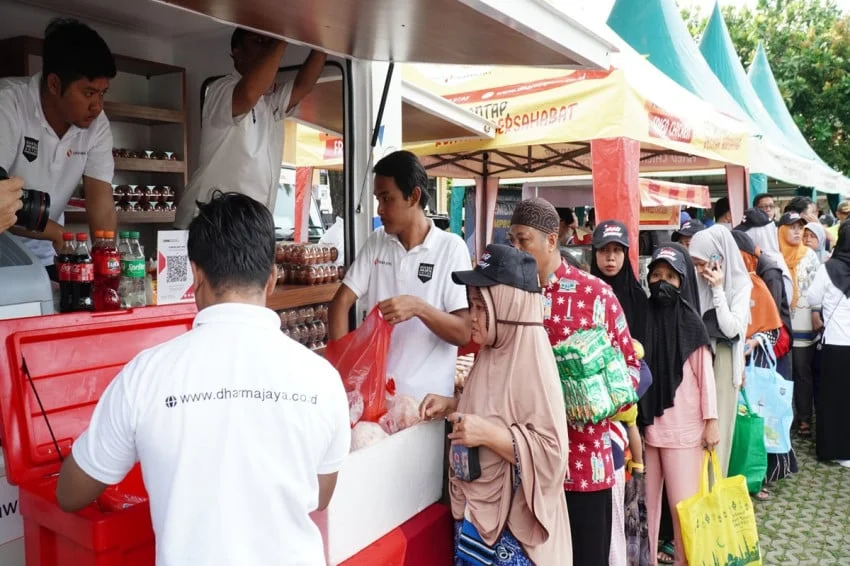
JAKARTA – Perumda Dharma Jaya, the regional government-owned enterprise (BUMD) of DKI Jakarta, has set an ambitious target to establish 1,416 bazaar points by the close of 2026. This extensive initiative is strategically designed to broaden public access to affordable and high-quality animal protein, a critical component in ensuring food security and mitigating inflationary pressures within the capital region. As of March 2026, the company has already made significant strides, successfully realizing 480 bazaar points, demonstrating a robust operational capacity and a clear trajectory towards its overarching goal.
The Strategic Mandate of Perumda Dharma Jaya
Perumda Dharma Jaya operates under the direct purview of the DKI Jakarta Provincial Government, tasked with a vital mandate to manage the supply chain of basic food commodities, particularly meat, for the city’s vast and diverse population. Established to stabilize food prices, ensure availability, and promote equitable access, Dharma Jaya plays a pivotal role in Jakarta’s urban food ecosystem. In a megacity like Jakarta, which heavily relies on external sources for its food supply, the consistent availability and affordability of essential goods, especially protein, are paramount for public welfare and economic stability. The company’s operations extend beyond mere distribution; it encompasses procurement, storage, processing, and direct sales, positioning itself as a key intervention mechanism in the market to counteract price volatility and supply disruptions. Its efforts are a direct reflection of the provincial government’s commitment to protecting its citizens from the adverse effects of market fluctuations and ensuring nutritional adequacy for all strata of society. This strategic role is particularly critical in the context of global economic uncertainties and domestic inflationary pressures, where access to affordable protein can significantly impact household budgets and overall living standards.
Ambitious Targets and Early Successes
The 2026 target of 1,416 bazaar points represents a substantial increase from previous operational benchmarks, underscoring Dharma Jaya’s enhanced capabilities and expanded vision. Raditya Endra Budiman, President Director of Dharma Jaya, stated on Tuesday, April 14, 2026, "We are targeting a minimum achievement equivalent to, if not surpassing, the 1,200 points reached in the previous year. As of March, we have already established 480 points." This statement highlights not only the company’s ambition but also its confidence in achieving these targets, building upon a proven track record. The preceding year’s success in establishing 1,200 bazaar points serves as a strong foundation and a testament to the effectiveness of this direct-to-consumer distribution model. The rapid realization of 480 points within the first quarter of 2026 signals an accelerated pace of implementation, reflecting efficient planning and execution. This early success is crucial as it provides momentum and validates the operational strategies in place, giving a clear indication that the ambitious year-end target is well within reach. The expansion is not merely about increasing numbers; it is about extending the reach of affordable protein to more communities, particularly those in underserved areas or those most vulnerable to price hikes.
Operational Enhancements and Distribution Backbone
To support this ambitious expansion, Dharma Jaya has significantly bolstered its logistical capabilities. A crucial enhancement has been the increase in its fleet of refrigerated meat distribution vehicles, which has doubled from two to four units. This expansion in cold chain logistics is vital for maintaining the quality and freshness of animal protein, especially in a tropical climate and across a sprawling urban landscape like Jakarta. The average daily operation of six bazaar points further demonstrates the efficiency and scale of the company’s distribution network. This operational tempo, coupled with the expanded fleet, provides the necessary infrastructure to manage the projected increase in bazaar locations and product volume. The enhanced logistical capacity not only facilitates wider reach but also ensures timely delivery and optimal product condition, which are critical for consumer satisfaction and food safety standards. The strategic deployment of these vehicles and the meticulous planning of daily routes are integral to achieving the daily and quarterly targets, ensuring that each bazaar point receives its supply consistently and efficiently. This commitment to robust operational infrastructure is a cornerstone of Dharma Jaya’s strategy to guarantee reliable access to protein across the city.
Pricing Strategy: A Shield Against Inflation
One of the most impactful aspects of Dharma Jaya’s bazaar initiative is its commitment to selling meat at prices consistently below market rates. This deliberate pricing strategy serves a dual purpose: it directly enhances the affordability of animal protein for Jakarta’s residents and acts as a crucial mechanism for regional inflation control. In a country where food prices, particularly for staples like meat, can significantly influence the Consumer Price Index (CPI), interventions like these bazaars play a vital role in stabilizing the broader economy. Raditya Endra Budiman emphasized this, stating, "We want the community to get quality meat at more affordable prices. This is what drives the high public enthusiasm."
This strategy directly addresses a primary concern for many households: the rising cost of living. By offering a more accessible price point for essential protein, Dharma Jaya helps to alleviate financial burdens on families, allowing them to maintain adequate nutritional intake without compromising other essential expenditures. For instance, while typical market prices for certain cuts of beef might fluctuate significantly due to supply chain issues or seasonal demand, Dharma Jaya aims to keep its prices stable and competitive, often offering savings of 10-20% compared to conventional retailers. This tangible economic benefit is a major driver of the high public enthusiasm observed at these bazaars, where residents can often purchase fresh, quality meat at a more manageable cost. From an economic perspective, such interventions are invaluable. By injecting affordable supply into the market, Dharma Jaya helps to temper overall demand-side price pressures, thus contributing directly to the DKI Jakarta Provincial Government’s broader efforts to manage inflation and maintain economic stability within the region. This makes the initiative not just a social welfare program but also a critical economic stabilizer.
Addressing Food Security in a Megacity
Food security, defined as consistent access to sufficient, safe, and nutritious food for an active and healthy life, is a complex challenge in a rapidly urbanizing environment like Jakarta. With a population exceeding 10 million and a significant portion of its residents belonging to low- and middle-income groups, ensuring access to quality protein is paramount for public health and socio-economic development. Animal protein, rich in essential amino acids, vitamins, and minerals, is vital for physical growth, cognitive development, and overall immune function, particularly for children and vulnerable populations.
The bazaars directly address this challenge by bringing protein sources closer to communities that might otherwise struggle with access due to high prices or geographical distance from major markets. This localized distribution model not only makes protein more affordable but also more convenient. By setting up points in residential areas, community centers, and sometimes even in collaboration with local government offices, Dharma Jaya reduces the barriers of transportation and time for consumers. This initiative is particularly impactful in densely populated areas where traditional markets might be oversaturated or inaccessible to certain demographics. Beyond Jakarta, the company also selectively accommodates requests from buffer regions, recognizing the interconnectedness of food supply chains and consumer needs in the greater Jakarta metropolitan area (Jabodetabek). This selective outreach ensures that the benefits of affordable protein extend beyond administrative boundaries, contributing to regional food security.
Voices from the Administration and the Ground
The initiative has garnered strong support from government officials, who recognize its strategic importance. Suharini Eliawati, Assistant for Economy and Finance at the DKI Jakarta Regional Secretariat, underscored the significance of Perumda Dharma Jaya’s actions. "The steps taken by Perumda Dharma Jaya are an important part of the regional government’s strategy in maintaining food security while controlling inflation," she stated. Her remarks highlight the integrated approach of the provincial government, where BUMDs like Dharma Jaya are instrumental tools in achieving broader policy objectives related to public welfare and economic stability. This administrative backing provides a solid institutional framework for the bazaars’ continued expansion and success.
Beyond official statements, the impact resonates deeply within the communities. Local community leaders frequently express appreciation for the program. For instance, Ibu Fatimah, a neighborhood head from Cipinang, East Jakarta, noted, "These bazaars have been a tremendous help for families struggling with rising food costs. The quality of the meat is excellent, and the prices are truly affordable. It makes a real difference for our residents." Such testimonials underscore the direct, tangible benefits experienced by ordinary citizens, reinforcing the program’s value.
Economic analysts also weigh in on the effectiveness of such direct market interventions. Dr. Surya Wijaya, an economist specializing in urban development from the University of Indonesia, commented, "Targeted interventions by BUMDs like Dharma Jaya are crucial in mitigating the effects of global supply chain disruptions and domestic inflationary pressures on household budgets. By providing a stable and affordable supply of essential goods, they not only support consumer purchasing power but also act as a buffer against wider market volatility. This model demonstrates how local governments can effectively manage economic challenges through strategic public enterprises." These expert opinions lend further credibility to the initiative, positioning it as a sound economic and social policy.
Broader Economic and Social Implications
The implications of Perumda Dharma Jaya’s extensive bazaar program extend far beyond the direct provision of affordable meat. Socially, the program contributes significantly to improving the nutritional status of Jakarta’s population, particularly among lower-income families who might otherwise limit their protein intake due to cost constraints. Enhanced nutrition has a cascading effect, leading to better health outcomes, improved academic performance among children, and increased productivity among adults. This ultimately contributes to the overall human development index of the capital.
Economically, the bazaars play a crucial role in maintaining regional economic stability. By consistently offering prices below market rates, Dharma Jaya introduces a competitive element that can influence other retailers to moderate their own pricing, thereby creating a more consumer-friendly market environment. This "anchor pricing" effect helps to prevent price gouging during periods of high demand or supply shortages. Furthermore, by ensuring a stable supply of affordable protein, the program reduces the volatility of food expenditures for households, allowing them to allocate their budgets more predictably and efficiently. This stability is particularly vital in periods of economic uncertainty, providing a safety net for vulnerable populations. The success of this model in Jakarta could also serve as a blueprint for other Indonesian cities facing similar challenges in food security and inflation control, demonstrating a scalable and effective strategy for urban food management. The BUMD model, when effectively managed and supported by strong governance, offers a powerful mechanism for governments to intervene positively in markets for public benefit.
Navigating Future Challenges and Sustaining Momentum
While the progress is commendable, sustaining and expanding such a large-scale initiative comes with its own set of challenges. Logistics, despite the increased fleet, will remain a critical factor, especially with Jakarta’s notorious traffic and the need to reach diverse geographical areas. Maintaining a consistent supply of quality meat, often sourced from various regions or even imported, requires robust procurement strategies and strong partnerships with suppliers. Fluctuations in global commodity prices, animal disease outbreaks, or even adverse weather conditions can impact supply chains and potentially challenge the program’s ability to maintain its below-market pricing.
Dharma Jaya must also continuously engage with communities to ensure optimal bazaar locations and timings, responding to local needs and preferences. Public awareness campaigns are crucial to inform residents about the program’s availability and benefits, maximizing its reach and impact. Looking beyond 2026, Dharma Jaya’s long-term vision might include diversifying its product offerings to include other essential food items, exploring more sustainable sourcing methods, or even establishing permanent, affordable retail outlets alongside the mobile bazaars. Strategic partnerships with technology providers could also enhance operational efficiency, perhaps through digital platforms for pre-ordering or real-time location tracking of bazaars. The commitment from the DKI Jakarta Provincial Government, as emphasized by Assistant for Economy and Finance Suharini Eliawati, will be key to overcoming these challenges and ensuring the program’s enduring success. Continuous investment in infrastructure, human resources, and strategic planning will be essential to sustain the momentum and further solidify Dharma Jaya’s role as a cornerstone of Jakarta’s food security strategy.
In conclusion, Perumda Dharma Jaya’s ambitious target of 1,416 bazaar points by 2026 is a testament to the DKI Jakarta Provincial Government’s proactive approach to addressing critical issues of food security and inflation control. By leveraging its role as a BUMD, Dharma Jaya is not only making essential animal protein more accessible and affordable for millions of Jakarta residents but also contributing significantly to the broader economic stability and social welfare of the capital region. The early successes and robust operational enhancements indicate a strong foundation for achieving these goals, setting a commendable example for urban food management strategies across Indonesia.