
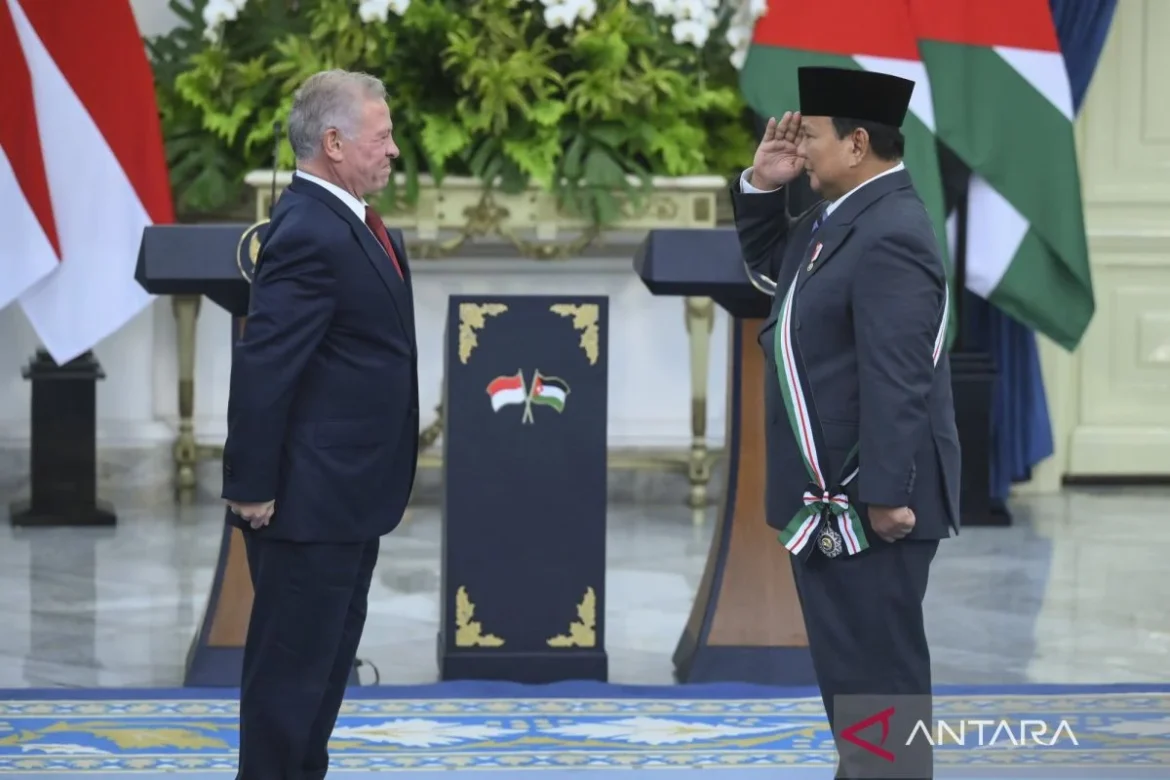
Jakarta, Indonesia – King Abdullah II bin Al-Hussein of Jordan is set to embark on a pivotal state visit to Indonesia this Friday afternoon, a diplomatic engagement poised to significantly deepen the strategic partnership between the two nations. The monarch’s itinerary includes a high-profile meeting with Indonesian President Prabowo Subianto, alongside representatives from Danantara Indonesia, culminating in the formal signing of crucial bilateral Memoranda of Understanding (MoUs). This visit, part of a broader Asian tour encompassing key regional players such as Japan, Vietnam, Singapore, and Pakistan, underscores Jordan’s strategic "Look East" policy and Indonesia’s increasing geopolitical prominence. The impending discussions are expected to traverse a wide spectrum of issues, from bolstering economic cooperation, particularly in vital sectors like phosphate supply, to enhancing diplomatic coordination on regional and global challenges, further cementing a relationship rooted in shared values and a long-standing personal bond between their leaders.
A Convergence of Leaders and Strategic Agendas
The arrival of King Abdullah II in Indonesia marks a significant moment in the diplomatic calendar, following closely on the heels of President Prabowo Subianto’s visit to Jordan on April 14, 2025. During that trip, President Prabowo engaged in a private, one-on-one meeting with King Abdullah II at the majestic Al Husseiniya Palace in Amman, setting the stage for the current reciprocal visit. This rapid exchange of high-level visits within a short span signals a mutual commitment to elevating the bilateral relationship. Observers suggest that the earlier meeting in Amman likely laid the groundwork for the specific agreements and areas of cooperation to be formalized in Jakarta, indicating a well-orchestrated diplomatic push.
Beyond formal state protocols, the relationship between King Abdullah II and President Prabowo Subianto carries a unique personal dimension, stretching back decades to their formative years. Both leaders share a distinguished military background and are esteemed alumni of the United States Army training institution at Fort Benning. This shared experience and professional camaraderie have fostered a deep and enduring friendship, which many analysts believe provides a robust foundation for the current diplomatic endeavors. Such personal rapport at the highest echelons of leadership often translates into smoother negotiations and a greater willingness to explore innovative avenues for cooperation, transcending conventional diplomatic barriers.
The Itinerary and Key Discussion Points
The core of King Abdullah II’s visit revolves around the substantive discussions with President Prabowo and other Indonesian officials. A primary focus of the economic agenda is expected to be cooperation with Danantara Indonesia, a state-owned enterprise, particularly concerning the critical resource of phosphate. Phosphate is an indispensable component in the production of fertilizers, crucial for Indonesia’s vast agricultural sector, which employs a significant portion of its workforce and is vital for national food security. Jordan is one of the world’s leading producers and exporters of phosphate rock, possessing substantial reserves. Diversifying sourcing for such essential raw materials is a strategic imperative for Indonesia, reducing reliance on single suppliers and enhancing supply chain resilience. The potential for long-term supply agreements or even joint ventures in phosphate mining and processing could be transformative for both economies.
Beyond phosphate, discussions are anticipated to cover broader economic partnerships, including trade facilitation, investment opportunities in various sectors such as tourism, infrastructure, and renewable energy. Both nations possess unique economic strengths and geographical advantages that could be leveraged for mutual benefit. Jordan, positioned at the crossroads of Asia, Africa, and Europe, offers strategic access to diverse markets, while Indonesia’s burgeoning economy and large domestic market present attractive prospects for Jordanian investors and exporters.
Diplomatically, the leaders are likely to address regional and international issues of mutual concern. These include the ongoing situation in the Middle East, particularly the Palestinian question, on which both Indonesia and Jordan hold strong, principled stances advocating for a just and lasting peace. Counter-terrorism efforts, interfaith dialogue, and promoting moderation within the Islamic world are also areas where Indonesia and Jordan have historically found common ground and actively collaborate in various international forums. The visit provides an opportunity to reaffirm these shared commitments and explore new avenues for joint advocacy on the global stage.
King Abdullah II: A Modern Monarch with a Global Vision
Born in Amman, Jordan, on January 30, 1962, King Abdullah II bin Al-Hussein is the eldest son of the late King Hussein bin Talal and Princess Muna Al Hussein. His lineage carries immense historical and religious significance, as he is the 41st direct descendant of the Prophet Muhammad (PBUH). This distinguished heritage imbues his leadership with a profound spiritual and moral authority, particularly within the Islamic world.
His educational journey reflects a blend of traditional and modern learning, preparing him for the complexities of modern statecraft. He began his schooling at the Islamic Educational College in Amman before continuing his studies abroad at St. Edmund’s School in Surrey, England, and completing his secondary education at Deerfield Academy in the United States. This international exposure provided him with a broad perspective and a deep understanding of diverse cultures and geopolitical dynamics.
King Abdullah II’s military career is a cornerstone of his profile. He received his foundational military training at the prestigious Royal Military Academy Sandhurst in England in 1980, a renowned institution that has shaped leaders globally. He subsequently pursued higher education at Pembroke College, University of Oxford, England, in 1982, and Georgetown University in the United States from 1987 to 1989. These academic pursuits, combined with his military training, equipped him with a robust analytical framework and strategic thinking capabilities.
His professional career in the Royal Jordanian Army spanned nearly two decades, during which he rose through the ranks with distinction. He served in the army from 1981 to 1993, gaining invaluable experience in leadership and command. From 1993 to 1994, he held the position of Deputy Commander of Jordan’s Special Forces, a testament to his tactical acumen and operational leadership. He then assumed the command of the Jordanian Special Forces from 1994 to 1999, where he played a crucial role in modernizing and enhancing the capabilities of Jordan’s elite military units.
In 1999, King Abdullah II ascended to the throne following the passing of his revered father, King Hussein. His reign has been characterized by a commitment to political and economic reform, modernizing Jordan while preserving its unique cultural and religious identity. He is a staunch advocate for regional peace and stability, promoting interfaith dialogue and working towards a comprehensive resolution to the Arab-Israeli conflict. His leadership has seen Jordan navigate complex regional challenges, including the influx of refugees and the ongoing fight against extremism, with resilience and a steadfast commitment to humanitarian principles.
On June 10, 1993, he married Queen Rania Al Abdullah, and they have four children: two sons, Crown Prince Hussein and Prince Hashem, and two daughters, Princess Iman and Princess Salma. Beyond his official duties, King Abdullah II is known for his diverse hobbies, including car racing, diving, and collecting antique weapons, reflecting a keen interest in both modern and historical pursuits. He is also a qualified pilot and an accomplished parachutist, embodying a spirit of adventure and precision.
Jordan’s "Look East" Policy and Indonesia’s Growing Influence
King Abdullah II’s extensive tour of Asian nations—Japan, Vietnam, Singapore, Pakistan, and now Indonesia—is a clear manifestation of Jordan’s strategic "Look East" policy. This initiative seeks to diversify Jordan’s diplomatic and economic partnerships beyond its traditional Western allies and the immediate Middle Eastern region. By forging stronger ties with dynamic Asian economies, Jordan aims to attract investment, expand trade markets, and gain support for its regional security agenda. Asian nations, with their rapidly growing economies and increasing global influence, represent crucial partners for Jordan’s long-term development and stability.
For Indonesia, hosting King Abdullah II underscores its growing stature as a significant player on the global stage, particularly within the Non-Aligned Movement and the Organization of Islamic Cooperation (OIC). Indonesia’s foreign policy prioritizes fostering peace, promoting economic cooperation, and advocating for justice on international issues. Strengthening relations with Jordan, a key Arab and Muslim nation, aligns perfectly with these objectives, enhancing Indonesia’s diplomatic reach and influence in the Middle East.
Broader Implications and Future Prospects
The state visit of King Abdullah II to Indonesia carries significant implications for both nations and the broader geopolitical landscape. Economically, the potential agreements, especially concerning phosphate, could secure vital resources for Indonesia’s agricultural sector, contributing to food security and economic stability. For Jordan, it represents a diversification of its export markets and a strengthening of its economic ties with a major Southeast Asian economy. Beyond trade, investment flows between the two countries could accelerate, fostering job creation and technological exchange.
Diplomatically, the visit reinforces the long-standing friendship and mutual respect between Indonesia and Jordan. It provides a platform for both leaders to coordinate efforts on pressing international issues, from promoting peace in the Middle East to combating global extremism. The personal bond between King Abdullah II and President Prabowo is expected to lend a unique warmth and efficiency to these discussions, potentially leading to more substantive and impactful outcomes.
Culturally and socially, enhanced bilateral ties could facilitate greater people-to-people exchanges, fostering mutual understanding and appreciation. This could manifest in increased tourism, educational exchanges, and cultural programs, deepening the bonds between the two societies.
In conclusion, King Abdullah II’s state visit to Indonesia is more than a ceremonial exchange; it is a strategic engagement designed to elevate a robust bilateral relationship to new heights. Against a backdrop of shared military backgrounds and a deep personal friendship between the leaders, the visit is poised to unlock significant opportunities for economic collaboration, particularly in vital sectors like phosphate, and to strengthen diplomatic coordination on critical regional and global challenges. As both nations look towards a future of enhanced cooperation, this visit serves as a testament to their enduring partnership and shared aspirations for peace, prosperity, and stability in an increasingly interconnected world.