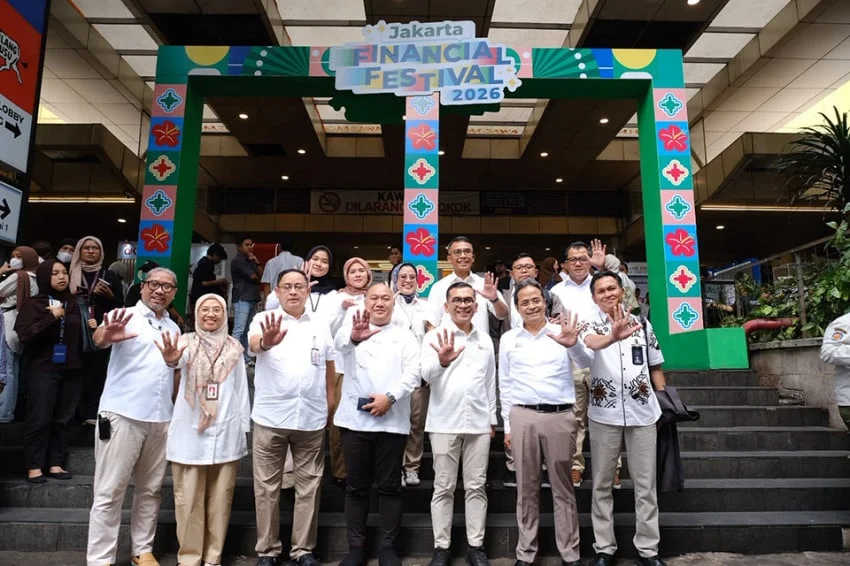
The inaugural Jakarta Financial Festival (FinFest) 2026, held at the bustling Blok M Square in South Jakarta, concluded on October 24, 2026, marking a pivotal moment in the capital city’s push toward comprehensive financial literacy. Over the course of two days, the event served as a collaborative hub for policymakers, financial institutions, and the general public, effectively bridging the gap between complex financial products and the everyday consumer. Organized through a strategic partnership between the Jakarta Provincial Government, the Financial Services Authority (OJK), Bank Indonesia, and the Communication Forum for Financial Services Industry (FKIJK) of DKI Jakarta, the festival surpassed initial participation targets, setting a new benchmark for regional financial outreach initiatives.
A Chronology of Engagement and Strategic Planning
The genesis of FinFest 2026 was rooted in the broader national agenda of the Financial Inclusion Month (Bulan Inklusi Keuangan), an annual initiative aimed at increasing the public’s access to formal financial services. Planning for the event began in early 2026, with organizers identifying Blok M Square—a high-traffic transit and commercial hub—as the ideal venue to reach a diverse demographic, ranging from students and small business owners to families and urban professionals.
The festival commenced on the morning of October 23, 2026, with an opening ceremony that underscored the necessity of digital transformation in banking. Throughout the two-day duration, the venue hosted a series of interactive workshops, financial planning clinics, and product showcases. The atmosphere was characterized by a concerted effort from exhibitors to demystify investment vehicles, insurance products, and digital payment systems. By the evening of October 24, the festival concluded with an awards ceremony recognizing the institutional efforts of participants who demonstrated exceptional commitment to public engagement.
Quantitative Success and Market Penetration
The empirical success of FinFest 2026 is reflected in the robust data released by the OJK. According to official reports, the festival welcomed nearly 7,500 visitors, a figure that significantly exceeded the initial projections set by the organizing committee. This turnout serves as a testament to the growing appetite for financial education among Jakarta’s populace.
Beyond mere foot traffic, the event facilitated tangible financial activity. Data indicated that over 1,000 new financial accounts were opened on-site. These accounts represent not only an increase in the number of individuals participating in the formal financial system but also a direct expansion of the customer base for the participating institutions. Furthermore, the festival generated an estimated collection of over Rp 5 billion in funds. This influx of capital highlights the immediate impact of face-to-face engagement strategies in fostering consumer trust and encouraging savings behavior.
Institutional Leadership and Official Remarks
Edwin Nurhadi, Head of the OJK Jabodebek office, expressed significant satisfaction regarding the outcome of the event. In his address during the closing ceremony, Nurhadi emphasized that the success of FinFest 2026 was a direct result of the synergistic collaboration between regulatory bodies and the private sector.
"The two-day execution was characterized by a massive influx of participants, and the outcomes clearly demonstrate the effectiveness of this format," Nurhadi stated. "We have witnessed not just numbers, but real-world conversions—over 1,000 accounts opened and significant fund mobilization. This serves as a validation that when the industry meets the public in a transparent, accessible, and educational environment, the barriers to financial inclusion begin to dissolve."
Nurhadi further articulated the necessity of institutional continuity. He suggested that for the momentum of FinFest 2026 to be sustained, these collaborative efforts must be institutionalized as an annual staple in the Jakarta event calendar. The objective, he noted, is to create a sustainable pipeline for financial literacy that reaches beyond the capital and into the broader Greater Jakarta area.
Recognition of Excellence: The Case of Bank Jakarta
A defining feature of the closing ceremony was the acknowledgement of exhibitors who went beyond standard sales pitches to provide genuine value to attendees. Bank Jakarta emerged as a standout participant, securing two prestigious awards: "Booth Teredukatif" (Most Educative Booth) and "Booth Teratraktif" (Most Attractive Booth).
The selection process for these awards was based on metrics including the clarity of information provided to visitors, the use of interactive technology to explain complex financial concepts, and the overall aesthetic and welcoming nature of the exhibition space. Bank Jakarta’s success serves as a case study for other financial institutions on how to optimize physical presence at public forums. By prioritizing simplified educational modules—such as simplified investment risk assessment tools and digital banking demonstrations—they effectively translated complex financial jargon into actionable insights for the average citizen.
Broader Implications for Financial Inclusion
The implications of FinFest 2026 extend well beyond the two-day event in South Jakarta. In the current economic climate, where digital financial literacy is becoming increasingly vital, the festival acts as a blueprint for the future of financial regulation and outreach.
- Digital Literacy and Consumer Protection: A primary goal of the OJK and Bank Indonesia is to ensure that as more citizens enter the financial system, they do so with an understanding of risks and protections. The workshops conducted during FinFest addressed not only how to save or invest but also the importance of cybersecurity and identifying predatory lending practices.
- Economic Democratization: By concentrating efforts in a public space like Blok M Square, the organizers successfully lowered the barrier to entry for the "unbanked" or "underbanked" population. This geographic strategy proved effective in capturing a demographic that might not typically visit a bank branch or seek out formal financial advice.
- Synergy as a Policy Tool: The coordination between the provincial government, central regulators, and the FKIJK illustrates a "Whole-of-Government" approach to economic development. This model ensures that financial inclusion policies are not siloed but are integrated into the city’s social and economic fabric.
Future Prospects and Challenges
While the success of FinFest 2026 is undeniable, the challenge remains in long-term retention. Opening an account is the first step in a long journey toward financial health. The regulatory challenge for the OJK and its partners moving forward will be to track the activity of these new accounts to ensure they lead to long-term wealth accumulation rather than mere short-term usage.
Furthermore, as the landscape of financial technology evolves, the pedagogical methods employed at such festivals must also adapt. Future iterations of FinFest will likely need to integrate more advanced AI-driven financial simulations and personalized advisory tools to cater to a more tech-savvy younger generation.
The success of this year’s festival confirms that the demand for financial knowledge is high, provided it is presented in an approachable, engaging, and trustworthy format. As Jakarta looks toward 2027 and beyond, the blueprint established by FinFest 2026—combining regulatory oversight with private sector innovation—will likely serve as the foundational strategy for fostering a more inclusive and financially literate society.
In conclusion, the Jakarta Financial Festival 2026 has successfully fulfilled its mission to bring the financial industry closer to the people. With over 7,500 visitors engaged, a significant number of new accounts established, and a clear commitment from leadership to repeat the effort, the event stands as a landmark achievement in the national pursuit of financial inclusion. The lessons learned in the plazas of South Jakarta are expected to inform national policies for years to come, ensuring that the progress made during this weekend is not an isolated event, but the beginning of a sustained economic transformation for the capital.