
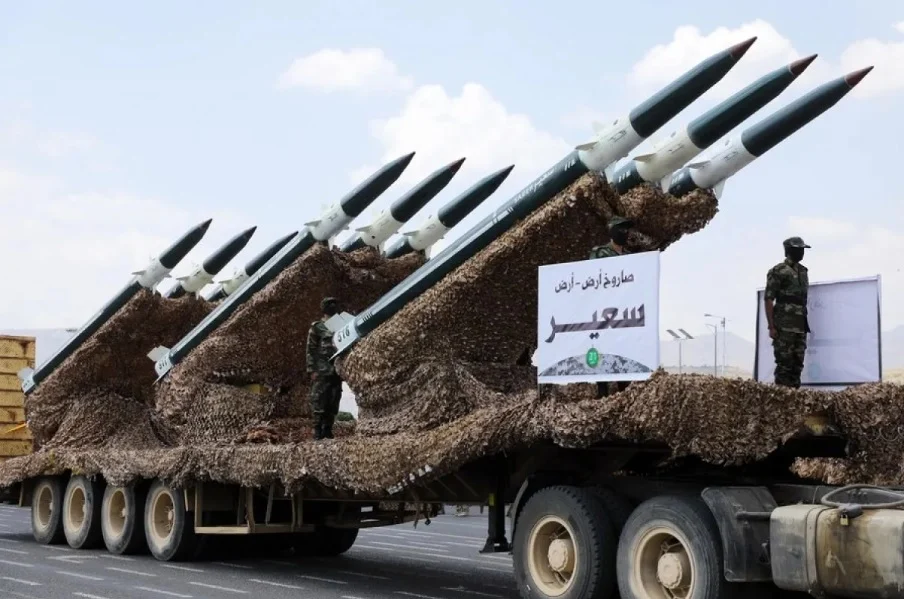
The geopolitical volatility in the Middle East has intensified once again as the Saudi-led coalition announced the successful interception and destruction of three ballistic missiles launched by the Houthi movement toward the Saudi Arabian capital, Riyadh. This latest escalation, reported on Saturday, November 21, 2026, marks a significant spike in regional tensions, further complicating the protracted conflict that has devastated Yemen for over a decade. While the Saudi authorities have confirmed that the aerial defense systems neutralized the incoming threats, the incident serves as a stark reminder of the persistent and evolving military capabilities of the Houthi faction, which continues to challenge the security architecture of the Gulf Cooperation Council (GCC) member states.
Chronology of the Recent Escalation
The early hours of Saturday morning were marked by emergency sirens echoing through the skies of Riyadh. Residents in various sectors of the sprawling capital reported hearing loud explosions, which were later identified by regional security analysts as the sound of Patriot missile batteries engaging incoming projectiles. The Saudi-led coalition, which has been involved in the Yemeni theater since 2015, issued a swift statement confirming the interception of three ballistic missiles.
The Civil Defense Directorate in Saudi Arabia had initially issued two separate emergency alerts for the capital, advising residents to take precautions as a precautionary measure. These alerts were rescinded shortly after the coalition confirmed the destruction of the projectiles. Preliminary reports suggest that debris from the intercepted missiles may have fallen in unpopulated areas, though comprehensive damage assessments are currently underway. Military spokespersons for the coalition have emphasized that such "hostile acts" are a direct violation of international law and represent a recurring pattern of aggression by the Houthi rebels.
The Strategic Targeting of Riyadh’s Financial Hub
This latest assault follows a troubling precedent of precision targeting by the Houthi forces. In recent months, Riyadh has become a recurring target for long-range munitions. Of particular concern was a previous incident where a projectile successfully struck a tower within the King Abdullah Financial District, a massive commercial development that serves as the cornerstone of Saudi Arabia’s economic diversification efforts under Vision 2030.
The building hit in that previous encounter was identified as the headquarters of the Public Investment Fund (PIF), the sovereign wealth fund that holds significant global assets. As the tallest skyscraper in the city, the tower serves as a potent symbolic target. While the Houthi leadership claimed the strike caused significant structural damage, Saudi officials maintained that the impact was limited to "material damage," with no casualties reported. The ability of the Houthi movement to reach such a high-profile target—deep within the Saudi interior—has prompted a strategic review of the kingdom’s layered air defense systems, which rely heavily on advanced Western-supplied technology.
The Yemen Conflict: A Decade of Attrition
To understand the gravity of these attacks, one must examine the broader context of the Yemeni Civil War. The conflict began in late 2014 when Houthi rebels, who adhere to the Zaydi branch of Shia Islam, seized control of the capital, Sana’a, and ousted the internationally recognized government. By March 2015, a coalition of Arab states led by Saudi Arabia intervened, seeking to restore the government of President Abdrabbuh Mansur Hadi.
What was intended to be a swift military campaign evolved into a grueling war of attrition. Over the past eleven years, the conflict has created one of the world’s most severe humanitarian crises, with millions of Yemenis displaced and facing systemic food insecurity. The Houthis, who receive technical, financial, and logistical support from Iran, have demonstrated an increasing sophistication in their military hardware. What began as skirmishes with light weaponry has transformed into a strategic arsenal consisting of "Burkan" and "Quds" series ballistic missiles and long-range loitering munitions, commonly referred to as "kamikaze drones."
The Iranian Connection and Regional Security
The international community, particularly the United States and the United Nations, has repeatedly expressed concerns regarding the proliferation of Iranian-made military components in Yemen. Western intelligence agencies have documented how missile parts are smuggled into Yemen through clandestine maritime routes, circumventing the naval blockade enforced by the coalition.

Analysts argue that the Houthis utilize these attacks as a form of "asymmetric leverage." By threatening the stability and infrastructure of Saudi Arabia, the group seeks to force concessions in diplomatic negotiations and gain international recognition. Furthermore, the Houthi military strategy is deeply intertwined with the broader "Axis of Resistance," a network of regional proxies supported by Tehran. Each time a missile is fired toward Riyadh, it serves as a tactical signal to the international community that the conflict in Yemen cannot be isolated from the wider geopolitical struggle between Tehran and the Gulf states.
Defensive Capabilities and Challenges
The Saudi-led coalition relies on a robust defense network, primarily consisting of the Patriot Advanced Capability (PAC-3) missile systems. These systems have proven effective in shielding urban centers from incoming threats. However, the cost-to-benefit ratio of these defenses remains a point of intense debate in security circles. Intercepting a relatively inexpensive Houthi drone or ballistic missile with a multimillion-dollar Patriot interceptor is a long-term financial drain that places significant strain on the Saudi defense budget.
Furthermore, the "saturation" tactic—where the Houthis launch multiple drones or missiles simultaneously to overwhelm radar systems—poses a persistent threat. Military experts suggest that the future of regional security will rely on the development of directed-energy weapons and electronic warfare systems, which could provide a more sustainable and cost-effective method of neutralizing small-to-medium-range airborne threats.
Diplomatic Implications and Future Outlook
The international response to the latest incident has been one of condemnation. Human rights organizations continue to push for a sustainable ceasefire, arguing that military solutions will only exacerbate the humanitarian suffering of the Yemeni population. Conversely, the Saudi government maintains that it has a right to defend its sovereignty and protect its citizens from persistent aggression.
Diplomatic efforts led by the United Nations have faced significant hurdles. Previous attempts at peace talks have stalled due to the deep-seated mistrust between the warring factions. The Houthis continue to demand the total lifting of the blockade on Hodeidah port and Sana’a airport as a prerequisite for any meaningful dialogue, while the Saudi-led coalition insists on security guarantees that would prevent further missile strikes on its territory.
As of November 2026, the situation remains fluid. The incident on Saturday suggests that the Houthi command structure remains intact and capable of executing complex, long-range operations despite years of coalition airstrikes. The international community is now watching closely to see if this incident will trigger a retaliatory cycle or if there remains a window for renewed diplomatic de-escalation.
For the residents of Riyadh, these events serve as a sobering reminder of the interconnected nature of modern conflict. As the Kingdom of Saudi Arabia continues its rapid economic and social modernization, the threat posed by the conflict in Yemen remains a primary variable in its national security calculus. Moving forward, the efficacy of diplomatic mediation will likely determine whether the skies over the Saudi capital remain clear or if the region is destined for another period of heightened military volatility.
In conclusion, the interception of three ballistic missiles over Riyadh is a significant development in the ongoing Yemen crisis. It underscores the limitations of purely military solutions to deep-seated regional conflicts and highlights the critical need for a sustainable diplomatic framework. As stakeholders continue to monitor the situation, the focus will likely remain on the balance between national defense and the imperative to end a war that has defined the security landscape of the Arabian Peninsula for over a decade.
