
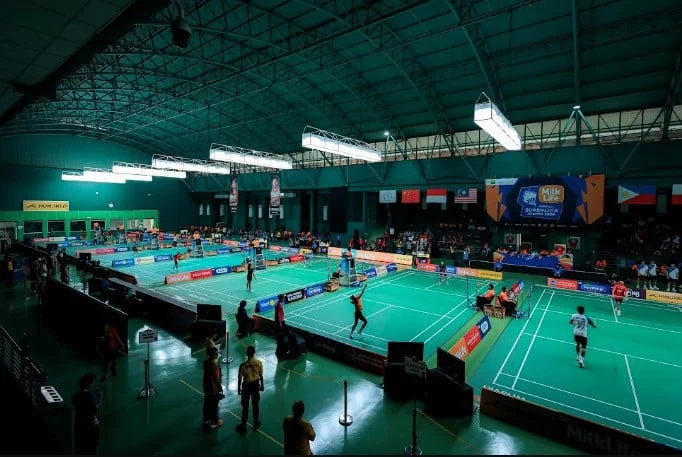
The GOR Djarum arena in Jati, Kudus, Central Java, is set to become the global epicenter of junior badminton as it prepares to host the highly anticipated MilkLife Superliga Junior 2026. From November 2 to 8, 2026, a total of 707 young shuttlers representing eight different nations will descend upon the facility, marking one of the most significant international youth sporting gatherings of the year. This tournament, a collaborative effort between the Bakti Olahraga Djarum Foundation, the All Indonesia Badminton Association (PBSI), and MilkLife, aims to bridge the gap between amateur junior talent and professional international standards through a rigorous team-based competition format.
An International Melting Pot of Talent
The participation list for this year’s edition reflects a truly global footprint. Shuttlers from Indonesia, Malaysia, Singapore, the Philippines, China, Chinese Taipei, Poland, and the United States have confirmed their attendance. The inclusion of diverse nations underscores the tournament’s growing prestige as a vital developmental circuit for young athletes looking to make their mark on the international stage.
Competitors will be divided into four distinct age categories: U-13, U-15, U-17, and U-19, with both boys’ and girls’ divisions contested across these brackets. With a total prize pool exceeding Rp1.4 billion, the stakes are high, but the intangible rewards—exposure, experience, and competitive maturity—remain the primary focus for the participating clubs and federations.
The Team-Based Format: A Strategic Developmental Tool
Unlike individual tournaments where an athlete plays for personal glory, the MilkLife Superliga Junior utilizes a team-based format modeled after the prestigious Thomas and Uber Cup championships. In this format, athletes are grouped into teams, requiring them to collaborate, support one another, and perform under the specific pressures of collective expectation.
This format is intentional. In many junior circuits, the focus is heavily weighted toward individual performance. By shifting the dynamics to a team environment, organizers aim to cultivate the "team spirit" necessary for elite professional play. When a match depends on the outcome of a collective effort, the psychological load shifts, forcing young athletes to manage their nerves and maintain focus even when their own match is not the deciding factor. This simulation of professional conditions is designed to replicate the intensity of senior international badminton, providing a steep but essential learning curve for players as young as 12 years old.
Historical Context and Institutional Vision
The Bakti Olahraga Djarum Foundation has long been a cornerstone of Indonesian badminton development. For decades, the foundation has identified that while Indonesia produces immense technical talent, the transition to the elite senior level often requires more than just stroke mastery—it requires mental fortitude.
Yoppy Rosimin, Program Director of the Bakti Olahraga Djarum Foundation, emphasized that the tournament was specifically initiated to fill a void in the global calendar. "We initiated this team-based tournament across various age groups because international team competitions for juniors are remarkably scarce," Rosimin noted. "Yet, these events are critical testing grounds. Through the simulation of mental pressure in team settings, we can identify athletes who possess the stable temperament required to navigate high-stakes situations in the future."
The success of this philosophy was recently validated on the grandest stage. At the 2026 Asian Games, the Indonesian men’s team secured a historic gold medal, defeating a formidable Chinese side 3-2. This victory ended a 28-year drought for Indonesia in the event, and analysts were quick to point out the composure displayed by the squad in the decisive final matches.
The Pipeline Effect: From Kudus to the World Stage
The connection between the MilkLife Superliga Junior and national success is not merely coincidental; it is a direct result of a structured developmental pipeline. Several members of the gold-medal-winning Asian Games squad, including Moh Zaki Ubaidillah and the established partnership of Leo Rolly/Daniel Marthin, are alumni of the Superliga Junior program.
"If you look at the squad that brought home the gold at the Asian Games, names like Moh Zaki Ubaidillah and the pair of Leo Rolly/Daniel Marthin all passed through the atmosphere of the Superliga Junior," Rosimin explained. "Their ability to perform under the heavy pressure of the Asian Games is rooted in the early experiences they gained in team formats. We want the current generation of junior players to understand that the path they are walking today in Kudus is the same path their idols took to reach the top."
Expanding the Horizon: U-15 Inclusivity
A significant evolution in the 2026 edition is the expanded eligibility for international participants. Previously, foreign clubs were largely restricted to the U-17 and U-19 categories. However, this year, the committee has opened the U-15 bracket to international entrants.
Achmad Budiharto, Director of the Superliga, believes this expansion will significantly raise the overall technical level of the tournament. "By allowing international clubs to participate in the U-15 category, we are ensuring that the competitive gap between domestic and international players is narrowed at an earlier stage," Budiharto stated. "This creates a more diverse playing field where our local athletes are constantly challenged by different styles of play from abroad, which is essential for their tactical growth."
Analytical Perspectives on Tournament Impact
From a structural standpoint, the MilkLife Superliga Junior serves three core functions in the global badminton ecosystem:
- Psychological Profiling: By observing how young players react to the stress of a 3-2 team outcome, coaches and scouts can identify "clutch" players—those who perform better under pressure compared to those who struggle with the weight of expectation.
- Tactical Diversification: With players coming from as far as the United States and Poland, local Indonesian athletes are exposed to European and North American tactical nuances, which differ from the traditional Asian styles of play. This exposure is critical for long-term development.
- Economic and Organizational Benchmarking: The event serves as a high-level operational model for hosting international junior events. By maintaining a standard of Rp1.4 billion in prize money and adhering to strict international scheduling, the event signals that junior badminton is a serious, professionalized industry.
The Road Ahead: Challenges and Aspirations
While the event is a boon for the sport, the organizers acknowledge the ongoing challenge of maintaining momentum. Badminton remains a highly competitive and resource-intensive sport, and the ability of a junior player to rise through the ranks depends heavily on sustained support from their home clubs.
The presence of scouts from various national federations at the GOR Djarum during the first week of November is expected to be high. For many of the 707 participants, this tournament represents a "coming out" party—a chance to secure sponsorships, attract the attention of national coaches, and begin the transition toward a professional career.
As the tournament approaches, the focus remains on the host city of Kudus. The city, which has served as a sanctuary for badminton development for years, will once again prove its capacity to manage a logistics-heavy, multi-nation event. The local community, bolstered by the presence of international delegations, is expected to turn the tournament into a vibrant showcase of youth athletics.
Conclusion: A Legacy in the Making
The MilkLife Superliga Junior 2026 is more than just a series of matches; it is a manifestation of the long-term strategic vision held by the Djarum Foundation and the PBSI. By prioritizing team dynamics over individual accolades, and by inviting global participation at a younger age, the organizers are effectively accelerating the development of the next generation of badminton icons.
As the world watches the courts in Kudus this November, the primary question will not just be which team lifts the trophy, but which young athletes will demonstrate the mental grit and technical versatility required to carry the torch for their respective nations in the years to come. With 707 of the world’s most promising young shuttlers converging on Central Java, the future of international badminton looks not only competitive but profoundly bright. The event serves as a reminder that the stars of tomorrow are forged in the fires of the competitions held today, and for these young athletes, the journey toward global greatness begins on the courts of the GOR Djarum.
