
The Indonesian Army (TNI AD) has officially moved to hold personnel accountable following the tragic death of Letda Inf Jihad Ahmad Al-Rasyid, an incident that has sent shockwaves through the elite ranks of the Kopassus special forces. In a decisive administrative and legal response, the military leadership has stripped the suspect, Letda Inf AG, of his prestigious military qualifications, marking a significant step in the internal disciplinary proceedings currently unfolding at the Grup 2 Kopassus headquarters in Kartasura, Central Java.
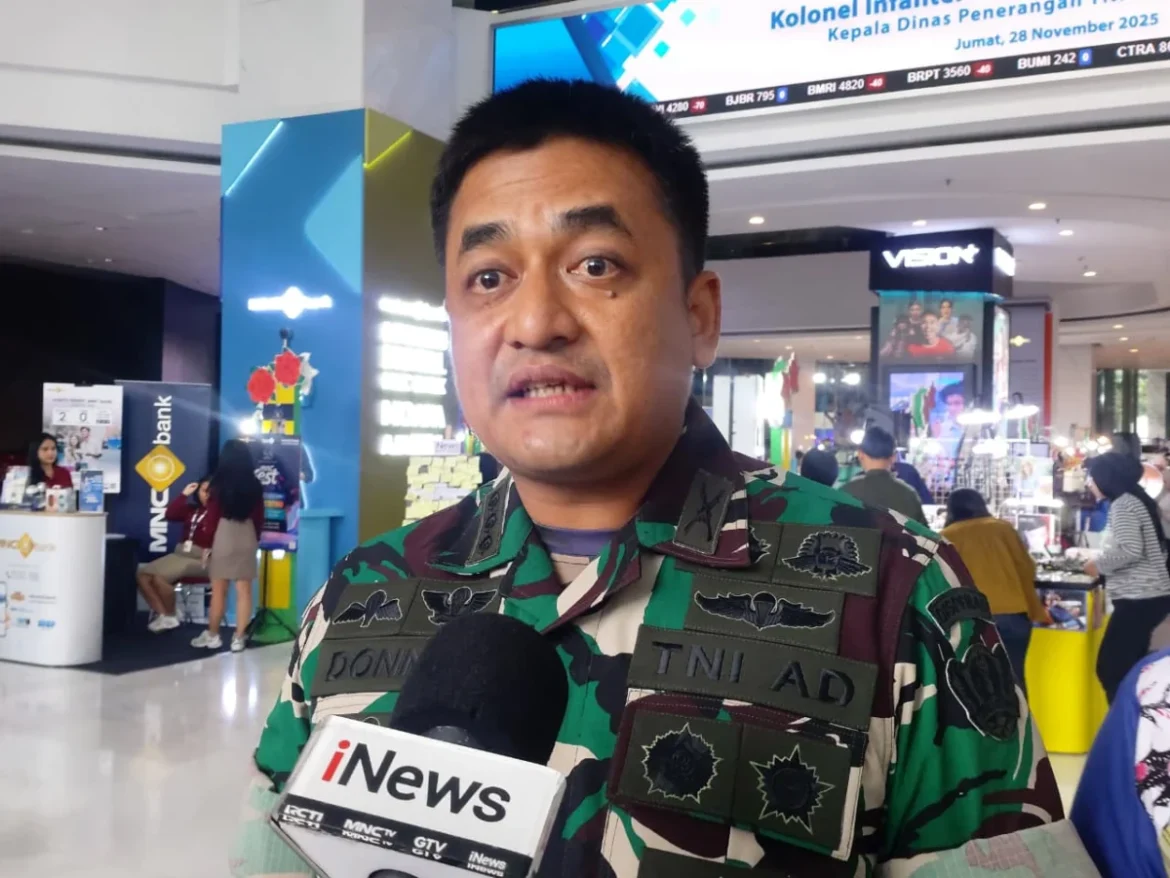
The confirmation of these sanctions was provided by the Head of the Indonesian Army Information Service (Kadispenad), Brigadier General Donny Pramono, on Friday, October 30, 2026. According to the official statement, the military justice system is proceeding in parallel with internal administrative punishments to ensure that accountability is maintained within the high-stakes environment of special operations units.
The Administrative Fallout: Stripping of Elite Status
The core of the administrative action against Letda AG involves the immediate revocation of his professional credentials. In the military hierarchy, especially within the Komando Pasukan Khusus (Kopassus), these qualifications are not merely titles; they represent years of grueling physical and psychological training.
By stripping Letda AG of his Para (paratrooper), Komando (special forces), and Antiteror (counter-terrorism) qualifications, the TNI AD is sending a powerful message regarding the standards expected of its officers. These qualifications define an individual’s identity as an elite soldier. Their removal effectively signals a complete loss of standing within the elite unit, rendering the officer unfit for the high-level operational duties for which they were originally trained.
Military analysts note that such administrative actions are rarely taken unless the breach of discipline or protocol is considered severe. While legal proceedings determine criminal liability, the administrative stripping of credentials serves as an immediate institutional rebuke, reflecting the severity of the circumstances surrounding the death of Letda Jihad.
Chronology of the Incident
The tragedy occurred at the armory of the Grup 2 Kopassus in Kartasura, a facility characterized by stringent safety protocols and restricted access. While details regarding the exact nature of the incident remain under investigation by the Military Police (Denpom), the timeline leading to the current state of the case has been established through preliminary investigative efforts.
- The Incident: The event took place within the secure environment of the Grup 2 Kopassus weapon storage facility. Following the discovery of the casualty, the unit immediately initiated standard operating procedures for an internal investigation.
- Investigation Phase: The Denpom Kopassus, acting as the primary investigative body, cordoned off the area and secured critical evidence, including high-definition surveillance footage from the armory’s security cameras.
- Witness Accounts: Investigators conducted a series of interrogations with personnel present at the facility, as well as those with knowledge of the chain of command and weapon handling procedures during the timeframe of the incident.
- Legal Determination: Based on the gathered evidence and the results of a formal case review (gelar perkara), the investigators identified Letda AG as the primary suspect.
- Current Status: Letda AG is currently being held in military detention, awaiting further judicial process under the Military Court system.
Professionalism and Transparency in the TNI AD
Brigadier General Donny Pramono emphasized that the TNI AD remains committed to a transparent and objective process. "TNI Angkatan Darat conveys its deepest condolences to the family of the late Letda Inf Jihad Ahmad Al-Rasyid. We ensure that the handling of this case is carried out objectively, transparently, and professionally," Donny stated.
This emphasis on "objectivity and transparency" is vital for the military’s public image. In recent years, the Indonesian military has sought to modernize its internal disciplinary mechanisms, particularly when dealing with high-profile cases involving elite units. The public declaration of specific sanctions—even before the final court verdict—is an attempt to assure both the public and the military rank-and-file that no individual is above the established code of conduct.
Implications for Kopassus and Military Doctrine
The death of an officer within a secure armory raises significant questions regarding standard operating procedures (SOP) and weapon handling safety. Kopassus, as the nation’s premier special operations force, relies heavily on the strict adherence to safety protocols to prevent accidents during the storage, maintenance, and distribution of weaponry.
Safety Protocol Review
The incident has necessitated a broader review of safety management within Kopassus armories. Analysts suggest that the investigation will likely lead to a tightened enforcement of the "Two-Man Rule" or similar safety protocols to ensure that weapon handling is never left to the discretion of a single individual, regardless of their rank or qualification.
Impact on Unit Morale
While the loss of an officer is always a blow to unit cohesion, the swift move to hold an internal peer accountable serves to maintain the legitimacy of the chain of command. When an officer is seen as being held to the same standards as any other soldier, it reinforces the principle of equality under military law. However, the loss of a qualified operator like the late Letda Jihad is an institutional loss that will likely result in a temporary shift in training focuses within the Grup 2 headquarters.
Legal Path Forward
The transition from administrative sanction to criminal prosecution represents the next phase of the ordeal. Under the Indonesian Military Justice Law, the case against Letda AG will be handled by the Military Prosecutor.
The military court system is tasked with determining the extent of criminal negligence or intent. Given that the incident occurred in a controlled environment, the defense and prosecution are expected to focus heavily on the forensic analysis of the armory, the timeline of personnel entry and exit, and the adherence to established safety mandates.
Conclusion
The case of Letda Jihad Ahmad Al-Rasyid is a somber reminder of the risks inherent in military service, even within the confines of training bases and logistics facilities. The decision by the TNI AD to strip Letda AG of his elite qualifications is an unprecedented administrative step that highlights the military’s intolerance for lapses in discipline that result in the loss of life.
As the legal proceedings continue, the Indonesian Army is under pressure to ensure that the final verdict reflects the gravity of the event. For the family of the deceased, the military’s commitment to an objective process is the only path toward finding closure, while for the Kopassus unit, the focus remains on restoring operational integrity and ensuring that the lessons learned from this tragedy prevent a recurrence in the future.
The military will continue to provide updates as the Denpom and the military court reach further milestones in this investigation, keeping the public informed while maintaining the necessary confidentiality required for sensitive military operations and judicial processes. For now, the focus remains on the grieving process for the family of Letda Jihad and the rigorous application of justice within the TNI AD.
