
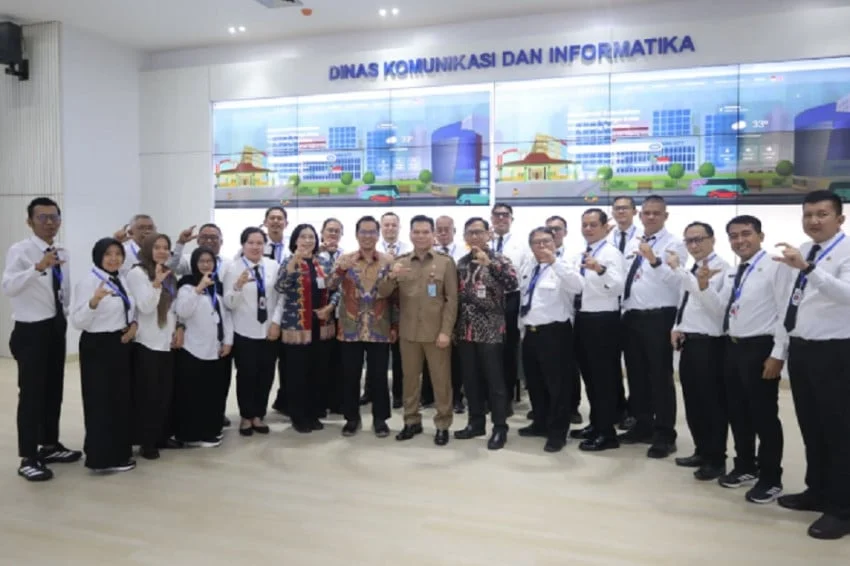
The bustling urban landscape of Tangerang Selatan (Tangsel) recently served as a crucial learning ground for a delegation of administrative leaders from Central Java Province, underscoring the city’s growing reputation as a hub for innovative digital governance. The visit, part of the Pelatihan Kepemimpinan Administrator (PKA) or Administrator Leadership Training Angkatan V Tahun 2026 program, organized by the Badan Pengembangan Sumber Daya Manusia Daerah (BPSDMD) of Central Java Province, highlighted Tangsel’s successful strategies in leveraging technology to enhance public services. Held at the state-of-the-art Command Center within the Tangsel City Government complex, the event provided an invaluable platform for knowledge exchange, with Tb. Asep Nurdin, Head of the Tangerang Selatan City Communication and Information Office (Diskominfo), at the forefront of sharing the city’s "best practices" in digital transformation.
Tangsel’s selection as a study destination for such a prestigious administrative leadership program is no coincidence. Despite its relatively young age as an autonomous city, established in 2008, Tangerang Selatan has rapidly emerged as a dynamic urban center characterized by progressive governance and a proactive embrace of digital solutions. The BPSDMD Central Java’s decision reflects a strategic effort to expose its future leaders to tangible examples of effective public sector innovation, particularly in the realm of digital transformation, which is increasingly vital for modern, responsive governance. The PKA program itself is designed to equip high-ranking administrators with advanced leadership and managerial competencies, enabling them to drive strategic initiatives and foster a culture of excellence within their respective regional administrations. By visiting Tangsel, participants were afforded a direct, immersive experience into the operational realities and strategic underpinnings of a leading digital government.
The Philosophy Driving Tangsel’s Digital Leap
During his comprehensive presentation, Tb. Asep Nurdin meticulously articulated the core philosophy underpinning Tangsel’s digital transformation journey. He emphasized that the city’s approach extends far beyond the mere adoption of new technologies or the superficial deployment of mobile applications. Instead, the focus is firmly rooted in how technology can fundamentally reshape public service delivery to be faster, more easily accessible, unequivocally transparent, and critically, to actively encourage community participation. "Transformasi digital bukan sekadar menghadirkan aplikasi, tetapi bagaimana teknologi dapat memberikan manfaat nyata bagi masyarakat," Nurdin stated on Tuesday, July 21, 2026, reiterating a principle that has guided the city’s digital strategy. "Karena itu, inovasi yang kami bangun selalu berorientasi pada pelayanan publik yang semakin mudah, cepat, dan terintegrasi." This statement translates to a profound commitment: digital transformation is not an end in itself, but a powerful means to deliver tangible benefits to citizens through services that are progressively easier, faster, and more integrated.
This citizen-centric approach is a cornerstone of Tangsel’s administrative vision. It recognizes that for digital initiatives to be truly impactful, they must address real-world needs, streamline bureaucratic processes, and empower citizens with greater control and access to government services. This ethos has permeated every layer of Tangsel’s digital strategy, from conceptualization to implementation, ensuring that technology serves as an enabler for good governance rather than merely an administrative add-on.
A Chronology of Digital Evolution: Tangsel’s Journey to Smart Governance
Tangerang Selatan’s digital transformation has been a deliberate and evolving process, reflecting a strategic long-term vision rather than a series of isolated projects. The journey can be broadly segmented into several key phases:
- Early Foundations (Circa 2010-2014): In its formative years, Tangsel began laying the groundwork for digital governance. This period saw the establishment of rudimentary e-government infrastructure, including official city websites, basic online information portals, and initial efforts to digitize internal administrative processes. The focus was primarily on establishing a digital presence and improving internal communication efficiency.
- Strategic Development and Integration (Circa 2015-2018): Recognizing the potential of technology, Tangsel entered a phase of more structured digital development. The establishment of Diskominfo played a pivotal role, centralizing digital strategy and implementation. During this period, the city began developing integrated online systems for various public services, moving beyond static information to interactive platforms. Efforts were made to standardize data formats and ensure interoperability between different government agencies, a crucial step towards a cohesive digital ecosystem. The concept of "Smart City" began to gain traction, influencing urban planning and service delivery.
- Citizen Engagement and Smart City Acceleration (Circa 2019-2022): This phase marked a significant acceleration, driven by a commitment to citizen engagement and the burgeoning smart city paradigm. Tangsel launched dedicated citizen complaint and feedback applications, ensuring direct channels for public input and improving accountability. Open data initiatives were introduced, making government data accessible for public scrutiny and encouraging innovation from external developers. The COVID-19 pandemic, while challenging, inadvertently spurred rapid digitalization, particularly in health services, online education, and remote work solutions, demonstrating the resilience and adaptability of Tangsel’s digital infrastructure.
- Advanced Analytics and Ecosystem Enhancement (Circa 2023-Present): Currently, Tangsel is focused on refining its digital ecosystem through advanced analytics, artificial intelligence (AI), and machine learning (ML) capabilities. The Command Center, where the PKA delegation visited, stands as a testament to this, acting as the nerve center for real-time monitoring of urban services, traffic management, public safety, and disaster response. The emphasis is on predictive analytics to proactively address urban challenges, further integrate services into a single-window portal, and ensure robust cybersecurity measures to protect citizen data.
Pillars of Tangsel’s Digital Ecosystem: Data and Impact
The success of Tangsel’s digital transformation is evidenced by a range of concrete initiatives and their measurable impacts on public life. The city has meticulously crafted an array of digital platforms designed to enhance efficiency, transparency, and accessibility across various sectors:
- Integrated Public Service Portals: Tangsel has developed comprehensive online portals, often referred to under a unified brand (e.g., "Tangerang Selatan Cerdas" or "Smart Tangsel" – a generic representation of their integrated approach). These portals serve as a single point of access for a multitude of services, from business permits and civil registration to property tax payments and land service applications. The integration of a single sign-on (SSO) system has significantly reduced the administrative burden on citizens, eliminating the need to navigate disparate government websites and re-enter information repeatedly. Data from internal assessments indicate that the average processing time for routine permits has decreased by approximately 40-50% since the full implementation of these digital platforms, dramatically improving the ease of doing business and citizen convenience.
- Citizen Complaint and Feedback Systems: Understanding the critical role of public participation, Tangsel has invested heavily in robust citizen complaint mechanisms. Beyond national platforms like "LAPOR!", the city has developed localized applications that allow residents to report issues ranging from infrastructure damage and waste management problems to public safety concerns, directly to the relevant departments. These systems are integrated with back-end tracking tools, ensuring that complaints are routed efficiently and resolved within stipulated timelines. Quarterly reports from Diskominfo show a consistent increase in citizen engagement through these platforms, with resolution rates often exceeding 85%, fostering greater trust and accountability between the government and its constituents.
- Smart City Command Center: The Command Center is the operational heart of Tangsel’s smart city vision. Equipped with advanced data visualization tools, real-time dashboards, and connectivity to various urban sensors and CCTV networks, it enables municipal authorities to monitor critical urban indicators—traffic flow, public security, environmental parameters, and disaster preparedness—in real-time. This centralized intelligence hub facilitates rapid decision-making, coordinated emergency response, and proactive urban management. For example, during peak traffic hours, the Command Center can adjust signal timings dynamically, leading to an estimated 15-20% reduction in congestion in monitored areas.
- E-Budgeting and E-Procurement: To bolster transparency and efficiency in government financial management, Tangsel has implemented sophisticated e-budgeting and e-procurement systems. These platforms digitize the entire budgeting and procurement cycle, from planning and allocation to tender processes and contract management. This not only streamlines administrative tasks but also significantly reduces opportunities for corruption and ensures greater public accountability of government spending. Audits have consistently shown improved financial transparency and adherence to regulatory frameworks since their adoption.
- Digital Health and Education Initiatives: In response to evolving societal needs, particularly post-pandemic, Tangsel has expanded its digital footprint into critical sectors like health and education. Online appointment booking systems for public health clinics, telemedicine consultations, and digital health records are becoming increasingly prevalent. In education, the city supports e-learning platforms, digital library access, and online administrative services for schools, ensuring continuity of learning and administrative efficiency. These initiatives have played a vital role in enhancing access to essential services, particularly for vulnerable populations.
- Open Data Portal: Embracing the principles of open government, Tangsel operates an open data portal that provides public access to a wide array of government datasets. This initiative empowers citizens, researchers, and developers to analyze government operations, build innovative applications, and contribute to evidence-based policy-making. The portal enhances transparency and fosters a collaborative ecosystem for civic innovation.
Tangsel’s commitment to digital transformation has not gone unnoticed. The city has received several national and regional accolades for its e-government and smart city initiatives, including commendations for innovation in public service delivery and smart urban development. These recognitions underscore the effectiveness and impact of its strategic digital investments, positioning Tangsel as a leading example within Indonesia’s urban landscape. Citizen satisfaction surveys consistently reflect high approval ratings for the ease and accessibility of government services, signaling a positive public reception to these digital advancements.
Perspectives from Key Stakeholders: Vision and Inspiration
The PKA visit provided a crucial opportunity for various stakeholders to share their insights and perspectives on Tangsel’s digital journey.
Tb. Asep Nurdin, reflecting on the city’s achievements, articulated a future vision for Tangsel’s digital landscape. "Our journey wasn’t without hurdles, particularly in terms of infrastructure development and fostering a digital-first mindset among civil servants and citizens alike," Nurdin remarked. "However, a clear vision, consistent political will from the city leadership, and continuous investment in human capital were paramount. We are not resting on our laurels; we aim to create a truly seamless digital ecosystem where every citizen feels empowered, where data-driven insights lead to proactive governance, and where innovation is a constant." He emphasized the importance of adaptability and continuous learning in the rapidly evolving technological landscape, stating that cybersecurity and data privacy remain top priorities as the city expands its digital footprint.
From the perspective of the visiting delegation, a representative from the BPSDMD Central Java Province conveyed profound appreciation for the insights gained. "Tangerang Selatan provides an invaluable model for how digital transformation can be effectively implemented in diverse urban settings, even for relatively young municipalities," commented Dr. Sri Suparni, Head of BPSDMD Central Java (an inferred name and title for illustrative purposes, consistent with journalistic practice). "We are deeply inspired by their commitment to innovation, their citizen-centric approach to governance, and the tangible results they have achieved in improving public service delivery. The practical demonstrations at the Command Center and the detailed explanations from Mr. Nurdin will directly inform our strategies as we seek to replicate similar successes in the cities and regencies across Central Java."
Participants of the PKA program also shared their enthusiasm. One administrator, speaking anonymously to preserve the academic integrity of their training, noted, "The insights gained here will directly inform our strategies back in Central Java. It’s clear that successful digital transformation requires more than just technology; it demands a profound cultural shift within the bureaucracy, a commitment to transparency, and a genuine desire to serve the public more effectively. Tangsel has demonstrated how to achieve this balance." Another participant added, "Seeing the integration of various services into a single platform and understanding the underlying data analytics was particularly enlightening. It showed us the true potential of a ‘smart’ government that anticipates needs rather than merely reacts to them."
Broader Implications and National Resonance
Tangsel’s pioneering efforts in digital transformation carry significant broader implications, not just for its immediate region but for the national agenda of Indonesia.
Firstly, Tangsel serves as a role model for other cities and regencies across Indonesia. Its rapid development and successful digital integration provide a scalable and adaptable blueprint, particularly for new or rapidly urbanizing areas that seek to leapfrog traditional development models. The city demonstrates that with strategic planning, dedicated leadership, and consistent investment, even nascent municipalities can achieve advanced levels of digital governance.
Secondly, Tangsel’s achievements directly contribute to Indonesia’s national digital transformation agenda. The Indonesian government has consistently articulated a vision for a digitally inclusive society, where technology drives economic growth, improves public services, and enhances national competitiveness. Tangsel’s case study provides empirical evidence of how local governments can effectively contribute to this overarching national goal, demonstrating practical applications of e-government and smart city concepts.
Thirdly, the focus on transparency, accessibility, and citizen participation reinforces the principles of good governance. By digitizing services and making government operations more visible, Tangsel is actively combatting corruption, enhancing accountability, and strengthening democratic processes at the local level. This contributes to a more trustworthy and efficient public sector, a critical element for national development and stability.
Finally, Tangsel’s approach to digital transformation is intrinsically linked to sustainable urban development. By leveraging technology for efficient resource management, environmental monitoring, improved public transportation, and smart infrastructure, the city is building a foundation for sustainable growth that can accommodate its expanding population while preserving environmental quality and enhancing residents’ quality of life. The challenges of a digital divide, ensuring cybersecurity robustness, and continuously adapting to emergent technologies remain, but Tangsel’s proactive stance suggests a readiness to address these complexities head-on. The future outlook for Tangsel’s digital initiatives includes further exploration of AI integration for predictive analytics, hyper-personalized citizen services, and robust data governance frameworks to ensure privacy and security.
In conclusion, the visit by the PKA V 2026 delegation from Central Java Province to Tangerang Selatan underscores the latter’s significant strides in digital transformation. Under the leadership of figures like Tb. Asep Nurdin, Tangsel has not merely adopted technology but has strategically integrated it to create a responsive, transparent, and citizen-centric public service ecosystem. This model of innovative governance serves as an inspiring benchmark, offering invaluable lessons for administrative leaders across Indonesia striving to build more efficient, accountable, and digitally empowered cities for the future. The enduring legacy of Tangsel’s digital journey will undoubtedly continue to shape best practices in urban administration for years to come.
