
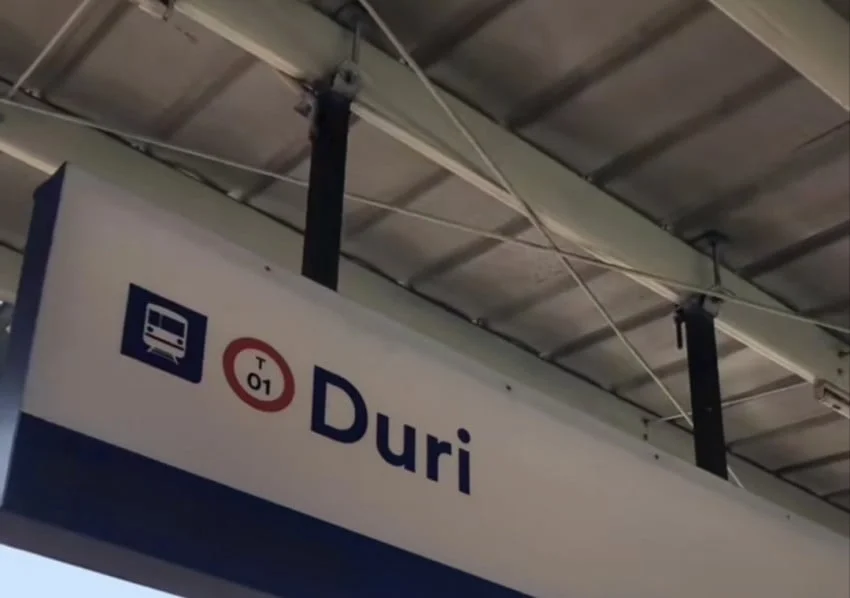
PT Kereta Commuter Indonesia, widely known as KAI Commuter, has announced a comprehensive infrastructure revitalization plan targeting two of the capital’s busiest transit hubs: Duri Station in West Jakarta and Cawang Station in East Jakarta. This strategic urban transport initiative is designed to address mounting passenger volumes, alleviate severe bottlenecking at critical interchange points, and fundamentally enhance the safety, efficiency, and overall comfort of millions of daily commuters navigating the Greater Jakarta metropolitan rail network.
The announcement comes at a time when the demand for integrated, mass public transportation is reaching unprecedented levels across the Jabodetabek (Jakarta, Bogor, Depok, Tangerang, and Bekasi) region. As the urban population continues to expand and traffic congestion on Greater Jakarta roads remains a persistent economic and environmental challenge, the KRL Commuter Line system serves as the literal backbone of daily commuter movement. Ensuring that key interchange stations can scale their capacity to meet this soaring demand has become an operational imperative for the national railway operator.
Duri Station: A Critical Transit Epicenter
Stasiun Duri, located strategically in West Jakarta, occupies a uniquely vital role within the KAI Commuter ecosystem. It functions as a major convergence point where multiple lines intersect, most notably acting as a crucial transit hub for passengers traveling from the Tangerang Line heading toward central and southern Jakarta, as well as those utilizing the loop line services. However, this high level of interconnectivity has transformed Duri Station into one of the most intensely congested locations across the entire rail network.
According to official operational data released by KAI Commuter, the average volume of transit passengers passing through Duri Station alone reaches a staggering 87,066 individuals per day. A closer examination of these figures reveals that weekday volumes are particularly punishing, with an average of 93,412 passengers navigating the station’s concourses and platforms from Monday through Friday. Even on weekends, when commuter traffic typically experiences a dip, Duri Station maintains a heavy operational load, averaging 75,610 passengers per day.
These massive numbers routinely push the station’s existing physical infrastructure to its absolute limits. During morning and evening peak hours, platforms experience significant overcrowding, narrow stairwells become major chokepoints, and the flow of passengers transferring between platforms often results in severe gridlock. Recognizing that incremental crowd-management measures are no longer sufficient, KAI Commuter leadership greenlit a structural overhaul centered around expanding pedestrian infrastructure and reengineering passenger circulation pathways.
Phase One: Groundbreaking and the New Pedestrian Skybridge
The revitalization of Duri Station will be executed in carefully planned, sequential phases to minimize disruption to ongoing train operations. Speaking in Central Jakarta, KAI Commuter VP Corporate Secretary Karina Amanda provided detailed insights into the immediate rollout of the project, highlighting that physical construction is slated to begin in the very near future.
"For Duri Station, this revitalization will be carried out in stages, and in the near future, there will be a groundbreaking ceremony for the initial phase, which involves the construction of an additional pedestrian overpass, or JPO, positioned near the exit signal heading toward Tanah Abang," Karina stated.
The implementation of this specialized Jembatan Penyeberangan Orang (JPO) is engineered to solve a specific structural bottleneck. By creating a dedicated, high-capacity pedestrian bridge connecting the outer areas near the Tanah Abang-bound tracks, KAI Commuter aims to physically separate entering and exiting passenger streams from those actively transferring between platforms. This structural separation is expected to drastically reduce the crossing conflicts that currently paralyze movement during rush hours, thereby improving dwell times for trains and enhancing safety across the board.
Strategic Timing Amid Broader Network Expansions
The decision to overhaul Duri and Cawang stations does not occur in a vacuum; it is part of a synchronized, region-wide enhancement of the rail infrastructure. The timing of the Duri Station revitalization coincides closely with other major milestones in the Greater Jakarta transportation calendar. Most notably, the official commencement of the extended Soekarno-Hatta Airport Rail Link (KA Bandara) route—which now stretches all the way to Bogor Station—began operations on December 1, 2026.
The integration of airport rail services deeper into the commuter network places additional significance on interchange stations like Duri, which serve as vital nodes where urban commuters and airport travelers intersect. As more passengers utilize the rail system for both daily commuting and long-distance travel to Indonesia’s primary international aviation gateway, the pressure on interchange infrastructure intensifies. Upgrading Duri Station is therefore an indispensable step in ensuring that the newly expanded airport rail services operate at peak efficiency without worsening platform congestion for regular KRL commuters.
Cawang Station: Addressing East Jakarta’s Commuter Surge
While Duri Station serves as the western focal point of this revitalization initiative, Cawang Station in East Jakarta represents an equally critical priority for KAI Commuter. Situated along a dense commercial and residential corridor, Cawang Station acts as a vital interchange point connecting rail commuters with other mass transit modes, including the Jabodebek LRT (Light Rail Transit) system and various TransJakarta Bus Rapid Transit corridors.
The convergence of heavy commuter rail traffic with urban bus and light rail networks has turned Cawang into a high-density pressure cooker, particularly during the critical morning rush hour when thousands of workers stream into the capital from Bekasi and Bogor. Although specific architectural details for the Cawang project are being finalized in tandem with local municipal authorities, the core objective mirrors that of Duri: expanding platform capacity, optimizing pedestrian flow, and creating seamless, weather-protected integration paths with adjacent transit systems.
Operational Challenges and Engineering Complexities
Executing major infrastructure upgrades within densely populated urban environments while maintaining continuous, uninterrupted railway operations presents a formidable challenge for project engineers and station managers. Unlike greenfield construction projects where work can proceed without spatial constraints, revitalizing active transit hubs requires meticulous logistical planning.
Construction activities—such as pile driving for the new JPO at Duri Station, steel truss installations, and concourse expansions—must predominantly be scheduled during narrow window periods overnight when commercial train services are suspended. Furthermore, project managers must coordinate closely with signaling and telecommunications teams to ensure that new structures do not interfere with sightlines, electrical catenary lines, or automated train protection systems.
Safety remains the paramount concern throughout the construction lifecycle. Temporary pedestrian pathways, clear directional signage, and an expanded presence of station security and operational personnel will be deployed to guide commuters safely through the active construction zones. KAI Commuter has emphasized that passenger safety and service continuity will be prioritized at every stage of the development process.
Socio-Economic Implications and Urban Mobility Impact
The broader implications of the Duri and Cawang station revitalizations extend far beyond mere passenger comfort; they touch upon the core economic productivity and environmental sustainability of the entire Jakarta metropolitan area. Public transportation systems function effectively only when their modal interfaces are frictionless. When transit nodes experience chronic congestion, the resulting delays accumulate, dampening workforce productivity and discouraging private vehicle users from making the switch to public transit.
By investing in high-capacity infrastructure like dedicated pedestrian overpasses and expanded concourses, KAI Commuter is directly addressing the "last-mile" and "interchange friction" problems that plague urban transit networks worldwide. Smoother transfers translate directly into reduced station dwell times, which in turn allows for tighter train scheduling, increased line capacity, and a more resilient overall timetable.
Moreover, as Jakarta continues its ambitious transition toward becoming a truly transit-oriented development (TOD) metropolis, the seamless integration of rail, light rail, and bus networks is essential. Modernized stations that can comfortably accommodate tens of thousands of daily transit passengers without hazardous overcrowding will play a foundational role in reducing the city’s infamous traffic congestion and curbing vehicular carbon emissions.
Future Outlook and Continuing Modernization
Looking ahead, KAI Commuter’s leadership has signaled that the revitalization of Duri and Cawang stations represents part of an ongoing, long-term capital expenditure program aimed at future-proofing the Jabodetabek rail network. As passenger volumes are projected to climb steadily over the coming decade driven by urban sprawl and real estate developments along the rail corridors, proactive infrastructure scaling is the only viable strategy to prevent system-wide gridlock.
With the upcoming groundbreaking ceremony at Duri Station marking the official commencement of physical works, commuters and urban planners alike will be closely watching how effectively the new architectural interventions perform under the immense pressure of daily rush-hour crowds. If successful, the blueprint established at Duri and Cawang could well serve as a standardized model for modernizing other high-density interchange stations across Indonesia’s rapidly evolving national railway network.
