
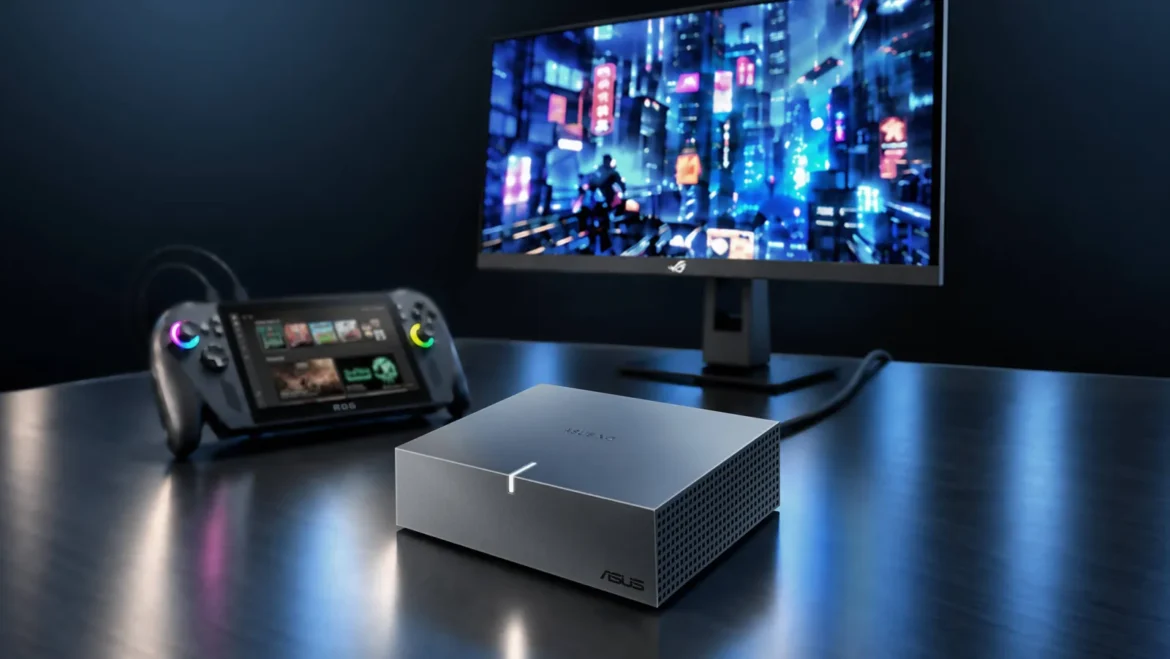
ASUS has officially expanded its ecosystem of external graphics solutions with the introduction of the ASUS XG Core Radeon RX 9060 XT LP 16GB, a uniquely ultra-compact external graphics enclosure (eGPU) designed to bridge the gap between portable computing and desktop-class graphical memory. Built to cater to users of modern ultra-thin laptops, compact mini PCs, and handheld gaming consoles, this innovative hardware piece aims to deliver robust visual processing capabilities without demanding a massive physical footprint. Measuring a mere 144 × 117 × 39 mm, the device easily distinguishes itself from traditional, bulky eGPU setups that often require dedicated desktop power supplies and considerable desk space.
However, achieving such a remarkably small form factor has necessitated notable engineering compromises. Most critically, the ASUS XG Core operates under a stringent power consumption ceiling of just 75W. This strict power limitation forces the powerful AMD Radeon RX 9060 XT GPU architecture housed inside to operate at significantly reduced clock speeds—nearly halving the performance metrics found in its standard desktop counterparts. Despite these concessions, the inclusion of a full 16GB VRAM buffer and uncompromised core specifications ensures that the device maintains substantial relevance for specific mobile productivity and gaming workloads.
Performance Profile and the 75W Power Compromise
To understand the operational envelope of the ASUS XG Core Radeon RX 9060 XT LP 16GB, one must examine the stark contrast between its specifications and those of the standard desktop variant. Out of the box, ASUS configures the eGPU with a base clock of 1,010 MHz and a boost clock reaching 1,600 MHz under standard operating conditions. Users seeking a minor performance uptick can engage the OC Mode via ASUS’s proprietary GPU Tweak III software, which marginally elevates these figures to a base clock of 1,030 MHz and a boost clock of 1,620 MHz.
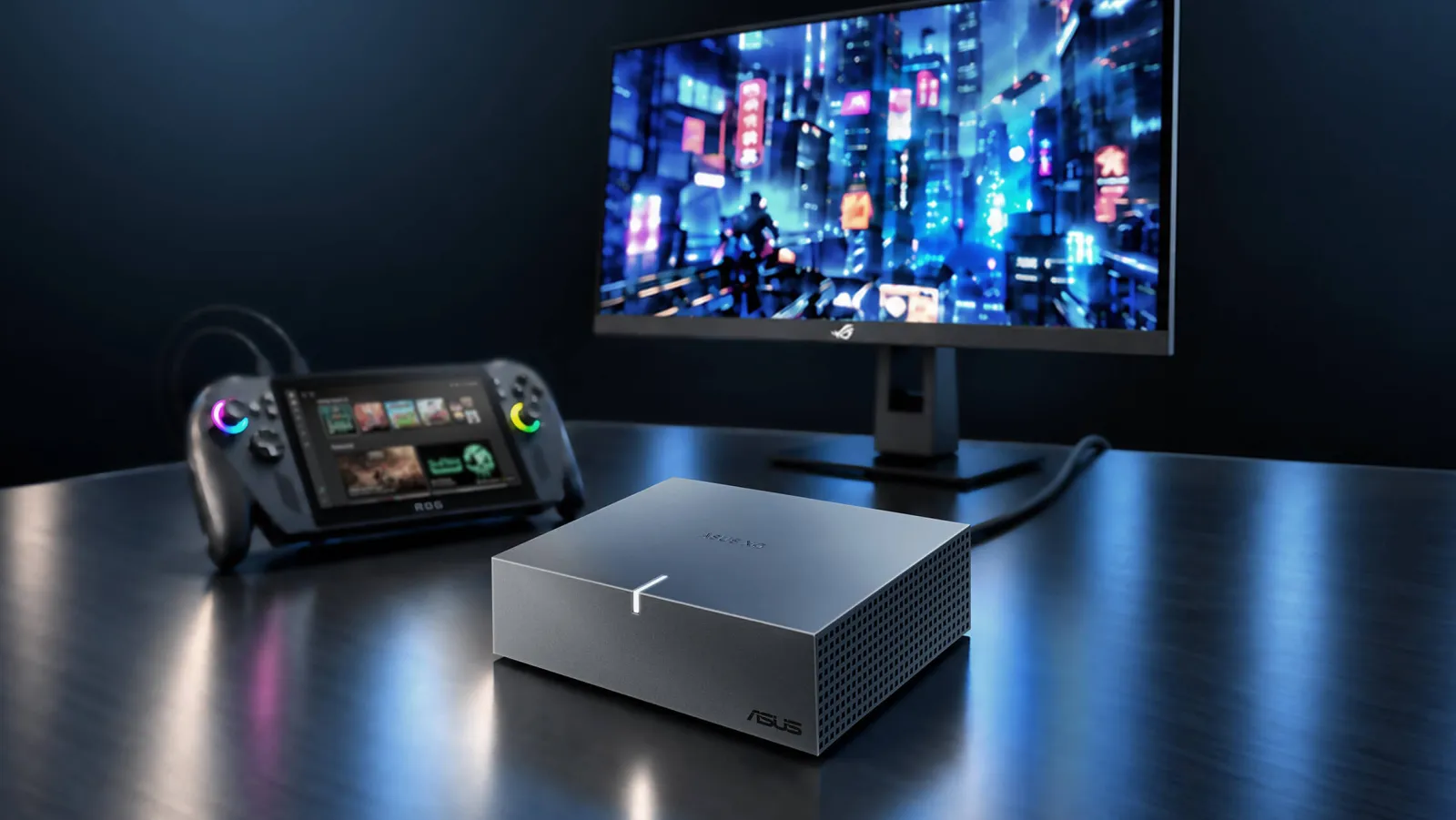
When juxtaposed against the stock desktop iteration of the Radeon RX 9060 XT—which boasts a staggering boost clock of up to 3,130 MHz and a thermal design power (TDP) requirement of 160W—the XG Core operates at approximately half the frequency. This reduction is a direct consequence of the 75W power envelope, which prioritizes thermal management and power efficiency within the diminutive enclosure over raw, unthrottled computing output.
Despite the suppressed clock speeds, ASUS has notably preserved the core architectural integrity of the GPU silicon. The XG Core retains its full complement of 2,048 Stream Processors, alongside 16GB of high-speed GDDR6 VRAM operating across a 128-bit memory bus with a memory bandwidth speed of 20 Gbps. While synthetically handicapped by power delivery limits, the generous 16GB framebuffer ensures that the device remains well-equipped to handle memory-intensive modern applications, high-resolution textures, and complex rendering pipelines that typically choke lower-tier mobile graphics solutions.
Connectivity, Display Outputs, and System Integration
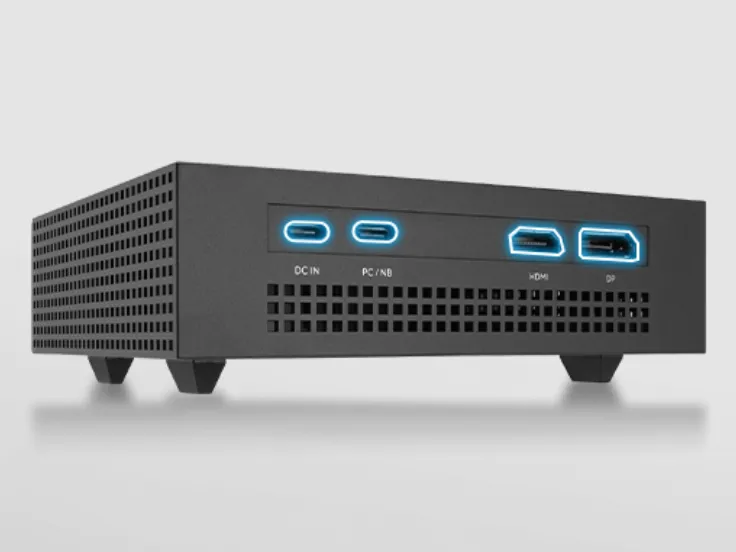
Recognizing the diverse ecosystem of modern portable devices, ASUS has engineered the XG Core with a versatile array of connectivity options designed for seamless integration. The primary interface relies on a high-bandwidth USB-C connection utilizing a 40Gbps data throughput protocol. This robust connection standard ensures that data latency between the host system—whether it be a laptop, a mini PC, or a modern gaming handheld—and the eGPU is minimized, facilitating efficient offloading of graphical computations.
Furthermore, the enclosure features dedicated power delivery mechanisms, including a separate USB-C power input port to ensure stable operation during prolonged workloads. For display outputs, the XG Core does not skimp on modern standards, equipping users with an HDMI 2.1b port and a DisplayPort 2.1a port. This configuration allows the eGPU to drive up to two external monitors simultaneously, effectively transforming a lightweight portable computer into a multi-display workstation or a capable desktop gaming rig upon connection.

Background Context and the Evolution of the eGPU Market
The launch of the ASUS XG Core arrives at a time when the market for external graphics enclosures has experienced a renaissance, largely driven by the explosive growth of portable Windows-based gaming handhelds and increasingly powerful yet power-constrained thin-and-light laptops. Historically, eGPUs have occupied a niche market due to several persistent challenges: high costs, proprietary connection standards, massive physical dimensions that defeat the purpose of mobility, and significant performance bottlenecks caused by Thunderbolt or USB-C bandwidth limitations.
Earlier generations of eGPUs typically required desktop-sized chassis to accommodate full-length graphics cards and internal power supplies weighing several kilograms. While these systems offered near-desktop performance, their lack of portability relegated them to stationary desk setups. By shifting the paradigm toward a low-profile, low-wattage design, ASUS is targeting a different consumer demographic—users who prioritize desk-free mobility, frequent travelers, and professionals or gamers who require a pocket-sized or backpack-friendly graphical accelerator that can be deployed rapidly in constrained environments.
Implications and Industry Analysis
Industry analysts observing the release of the ASUS XG Core note that the device represents a fascinating engineering experiment in power-scaling desktop silicon for mobile enclosures. By utilizing a 75W power limit—traditionally the maximum wattage a PCIe slot can deliver without auxiliary power cables—ASUS has essentially created a desktop-class GPU that behaves like a high-end mobile graphics processor in terms of power draw, yet retains the massive VRAM capacity typically reserved for more expensive desktop cards.
While the reduction in clock speed by nearly 50% will undoubtedly impact peak frame rates in demanding AAA video games, preliminary corporate claims suggest that the combination of a 16GB VRAM buffer and the underlying architecture can still yield playable frame rates exceeding 60 FPS in certain modern titles running at 1440p resolution. However, independent tech observers emphasize that real-world performance will heavily depend on thermal throttling within the compact 144 × 117 × 39 mm chassis, as well as the specific CPU and memory bandwidth limitations of the host system connected via the 40Gbps USB-C interface.
Moreover, the success of the XG Core will hinge significantly on pricing strategy and market positioning. As of press time, ASUS has not yet disclosed official pricing details or a definitive global launch date for the product. If positioned competitively, the device could carve out a lucrative segment among mobile professionals who occasionally engage in heavy rendering tasks and gamers seeking a middle ground between integrated graphics and full-scale desktop eGPU setups. Conversely, an exorbitant price tag could limit its appeal, as consumers might weigh the performance compromises against the cost of traditional, higher-wattage alternatives.
As the hardware landscape continues to adapt to the demands of mobile computing, the ASUS XG Core Radeon RX 9060 XT LP 16GB stands as a testament to ongoing efforts to pack desktop capabilities into increasingly miniaturized form factors, setting a precedent for future innovations in portable graphical hardware.
