

The act of washing dishes immediately after a meal is often perceived as a mundane household chore, yet psychological research suggests that this simple habit serves as a profound indicator of an individual’s cognitive processes, emotional regulation, and personality structure. While many individuals prefer to delay such tasks—opting to leave dishes in the sink until later in the day or the following morning—those who exhibit the behavior of immediate cleaning often demonstrate a distinct set of psychological traits. These characteristics, ranging from high levels of executive function to a sophisticated sense of communal responsibility, provide insight into how individuals manage stress, prioritize tasks, and interact with their environments.
The Psychological Underpinnings of Procrastination and Completion
The primary psychological framework often cited in relation to this habit is the Zeigarnik Effect, a concept identified by Soviet psychologist Bluma Zeigarnik in the 1920s. The theory posits that human memory and cognitive focus are disproportionately occupied by uncompleted or interrupted tasks. When a meal concludes, the physical act of eating is finished, but the associated "cleanup" remains an open mental file. For individuals who prioritize immediate completion, the sink full of dishes represents a "cognitive load" that creates low-level psychological tension. By washing the dishes immediately, these individuals effectively "close the loop" on the task, allowing their brains to shift into a state of rest or transition to the next activity without the background interference of unfinished chores.

Research from institutions such as the University of Michigan has explored how this drive for completion mitigates mental fatigue. When a task is left pending, the brain consumes a portion of its processing power to monitor the incomplete state. Conversely, immediate resolution provides a sense of closure, which serves as a physiological and psychological buffer against stress. This behavior is not merely about cleanliness; it is a strategic management of one’s internal mental resources.
High Levels of Self-Awareness and Executive Function
Individuals who possess the habit of cleaning up immediately often exhibit high levels of self-awareness regarding their post-prandial energy levels. It is a biological reality that the human body experiences a slight dip in metabolic energy after a meal, often referred to as post-prandial somnolence. Recognizing this natural decline in focus, these individuals implement a system to ensure productivity.
By establishing a rigid, almost ritualistic standard for their immediate actions, they bypass the need for decision-making during moments of low energy. This is a hallmark of strong executive function. Instead of debating whether to wash the dishes now or later, they have automated the process. This elimination of choice—a strategy often recommended by productivity experts—prevents the "decision fatigue" that typically leads to procrastination. By streamlining their workflow, these individuals maintain a consistent standard of performance regardless of their fluctuating energy states.

Proactive Problem Solving and Future Orientation
The tendency to address a mess immediately is a behavioral manifestation of a "proactive" rather than "reactive" personality. These individuals view potential problems as tasks to be neutralized before they can escalate into larger, more complex challenges. This approach extends far beyond the kitchen; it is often reflected in their professional and financial lives.
Data on organizational behavior indicates that people who prioritize early intervention in small tasks are statistically more likely to maintain consistent progress toward long-term goals. For instance, the psychological profile of an individual who clears a table immediately is correlated with the habit of paying bills ahead of schedule and resolving interpersonal conflicts before they become entrenched. By preventing the accumulation of "clutter"—whether physical, financial, or emotional—they ensure that their future selves are not burdened by the remnants of the past.
The Concept of Communal Orientation
The social implications of this habit are significant, particularly in shared living environments such as households or communal housing. Psychologists refer to this as "communal orientation," a social psychological framework where individuals prioritize the well-being of the group over the immediate convenience of the individual.

Leaving dishes to accumulate is often perceived as a form of "social friction." It places the burden of cleanup on others or creates an environment of visual disorder that affects all inhabitants. Conversely, those who clean immediately demonstrate high levels of accountability and empathy. They recognize that their personal actions have a direct impact on the shared environment. This behavior is an indicator of a highly developed social conscience, where the individual views themselves as a steward of the collective space rather than an isolated user. This trait is frequently linked to higher levels of cooperation and conflict resolution skills within personal and professional relationships.
Disciplinary Rigor and Emotional Regulation
Discipline is often misunderstood as a rigid, forced state of being, but in the context of household chores, it is better defined as the ability to act in alignment with one’s values rather than one’s immediate impulses. After eating, the path of least resistance is to relax. Choosing to stand and clean is an act of emotional regulation—the ability to override the desire for immediate comfort in favor of long-term order.
This level of discipline is rarely isolated to a single behavior. Studies on habit formation suggest that "keystone habits"—small, seemingly insignificant changes that create a ripple effect—can foster a more disciplined lifestyle. Individuals who consistently wash their dishes are often found to be more disciplined in other areas, such as physical fitness, project management, and time-sensitive work. The act of cleaning serves as a daily reinforcement of the capacity to govern one’s own behavior.
Mindfulness and the "Flow State"
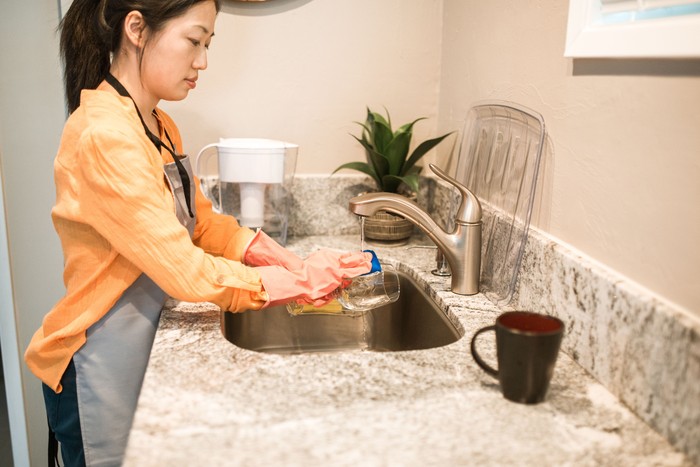
For some, the process of cleaning is not viewed as a chore but as a meditative practice, often described in psychology as "mindfulness." By engaging in a repetitive, sensory-based task—the temperature of the water, the texture of the soap, the sound of the dishes—the individual enters a state of grounding.
This practice of being fully present in the moment is a recognized method for reducing anxiety and enhancing cognitive clarity. It forces the mind to step away from abstract planning or worrying about future obligations and instead focus entirely on the physical reality of the present. This ability to find satisfaction in the "here and now" is a key indicator of psychological resilience. It demonstrates an ability to derive fulfillment from the process of living rather than just the outcome, which contributes to overall life satisfaction.
Humility and the Value of Invisible Labor
Finally, the habit of cleaning up without expectation of reward or recognition speaks to a high degree of humility. In many cultures, domestic tasks are undervalued, yet they are essential for the maintenance of a functional life. Individuals who perform these tasks consistently, regardless of whether anyone is watching or whether they will receive praise, exhibit a strong internal locus of control.

Their motivation is not external validation; it is an internal standard of integrity. They understand that the value of the action is inherent in the result—a clean and organized space—rather than the credit they might receive for it. This trait is often found in leaders who lead by example, recognizing that the most critical components of any system are the small, foundational actions that keep the structure stable.
Conclusion: Implications for Personal Development
The psychological profile of those who wash dishes immediately after eating is characterized by order, foresight, and a profound respect for both oneself and others. While the habit itself is simple, it acts as a diagnostic tool for understanding broader character traits.
The evidence suggests that such individuals are better equipped to handle the complexities of modern life, as they possess the cognitive tools to minimize stress, maximize productivity, and maintain harmonious social environments. By viewing the kitchen sink as a microcosm of their wider life, they demonstrate that even the most trivial tasks, when approached with intention and discipline, become the building blocks of a stable and well-ordered existence. Whether through the lens of the Zeigarnik Effect or the practice of mindfulness, the consistency with which one manages their daily chores remains a reliable reflection of their internal psychological landscape.
