
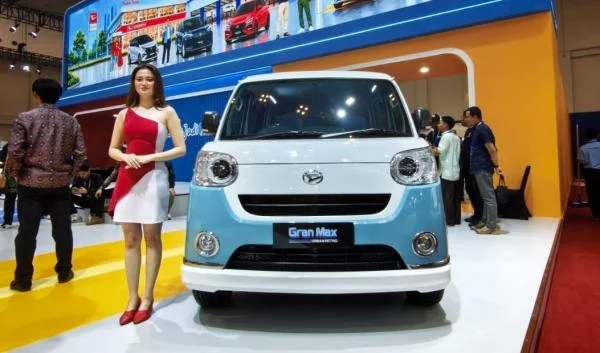
PT Astra Daihatsu Motor (ADM), a cornerstone of the Indonesian automotive industry, has solidified its position as the dominant player in the country’s high-volume, sub-IDR 300 million vehicle segment. During the Gaikindo Auto Week (GAW) 2026, held on Friday, November 20, 2026, the company announced that it currently controls a significant 32 percent market share in this price-sensitive bracket. This achievement underscores Daihatsu’s strategic alignment with the purchasing power and operational needs of the Indonesian mass market, particularly as the nation experiences shifting economic dynamics.
The announcement came as a strategic highlight of the GAW 2026 event, where industry leaders gather to assess the pulse of the Indonesian automotive landscape. Rokky Irvayandi, Marketing Director and Corporate Function Director at ADM, articulated that this success is not merely a product of sales volume but a reflection of the deep-rooted trust consumers across the archipelago place in the brand.
The Strategic Importance of the Gran Max Legacy
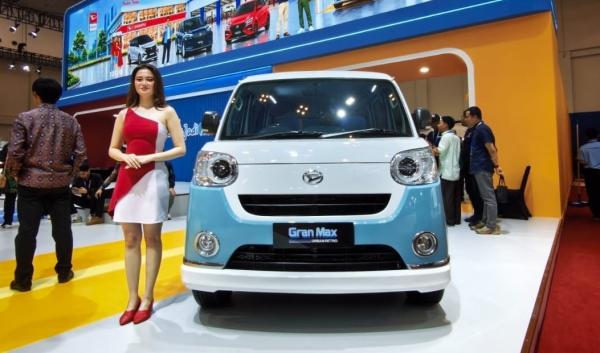
Central to this market dominance is the enduring success of the Daihatsu Gran Max. Since its introduction to the Indonesian market in 2007, the Gran Max has transitioned from a new entrant to a household name, serving as the backbone for countless small-to-medium enterprises (SMEs) and families. The company revealed that the model has reached a cumulative sales milestone approaching one million units, a feat that marks nearly two decades of consistent market penetration.
The Gran Max’s success can be attributed to its versatile design, which caters to both commercial logistics and personal utility. Its durability on varying road conditions, coupled with its relatively low maintenance costs, has made it a preferred choice for businesses ranging from food logistics to courier services. As the Indonesian economy continues to rely heavily on the micro, small, and medium enterprise (MSME) sector, the Gran Max remains a critical tool for economic mobility.
Geographic Diversity and Market Distribution
One of the most revealing statistics shared by ADM during the event was the geographic distribution of its sales. Contrary to the industry trend where most sales are heavily concentrated in the capital city and its surrounding urban centers, 56 percent of Daihatsu’s sales are generated outside of Java.
This statistic is pivotal for understanding the broader Indonesian automotive market. It indicates that Daihatsu has successfully built an infrastructure of dealerships and service centers that extends into the outer islands of the archipelago. By fostering trust in Sumatra, Kalimantan, Sulawesi, and beyond, the company has insulated itself from the potential stagnation of the Javanese market, ensuring a more stable and resilient revenue stream.
Portfolio Balance: Passenger vs. Commercial
The current composition of Daihatsu’s sales represents a balanced ecosystem between two distinct buyer segments. According to the data provided by ADM, approximately 50 percent of their sales are driven by passenger vehicles, headlined by the Ayla and the Sigra. These models are specifically designed to meet the requirements of the entry-level passenger car segment, offering fuel efficiency and compact dimensions that are ideal for navigating the dense traffic of Indonesian cities.
The remaining 50 percent of sales is accounted for by the Gran Max series. This parity is a strategic advantage for ADM. By splitting its focus equally between the passenger and commercial sectors, the company effectively mitigates risk. If the passenger vehicle market experiences a downturn due to fluctuating interest rates or economic volatility, the commercial sector—often driven by essential business logistics—tends to remain more stable, and vice versa.
Chronology of Growth (2007–2026)
The trajectory of PT Astra Daihatsu Motor over the past 19 years provides a blueprint for successful localization in the Southeast Asian automotive industry.

- 2007: The official launch of the Gran Max in Indonesia, designed to replace the aging Zebra platform. It immediately captured the market’s attention with its wide body design and versatile engine options.
- 2012: By its fifth anniversary, the Gran Max reached significant milestones in sales, cementing its role as the market leader in the commercial light-truck segment.
- 2016–2017: The introduction of the Ayla and Sigra expanded Daihatsu’s footprint in the Low Cost Green Car (LCGC) segment, effectively doubling the brand’s reach in the passenger car market.
- 2020–2022: Despite the global pandemic, ADM maintained its focus on supply chain resilience, allowing the company to sustain its market share while competitors struggled with logistics and material shortages.
- 2026: At Gaikindo Auto Week, ADM reaffirms its 32 percent market share in the sub-IDR 300 million segment, signaling its readiness to enter the next phase of market evolution, potentially focusing on electrification and advanced vehicle connectivity.
Economic Implications and Market Analysis
The dominance of a brand in the sub-IDR 300 million price category is a bellwether for the health of the Indonesian middle class. As the cost of living fluctuates and inflation impacts consumer spending power, vehicles that offer high value-for-money remain the most resilient assets.
Industry analysts observe that ADM’s strategy is highly localized. By manufacturing the vast majority of its parts within Indonesia, the company not only contributes to the local economy but also minimizes the impact of currency fluctuations on the retail price of its vehicles. This vertical integration is a primary reason why Daihatsu can maintain such competitive pricing without sacrificing quality.
Furthermore, the "sub-IDR 300 million" segment is currently the most competitive arena in the Indonesian automotive market. It is here that Japanese, Chinese, and increasingly, European manufacturers are fighting for dominance. Daihatsu’s ability to hold 32 percent of this space suggests a sophisticated understanding of consumer behavior—specifically, the preference for functional, low-maintenance vehicles that hold their resale value over time.
Future Outlook and Challenges
While the current figures are positive, the automotive industry in Indonesia faces several headwinds. The transition toward electric vehicles (EVs) is accelerating, and the government of Indonesia is aggressively pushing for a cleaner energy transition. For a company that has built its brand on the reliability of internal combustion engines (ICE), the challenge for the next decade will be to translate its reputation for trust and affordability into the nascent EV market.
Rokky Irvayandi’s comments at GAW 2026 suggest that Daihatsu is acutely aware of these shifts. While the current success is rooted in traditional models like the Sigra and Gran Max, the company is expected to continue its policy of "gradual innovation." This involves integrating smarter safety features and potentially hybrid technology into their existing line-up before making a full-scale pivot to battery-electric vehicles (BEVs).

Conclusion
The data presented by PT Astra Daihatsu Motor at the Gaikindo Auto Week 2026 confirms that the company remains an indispensable pillar of the Indonesian economy. Through a combination of strategic model placement, a robust and widespread dealer network, and an unwavering commitment to the needs of both the family and the entrepreneur, Daihatsu has maintained a rare consistency in a volatile market.
As the Indonesian automotive sector continues to evolve, the challenge for ADM will be to maintain this 32 percent market share while navigating the complex transition toward sustainable mobility. However, if the past 19 years of the Gran Max’s journey are any indication, the company is well-positioned to adapt its proven formula for the next generation of Indonesian drivers. The success of the brand is not merely an achievement for its shareholders; it is a vital component of the nation’s ongoing infrastructure and economic development.
