
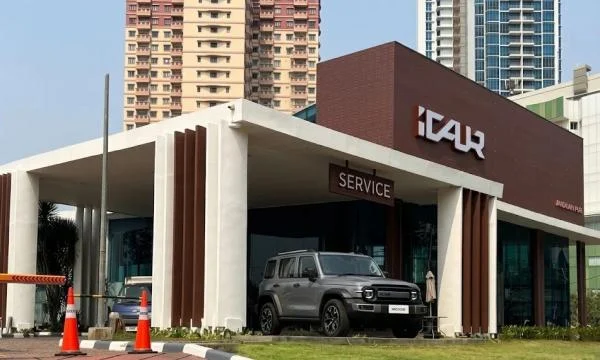
The Chinese automotive manufacturer iCar has officially announced an ambitious roadmap to expand its footprint in the Indonesian market, targeting the establishment of 30 dealerships across the archipelago by the end of 2026. This strategic initiative is designed to bolster the company’s retail presence and enhance the quality of its after-sales service network, ensuring that consumers have comprehensive access to the brand’s growing portfolio of electric vehicles (EVs). As the global automotive industry shifts toward sustainable mobility, iCar’s expansion serves as a critical move to capture a larger share of the burgeoning Indonesian EV sector.
Strategic Market Positioning and Expansion Timeline
The expansion plan coincides with the highly anticipated delivery of iCar’s flagship electric SUVs, the V23 and V27, to customers in Indonesia. The company has identified the Indonesian market as a key growth engine for its Southeast Asian operations, citing the government’s push for EV adoption and a growing consumer interest in sophisticated, tech-integrated transportation.
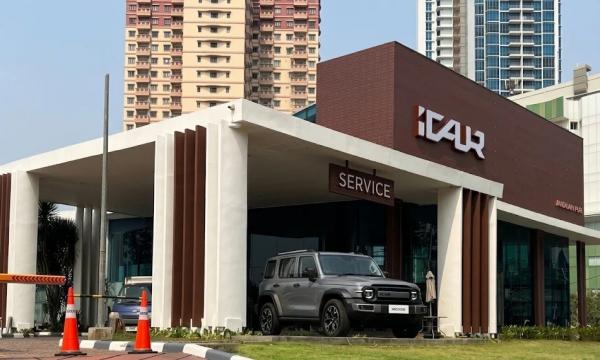
The timeline for this expansion is aggressive yet structured. Following the successful inauguration of the 3S (Sales, Service, and Spare parts) dealer facility at ADM Hasyim Ashari, the company recently celebrated the opening of the 3S Andalan Puri dealer in Jakarta. This facility serves as a blueprint for the company’s future retail outlets, offering a modern, customer-centric environment that aligns with the premium positioning of the iCar brand.
By focusing on the 3S model, iCar aims to provide a "one-stop-shop" experience for its clientele. This approach is intended to mitigate consumer concerns regarding maintenance and part availability, which are often cited as primary barriers to EV adoption in developing markets.
Technical Capabilities and Infrastructure
The newly established Andalan Puri dealership underscores the technical standards iCar intends to maintain across its future network. The showroom is designed with a capacity to display up to 10 vehicle units, allowing potential buyers to interact with the full range of current and upcoming models.
Beyond the sales floor, the after-sales department is equipped with sophisticated diagnostic tools. The facility includes two indoor Service Work Bays and two outdoor Quick Service Bays, capable of servicing up to eight vehicles per day. This infrastructure is vital for building long-term brand loyalty. By ensuring that routine maintenance, battery health checks, and minor repairs are handled efficiently, iCar aims to differentiate itself from competitors who may be slower to develop local service capabilities.
Leadership Perspective on Market Commitment
Yuri Yin, the Country Director of iCar Indonesia, emphasized that the expansion is not merely about physical reach, but about fostering deep-rooted trust with the Indonesian public. According to Yin, the company views its dealer network as the primary touchpoint for the customer journey.
"The expansion of our dealer network is a fundamental pillar of our strategy to provide an ownership experience that meets international standards," Yin stated during the inauguration of the Andalan Puri facility. "Our goal is to ensure that every iCar owner in Indonesia feels supported, whether they are in the initial purchase phase or requiring long-term maintenance. This infrastructure investment is a testament to our long-term commitment to the Indonesian market."
Industry analysts observe that this move is a calculated response to the increasing competitive pressure from other Chinese EV manufacturers, such as BYD, Wuling, and Chery, all of which are aggressively scaling their operations in Indonesia. By prioritizing 3S facilities, iCar is aiming to establish a reputation for reliability, which is essential for capturing a more discerning segment of the automotive market.

The Broader Context: Indonesia’s EV Landscape
The Indonesian government has been actively incentivizing the shift toward electric vehicles through various tax holidays, VAT reductions, and subsidies for local manufacturing. These policies are designed to position Indonesia as a regional hub for EV production, leveraging the country’s vast nickel reserves—a critical component for lithium-ion battery production.
iCar’s decision to commit to 30 dealerships aligns with these national objectives. The presence of these facilities contributes to the broader ecosystem by creating jobs, fostering technical skills among local mechanics, and encouraging infrastructure development in suburban and urban hubs.
Furthermore, the introduction of the V23 and V27 models marks a strategic segment entry. The V-series is targeted at urban professionals and families who prioritize design, advanced driver-assistance systems (ADAS), and sustainable performance. As charging infrastructure continues to develop across Java and other major islands, the accessibility provided by iCar’s dealer network will likely serve as a catalyst for increased adoption rates in the mid-to-high-tier vehicle segments.
Analysis of Future Implications
The success of iCar’s expansion strategy will depend on several factors, including the consistent availability of spare parts, the quality of technician training, and the company’s ability to navigate the complex logistics of Indonesia’s geography.
From an economic standpoint, the rollout of 30 dealerships will require significant capital expenditure, but it also creates a platform for sustained revenue generation through after-sales services. As EVs require less frequent maintenance than internal combustion engine (ICE) vehicles—due to fewer moving parts—iCar’s focus on "Quick Service" bays suggests a business model geared toward high-volume, efficient throughput.

Moreover, the competitive landscape in Indonesia is shifting from "market entry" to "market dominance." While the initial phase of EV adoption was characterized by early adopters, the next phase requires convincing the mass market that electric vehicles are a practical, long-term replacement for conventional cars. By building a visible, widespread presence, iCar is positioning itself to be a household name, effectively reducing the "range anxiety" and "service anxiety" that currently plague potential EV buyers.
Strategic Roadmap: Beyond 2026
While the immediate focus is on the 30-dealer target by 2026, industry observers speculate that this is merely the first phase of a broader Southeast Asian strategy. iCar’s parent companies are likely monitoring the performance of these Indonesian dealerships to determine the viability of local assembly (CKD – Completely Knocked Down) operations. If the demand for the V23 and V27 models remains robust, a localized manufacturing plant could follow, further reducing costs and potentially lowering prices for the end consumer.
The company is also expected to integrate its digital ecosystem with its physical showrooms. This includes the potential for over-the-air (OTA) updates, mobile service units, and integrated charging solutions, which would complement the brick-and-mortar dealer experience.
Conclusion
iCar’s commitment to establishing 30 dealerships in Indonesia by 2026 represents a major milestone in the brand’s international expansion. By focusing on a high-quality 3S model and demonstrating a clear, proactive approach to after-sales service, iCar is laying the groundwork for a sustainable and competitive presence in one of the world’s fastest-growing automotive markets. As the company continues to deliver its V-series SUVs and scale its operations, the impact on Indonesia’s transition to green mobility will be significant, marking a new chapter in the nation’s automotive evolution. The synergy between government support and private sector investment, as evidenced by iCar’s roadmap, suggests that the future of mobility in Indonesia will be increasingly electric, accessible, and customer-focused.
