
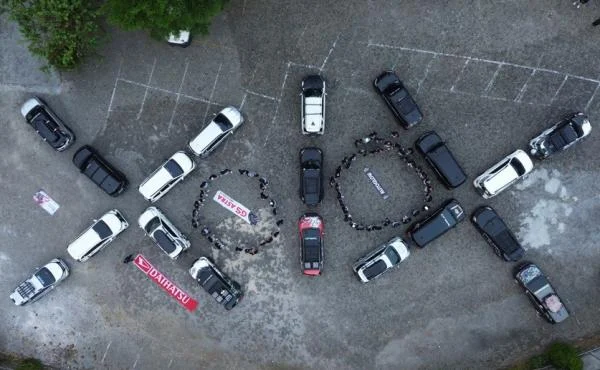
The Terios Rush Club Indonesia (TeRuCI), one of the nation’s most prominent automotive communities, officially marked its 19th anniversary with a dual-purpose gathering in Lampung. The event, which also served as the 10th Musyawarah Nasional (Munas), or National Deliberation, brought together hundreds of members from across the Indonesian archipelago. This landmark occasion underscored the evolution of the club from a simple enthusiast gathering into a structured, nationwide organization dedicated to automotive excellence, brotherhood, and social responsibility.
A Legacy of Brotherhood and Organizational Growth
Established nearly two decades ago, TeRuCI has served as a central hub for owners of Daihatsu Terios and Toyota Rush vehicles. The organization’s longevity is a rarity in the fragmented landscape of automotive clubs, where many groups disband after only a few years of activity. According to the Kumendan Pusat of TeRuCI, Budhy Prihantoro, the key to the club’s survival lies in its foundational values of fraternity and shared purpose.
"Nineteen years represents a significant journey that has been meticulously built upon the foundation of true brotherhood," Prihantoro stated during the event. "The 10th Munas is a crucial turning point. It is not just a celebration of our past, but a strategic moment to reinforce our organizational structure, refine our internal policies, and ensure that TeRuCI remains a solid, forward-thinking entity in the years to come."
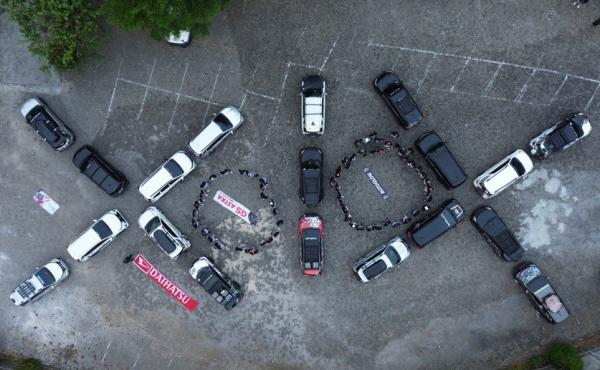
The Munas serves as the highest decision-making forum within the club. During this session, members evaluated past performance, discussed national membership trends, and elected new leadership frameworks intended to guide the club toward its second decade. By hosting this meeting in Lampung, the organizers aimed to decentralize the club’s activities, demonstrating that TeRuCI’s influence extends far beyond its headquarters in the capital, Jakarta.
The Evolution of Automotive Communities in Indonesia
The rise of clubs like TeRuCI mirrors a broader trend in Indonesia’s automotive landscape. As vehicle ownership—specifically in the Low Sport Utility Vehicle (LSUV) segment—has surged over the last twenty years, the need for communal support systems has grown in tandem.
Data from the Association of Indonesia Automotive Industries (GAIKINDO) consistently ranks the Terios and Rush models among the most popular vehicles in their class. Their durability, affordability, and adaptability for both urban commuting and long-distance touring have made them staples of the Indonesian middle class. TeRuCI has successfully leveraged this market dominance to create a robust social ecosystem.
Unlike casual hobbyist groups, modern automotive clubs in Indonesia have evolved into semi-professional entities. They often partner with manufacturers for technical support, engage in road safety advocacy, and organize large-scale cross-province convoys. The 19th anniversary of TeRuCI serves as a case study in how these communities can maintain engagement over nearly two decades by pivoting from purely automotive technical discussions to community-building and philanthropy.

Integrating Social Responsibility into Automotive Culture
A defining characteristic of the 19th-anniversary celebration was the integration of a Corporate Social Responsibility (CSR) program. As part of the festivities in Lampung, the TeRuCI delegation engaged in a philanthropic mission, delivering aid and donations to local boarding schools (pondok pesantren) in South Lampung.
Gofan Wijaya, the Chairperson of the 19th Anniversary and 10th Munas committee, emphasized that the club’s identity is increasingly defined by its commitment to societal impact. "We wanted this anniversary to be more than just a gathering of vehicles," Wijaya explained. "Our goal was to ensure that the event left a positive footprint in the host region. By supporting the local educational infrastructure in Lampung, we are demonstrating that our club is committed to the betterment of the communities we travel through."
This philanthropic approach is becoming a hallmark of reputable automotive clubs in Indonesia. It serves multiple purposes: it improves the public image of these clubs, which are often unfairly associated with reckless road behavior or excessive noise; it fosters a sense of collective purpose among members; and it strengthens the bond between the club and local authorities, which is vital for the logistical planning of future large-scale convoys.
The Logistical and Strategic Challenges of the 10th Munas
Organizing a national-level event of this magnitude requires months of preparation. The choice of Lampung as the venue provided both opportunities and challenges. Moving large groups of vehicles across the Sunda Strait involves complex logistical planning, including ferry coordination and traffic management.

During the Munas, delegates reviewed the club’s current operational status. Key topics of discussion included:
- Membership Retention: Strategies for engaging younger generations of Terios and Rush owners who may prefer digital engagement over physical meetings.
- Standardization of Safety: Updates to the club’s "Convoy Protocol," a set of internal rules designed to ensure that member vehicles do not disrupt public traffic flow during touring events.
- Institutional Collaboration: Discussions on how to better leverage the partnership with Daihatsu and Toyota to provide members with better maintenance resources and parts availability.
- Digital Transformation: The implementation of new platforms to manage membership databases, which currently span thousands of individuals across the Indonesian archipelago.
The professionalism shown during these sessions highlights how TeRuCI has transitioned from a loose group of friends into a structured organization capable of managing its own national policy framework.
Broader Implications and Future Outlook
The success of the 19th-anniversary event suggests that TeRuCI is well-positioned for its 20th-anniversary "platinum" year. However, the club faces a changing automotive landscape. With the government’s push toward electric vehicles (EVs) and hybrid technologies, the traditional internal combustion engine (ICE) vehicles that form the core of the club’s identity will eventually face shifts in maintenance requirements and fuel availability.
Industry analysts suggest that the next decade will be critical for such clubs. To remain relevant, TeRuCI will likely need to incorporate discussions regarding the future of mobility, vehicle modification regulations, and potentially the integration of newer, electrified SUV models into their membership criteria.

Moreover, the club’s focus on community service is a strategic hedge against potential regulatory crackdowns on large-scale automotive convoys. By positioning themselves as a positive force in the community, TeRuCI creates a "social license" that allows them to continue their touring activities with the support, rather than the suspicion, of local residents and police forces.
Conclusion
The 19th Anniversary and 10th Munas of TeRuCI in Lampung have set a high benchmark for Indonesian automotive communities. By successfully balancing organizational governance with a spirit of fellowship and a genuine commitment to social welfare, the club has solidified its position as a pillar of the Indonesian automotive scene.
As the club moves into its 20th year, the lessons learned in Lampung—the importance of decentralized operations, the necessity of giving back to local communities, and the value of clear internal governance—will undoubtedly serve as the blueprint for its continued growth. Whether through its technical contributions to members or its social contributions to the regions it visits, TeRuCI remains a testament to the idea that a car club is defined less by the machines its members drive and more by the values they share on the road.
