
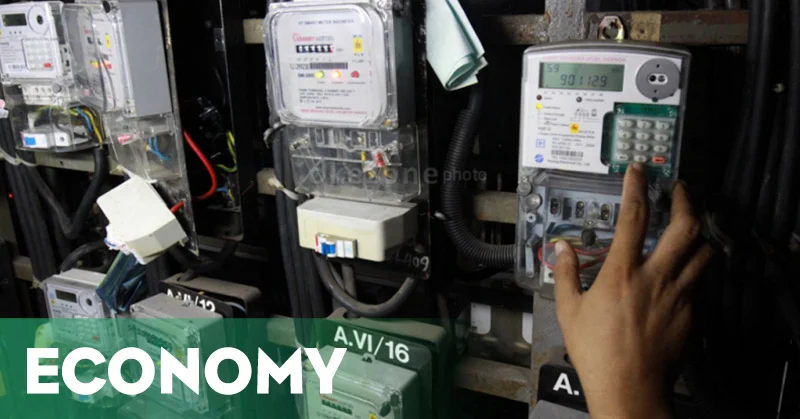
The Indonesian government’s ongoing evaluation of its national energy subsidy framework has sparked intense debate among economists, policymakers, and public interest groups. Central to this discussion is the proposed restructuring or potential removal of electricity subsidies targeted at households consuming 450 Volt-Amperes (VA) and 900 VA—tiers predominantly utilized by low-income and vulnerable segments of the population. While fiscal authorities view subsidy reform as an essential step toward achieving fiscal sustainability and better targeting state aid, researchers and energy experts emphasize that any policy shift must be accompanied by robust guarantees to ensure universal energy access. Among those weighing in on the debate is the Indonesian Institute of Sciences (LIPI), which has underscored the urgent need to redirect saved fiscal resources into expanding electrical infrastructure to reach millions of underserved citizens living in remote and isolated regions across the archipelago.
Background Context of Indonesia’s Energy Subsidy Reform
To understand the gravity of the proposed subsidy adjustments, it is necessary to examine the historical context of Indonesia’s energy assistance programs. For decades, the Indonesian government has maintained extensive subsidies for liquefied petroleum gas (LPG), fuel, and electricity to cushion the population from global commodity price volatility and to keep the cost of living manageable. The 450 VA and 900 VA electricity tariffs, in particular, were designed as social safety nets for the nation’s poorest households.
However, these broad-based subsidies have long faced criticism from economists and international financial institutions for being inefficient and poorly targeted. Because the subsidies are tied to connection capacity rather than individual household income, a significant portion of the financial support inadvertently benefits middle- and upper-income consumers who fall into the 900 VA category, or even unauthorized users of the 450 VA tier. Consequently, the national budget has borne a heavy fiscal burden year after year, crowding out high-priority public investments in healthcare, education, and critical infrastructure.
As successive administrations sought ways to optimize state expenditures, discussions surrounding targeted subsidies gained momentum. The objective shifted from subsidizing the commodity itself to providing direct assistance to eligible families, thereby freeing up state funds for more productive long-term economic endeavors. It was within this complex socio-economic climate that research institutions like LIPI began evaluating the structural implications of recalibrating the 450 VA and 900 VA electricity tariffs.
Expert Perspectives and Economic Implications
Weighing in on the discourse, Maxensius Tri Sambodo, a senior researcher at the Research Center for Economics of the Indonesian Institute of Sciences (LIPI), offered a nuanced assessment of the government’s plans. Speaking in Jakarta, Sambodo characterized the potential removal or restructuring of the broad subsidies as a fundamentally positive step for national economic management, provided that the administration manages the transition judiciously.
"I think it is a positive move, though the immediate consequence will naturally be an increase in tariffs for certain consumers," Sambodo noted. He emphasized that the core objective of dismantling the broad subsidy architecture should not merely be fiscal savings, but rather the strategic reallocation of those funds to bridge the stark energy divide that persists across the country. "What we hope to see is that once these subsidies are lifted, the resulting savings are channeled directly into helping communities that have not yet gained access to electricity," he added.
According to Sambodo, the principle of energy justice dictates that public resources should foster equity and fairness. Under the existing system, a paradox exists where a portion of the population receives subsidized power, while millions of other Indonesians remain entirely disconnected from the national grid, bearing the brunt of energy poverty. Realizing true energy equity, therefore, requires universal access as a baseline prerequisite.
The Reality of Energy Poverty: Millions Without Power
Despite Indonesia’s status as a rapidly developing Southeast Asian economic powerhouse, deep disparities persist in infrastructure development between urban centers and remote or outermost islands. Sambodo highlighted a striking statistic: approximately 60 million people across Indonesia still lack reliable access to electricity. This energy deficit is heavily concentrated in rural, inland, and frontier regions where geographical isolation presents formidable logistical and financial barriers to grid expansion.
The challenge of electrification in these areas extends far beyond the mere generation of power. Even when local microgrids or small-scale power plants are established, the requisite transmission networks are frequently missing. Building high-voltage transmission lines across dense jungles, mountainous terrains, and vast bodies of water requires monumental capital investments that often fall outside the immediate commercial feasibility calculations of state-owned utility companies operating under strict financial constraints.
Furthermore, for individual households living in remote settlements, the financial hurdle of connecting to an existing power grid can be insurmountable. Sambodo pointed out that standard connection fees—ranging from IDR 2 million to IDR 3 million to link a household to the Perusahaan Listrik Negara (PLN) network—represent a prohibitive expense for families subsisting on informal or agricultural incomes. Without targeted government intervention to absorb these connection costs or subsidize decentralized renewable energy installations, these communities remain trapped in a cycle of energy poverty, unable to benefit from modern lighting, refrigeration, communication, and educational tools.
Chronology of the Subsidy Debate and Policy Evolution

The debate over the 450 VA and 900 VA electricity tiers did not emerge in a vacuum; it has evolved through a series of phased policy adjustments over several years:
-
Initial Tariff Adjustments (2014–2015): Following the inauguration of President Joko Widodo’s administration, the government initiated steps to reform energy subsidies, successfully reallocating billions of dollars from fuel subsidies toward infrastructure development. Attention subsequently turned toward electricity tariffs, prompting intense public and legislative discussions regarding the accuracy of subsidy recipient databases.
-
Introduction of the Non-Subsidized 900 VA Category (2017): As part of the gradual targeting process, the government introduced a transition for certain households in the 900 VA bracket deemed capable of paying market rates, removing them from the subsidized registry in phases to verify data accuracy through the Integrated Data Center (Pusat Data dan Informasi Kesejahteraan Sosial).
-
Ongoing Research and Civil Society Advocacy (2015–Present): Academic institutions, including LIPI, alongside various think tanks and consumer watchdogs, continuously pressured the government to ensure that any fiscal space created by subsidy rollbacks be directly reinvested into remote electrification programs, renewable energy transitions, and direct cash transfers for the poorest demographics.
-
Strategic Focus on Frontier Regions: In recent years, national electrification ratios have climbed steadily, crossing the 99% mark nationwide on paper. However, experts continue to stress that nominal electrification figures do not capture the reliability, quality, and affordability of power supply, particularly in Indonesia’s 3T regions (Tertinggal, Terdepan, dan Terluar — Disadvantaged, Frontier, and Outermost regions).
Strategic Reallocation as a Policy Imperative
The core recommendation put forward by economic analysts is the strict institutionalization of budget earmarking. If the central government proceeds with the full or partial removal of subsidies for the lower-voltage categories, there must be absolute transparency regarding where the saved funds are deployed.
Energy policy analysts argue that simply absorbing subsidy savings into the general state budget risks diluting their developmental impact. Instead, a ring-fenced fund dedicated exclusively to rural electrification, hybrid solar-diesel power plants in remote islands, and micro-grid development would honor the social contract inherent in energy reform.
Moreover, tackling the connection fee barrier requires innovative financing models. Rather than requiring impoverished families to pay upfront installation fees, state enterprises and regional governments could partner to provide subsidized or zero-cost connections, amortizing the cost over time through flexible billing schemes or covering it entirely via the fiscal space generated by mainstream subsidy cuts.
Broader Implications for Indonesia’s Sustainable Development
The successful harmonization of energy subsidy reform and universal electrification carries profound implications for Indonesia’s broader socio-economic development and international climate commitments.
From an economic perspective, reliable electricity is the bedrock of productivity. Access to stable power enables small and medium enterprises (SMEs) in rural areas to process agricultural yields, extend operating hours, adopt digital technologies, and integrate into regional and global supply chains. Education and healthcare outcomes similarly improve when schools can utilize digital learning resources and clinics can reliably refrigerate vaccines and medicines.
Environmentally, a well-planned transition away from fossil-fuel-heavy broad subsidies can pave the way for accelerated investments in renewable energy. By redirecting state funds toward decentralized solar, micro-hydro, and biomass power generation in remote areas, Indonesia can simultaneously close its electrification gap and advance its Nationally Determined Contributions (NDCs) under the Paris Agreement.
Conclusion
As the discourse surrounding the 450 VA and 900 VA electricity subsidies continues to evolve, the consensus among independent researchers and economic observers remains clear. Subsidy reform is an unavoidable necessity for achieving long-term fiscal health and economic efficiency. However, it cannot be executed in isolation as a mere budget-balancing exercise. As emphasized by experts from the scientific and academic communities, the ultimate test of the government’s policy will lie in its ability to guarantee that every citizen—from the bustling metropolitan centers to the most remote corners of the archipelago—ultimately gains equitable access to the transformative power of electricity.
