
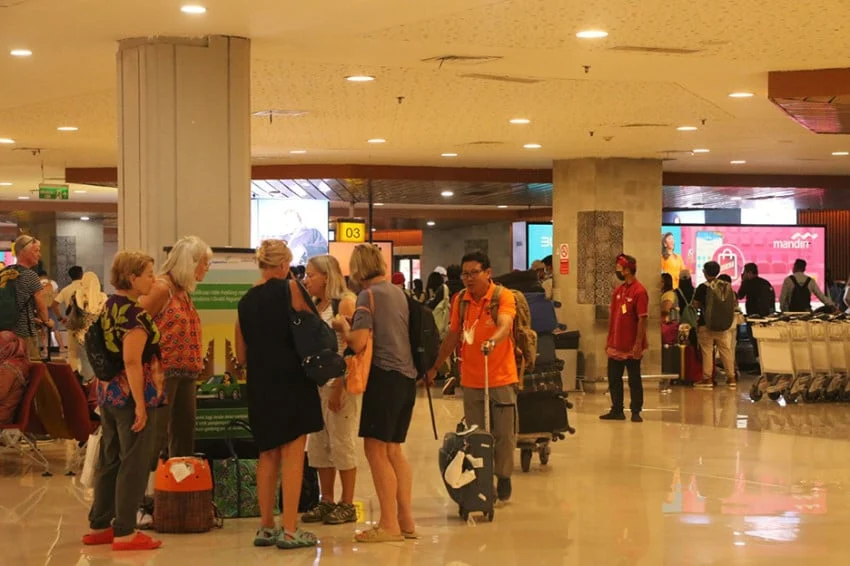
The paradox of Indonesia’s tourism sector has come under intense scrutiny as recent data reveals a widening gap between the volume of international visitor arrivals and the economic value generated per tourist. While the Indonesian government has successfully marketed the archipelago as a premier global destination, resulting in a consistent year-on-year rise in foot traffic, Bank Indonesia (BI) has sounded an alarm regarding the quality of these visits. Specifically, the average tourist spending—a critical metric for gauging the actual economic impact of tourism—has entered a concerning downward trajectory.
This discrepancy was brought to the forefront by Aida S. Budiman, Senior Deputy Governor of Bank Indonesia, during the FEKDI X IFSE event held at the Jakarta Convention Center (JCC) in Senayan on September 26, 2026. Her remarks underscored a structural challenge: Indonesia is attracting more people, but those individuals are spending less money, effectively dampening the sector’s potential to serve as a high-growth engine for the national economy.
A Chronological Analysis of Tourism Performance (2023–2025)
To understand the gravity of the situation, one must analyze the statistical trajectory over the past three years. The data presented by Bank Indonesia provides a clear, if sobering, timeline of this imbalance.
In 2023, Indonesia recorded approximately 11.68 million international tourist visits, with an average spending per visitor of USD 1,374. By 2024, the volume of arrivals saw a robust increase to 13.9 million, while the average spending saw only a marginal uptick to USD 1,392. However, the turning point occurred in 2025. While arrival numbers climbed further to reach 15.39 million, the average tourist spending plummeted to USD 1,267.
This inverse relationship suggests that the influx of new tourists is not yielding a commensurate increase in foreign exchange earnings. When the spending per capita drops while arrival numbers surge, it implies that the composition of the visitor profile may be shifting toward budget-conscious travelers or that the domestic tourism ecosystem is failing to offer high-value services and products that encourage longer stays or premium expenditure.
The Economic Implications of Declining Tourist Spending
The decline in per-capita tourist spending is not merely a statistical anomaly; it carries profound implications for Indonesia’s macroeconomic health. Tourism has long been identified as a pillar of the nation’s service export sector. When international tourists spend money—on luxury accommodation, domestic flights, fine dining, or high-end retail—that expenditure directly supports local SMEs, creates jobs, and generates tax revenue.
When this spending drops, the "multiplier effect" of tourism is weakened. If a tourist spends less, the indirect benefits to the local economy—such as the demand for agricultural produce for luxury hotels or the growth of artisanal industries—diminish. Furthermore, if the industry relies on a high volume of low-spending tourists, it places significant pressure on infrastructure, such as airports, public transport, and waste management systems, without providing the proportional revenue required to upgrade or maintain those facilities.
Analyzing the Structural Causes of the Spending Slump
While Bank Indonesia has identified the trend, industry analysts point to several potential drivers behind this decline. One primary factor is the global economic climate. As inflation and interest rates remain high in many source countries—such as those in Europe and parts of North America—travelers may be opting for shorter stays or more modest accommodations to offset the rising cost of international air travel.
Secondly, there is the issue of "tourism product diversification." Indonesia’s tourism strategy has been heavily reliant on the "Bali model," which focuses on mass tourism. While Bali remains a global icon, the focus on mass-market accessibility may inadvertently be attracting segments that do not contribute significantly to the luxury or high-end service economy. There is an urgent need to pivot toward "quality tourism"—a strategy that prioritizes high-value, long-stay, and eco-conscious travelers who are willing to spend more to experience curated, authentic, and sustainable Indonesian cultural experiences.
Thirdly, the digital transformation of the travel industry has shifted the landscape. With the proliferation of budget travel platforms, many tourists now have the tools to minimize costs at every stage of their journey. If the Indonesian tourism ecosystem does not offer high-value, "must-have" experiences that justify higher spending, tourists will naturally gravitate toward the most cost-effective options available.
Official Responses and Strategic Shifts
The Ministry of Tourism, led by Minister Widiyanti, has acknowledged the importance of the sector’s contribution to GDP. However, the shift in data necessitates a strategic rethink. Official discourse has recently begun to emphasize the "quality over quantity" narrative. The objective is no longer just to hit numerical arrival targets but to ensure that each visitor contributes meaningfully to the Indonesian economy.
Industry experts suggest that the government should look into incentivizing "MICE" (Meetings, Incentives, Conferences, and Exhibitions) tourism, which traditionally attracts business travelers who spend significantly more per day than leisure travelers. Furthermore, fostering "digital nomad" hubs with appropriate visa regulations could encourage longer stays, thereby increasing the total expenditure per visit, even if the daily spend is moderate.
The Role of Digital Finance in Tourism
At the FEKDI X IFSE event, the intersection of finance and tourism was a central theme. The digitalization of payment systems—such as the integration of QRIS (Quick Response Code Indonesian Standard) for international tourists—is seen as a vital tool. By making it seamless for international visitors to spend their money, Indonesia can reduce the friction that often prevents higher spending.
When a tourist finds it difficult to navigate local payment systems or is forced to rely on cash, they are less likely to participate in spontaneous consumption. Bank Indonesia’s push for interoperable digital payments is intended to capture a greater share of the tourist’s wallet by ensuring that digital spending is as easy in a rural artisan shop as it is in a Jakarta shopping mall.
Comparative Regional Perspectives
Indonesia is not alone in facing the challenge of managing the quality of tourism. Neighbors such as Thailand and Vietnam have also grappled with the trade-offs of mass tourism. Thailand, in particular, has successfully pivoted toward high-end tourism by leveraging its healthcare and wellness sectors, which attract visitors who stay for weeks at a time and spend significantly on medical services and luxury recovery.
For Indonesia, the path forward involves leveraging its unique cultural assets—such as the "Five Super Priority Destinations"—to create a more premium experience. By moving away from price-based competition and toward value-based competition, Indonesia can hope to stabilize and eventually reverse the downward trend in per-capita spending.
Future Outlook: Moving Toward Sustainable Growth
As the country looks toward the remainder of the decade, the priority must be to reconcile the growth in visitor numbers with the growth in economic value. This requires a multi-stakeholder approach. The government must invest in high-end infrastructure, the private sector must innovate its service offerings, and financial institutions must continue to simplify the payment ecosystem.
The current data provided by Bank Indonesia serves as a wake-up call. It highlights that while the marketing engines of Indonesia’s tourism industry are functioning effectively, the product and service engines require fine-tuning. If the trend of declining per-capita spending continues, Indonesia risks a scenario where the environmental and social costs of tourism begin to outweigh the economic benefits.
In conclusion, the goal for 2026 and beyond should be clear: to transform the Indonesian tourism landscape into one that attracts global travelers who are not only looking for the beauty of the destination but are also willing to invest in the quality of the experience. By shifting the focus from the sheer number of arrivals to the depth of the tourist experience, Indonesia can ensure that its tourism sector remains a robust, sustainable, and high-value pillar of its national economy. The data is clear, the challenge is defined, and the path to recovery lies in enhancing the value proposition of the Indonesian travel experience.