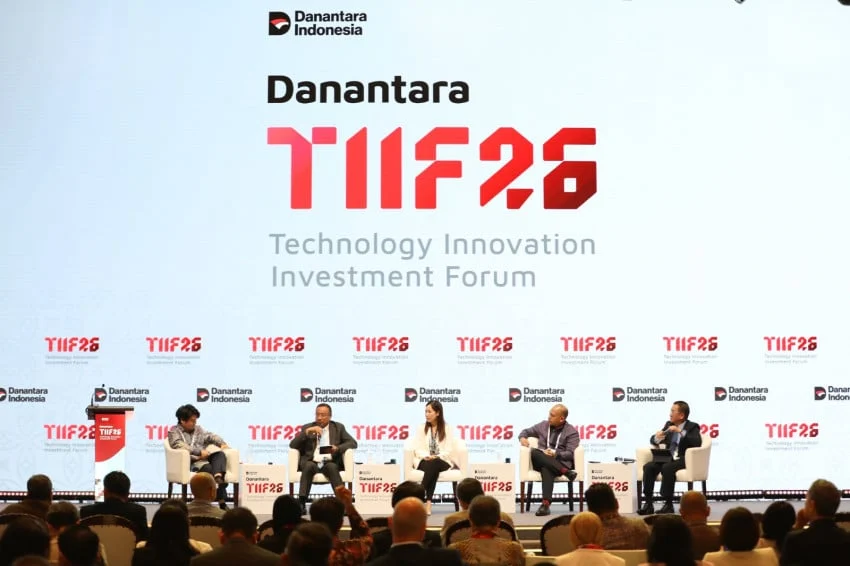
JAKARTA — In a decisive move to secure the nation’s digital infrastructure against the looming threat of advanced computational capabilities, Indonesia has officially launched the "Quantum-Safe Indonesia" initiative. This strategic framework was solidified on October 28, 2026, during the Danantara Technology Innovation Investment Forum (DTIIF) in Jakarta. The initiative marks a collaborative milestone involving PT Telkom Indonesia (Persero) Tbk, the National Cyber and Crypto Agency (BSSN), the state-owned security printer Perum Peruri, and the Danantara Indonesia investment management body.
The formalization of this alliance took place through the signing of two pivotal Memoranda of Understanding (MoU). Telkom Indonesia, as the nation’s primary telecommunications provider, entered into formal agreements with both BSSN and Peruri. These partnerships are designed to establish a unified front in developing cryptographic capabilities and cybersecurity protocols essential for navigating the transition into the era of Post-Quantum Cryptography (PQC).
The Quantum Imperative: Why Now?
The urgency behind this initiative stems from the rapid advancement of quantum computing. Unlike classical computers that operate on bits (0s and 1s), quantum computers utilize qubits, allowing them to perform complex calculations at speeds exponentially faster than current supercomputers. While this offers immense potential for sectors like drug discovery, material science, and climate modeling, it presents a significant "existential" threat to modern digital security.
Current encryption standards, such as RSA and ECC (Elliptic Curve Cryptography), rely on the mathematical difficulty of factoring large numbers—a task that, theoretically, a sufficiently powerful quantum computer could complete in seconds. This vulnerability, often referred to as "Harvest Now, Decrypt Later," allows adversaries to collect encrypted sensitive data today with the intention of decrypting it once quantum technology matures. By initiating the Quantum-Safe Indonesia project in 2026, the participating agencies aim to stay ahead of this timeline, ensuring that national assets remain protected before quantum supremacy is fully realized.
Chronology and the Road to DTIIF 2026
The lead-up to the DTIIF 2026 announcement was characterized by several years of gradual policy alignment and technical evaluation. Since 2023, BSSN has been actively researching cryptographic agility and the adoption of NIST-standardized (National Institute of Standards and Technology) quantum-resistant algorithms.
- 2023–2024: Initial exploratory studies conducted by BSSN regarding global trends in quantum threat modeling.
- Early 2025: The formation of the Danantara Indonesia investment body, tasked with streamlining strategic state-owned enterprise (BUMN) investments in deep tech.
- Mid-2025: Telkom and Peruri began internal audits to identify legacy cryptographic assets within their respective digital ecosystems.
- October 28, 2026: Official signing of the MoUs at DTIIF 2026, effectively launching the Quantum-Safe Indonesia roadmap.
The forum itself, DTIIF 2026, served as the ideal backdrop for this collaboration. Designed as a nexus for government officials, BUMN leaders, global technology architects, and institutional investors, the forum provides the necessary ecosystem to translate abstract technological challenges into concrete investment opportunities and operational implementations.
Strategic Roles of the Stakeholders
The success of the Quantum-Safe Indonesia initiative relies on the distinct expertise brought by each signatory:
PT Telkom Indonesia (Persero) Tbk: As the backbone of Indonesia’s digital infrastructure, Telkom provides the connectivity and data center capacity. Their role involves integrating quantum-safe layers into the national fiber-optic network and cloud infrastructure to ensure that data in transit and at rest remains secure.
Badan Siber dan Sandi Negara (BSSN): The national regulator for cybersecurity acts as the architect of the PQC migration framework. BSSN provides the regulatory guidance, standardization of cryptographic algorithms, and the threat-assessment methodologies that form the backbone of the initiative.
Perum Peruri: With its mandate for high-security printing and digital identity solutions, Peruri is the frontline for secure digital transactions. In the quantum era, the integrity of digital signatures and identity verification—crucial for government services—must be quantum-proof to prevent systemic fraud.
Danantara Indonesia: Serving as the orchestrator of investment and institutional alignment, Danantara ensures that these initiatives receive the necessary financial backing and policy synchronization across the state apparatus.
The PQC Migration Framework
Central to the collaboration is the BSSN-led migration framework, which serves as a blueprint for all Indonesian institutions. This framework is categorized into six critical phases:
- Preparation: Establishing a dedicated governance body to oversee quantum security transitions.
- Inventory & Assessment: Cataloging all existing cryptographic assets—from hardware security modules to individual software libraries—and determining which are vulnerable to quantum decryption.
- Risk Prioritization: Categorizing data based on sensitivity and the expected "shelf-life" of the information. Data that needs to remain secret for decades is prioritized for immediate PQC migration.
- Planning & Piloting: Designing the technical architecture for the migration, including the deployment of "hybrid" encryption methods that combine classical and quantum-safe algorithms.
- Implementation & Cryptographic Agility: Transitioning systems to be "cryptographically agile," meaning they can easily swap out encryption algorithms as new threats emerge, without needing to overhaul entire hardware systems.
- Monitoring & Evaluation: Continuous auditing of the system’s performance and security posture against evolving quantum capabilities.
Economic and Security Implications
From a macroeconomic perspective, the initiative is a proactive defensive measure against potential digital espionage and systemic financial failure. Should a nation’s banking, health, and state security infrastructure fall to quantum decryption, the economic fallout could be catastrophic. By fostering a domestic capacity for PQC, Indonesia is not only securing its borders but also building an indigenous industry around high-end cybersecurity.
Analysts suggest that the demand for quantum-safe hardware and software will skyrocket over the next decade. By involving local players like Telkom and Peruri, the Indonesian government is positioning the country to become a regional leader in quantum security services, potentially creating an export market for Indonesian-developed secure communication solutions within Southeast Asia.
"The transformation to a quantum-ready state is not merely an IT upgrade; it is a fundamental shift in how we conceive national security in the 21st century," noted a technology analyst familiar with the forum proceedings. "The collaboration between Telkom, BSSN, and Peruri effectively creates a sandbox where these massive organizations can fail safely, learn, and then deploy at scale."
Addressing the Talent Gap
While the technical roadmap is clear, the implementation phase faces a significant challenge: the scarcity of specialized human capital. Quantum computing and advanced cryptography require a unique intersection of mathematics, physics, and software engineering. Consequently, part of the Quantum-Safe Indonesia initiative is expected to involve academic partnerships and talent development programs.
Industry experts suggest that the government will likely need to incentivize local universities to prioritize quantum-related curricula to ensure that the workforce of the 2030s is capable of managing the infrastructure currently being planned.
Looking Ahead: The 2030 Horizon
The initiative is intended to be a long-term endeavor. While the formal signing occurred in 2026, the full transition to a post-quantum environment is expected to span several years, potentially concluding by the early 2030s. The immediate goal for the participants is to ensure that by 2028, all critical government infrastructure will have completed the inventory and assessment phases of the BSSN framework.
As DTIIF 2026 draws to a close, the consensus among participants is clear: the threat of quantum computing is no longer a distant theoretical concern for academics, but a tangible operational reality for state institutions. By aligning their strengths under the umbrella of Danantara, Telkom, BSSN, and Peruri are setting a precedent for how a modern nation-state must respond to the rapid acceleration of transformative technologies.
In the coming months, the public can expect to see further details regarding specific investment allocations for these projects and potential partnerships with international quantum technology leaders. For now, Indonesia has laid the groundwork for a transition that will define the security of its digital future, signaling to the global community that it intends to remain a resilient and secure player in the digital economy, regardless of the speed at which quantum computers evolve.